Product-Wise Analysis of the U.S. Threaded Fasteners Market for Automotive and Machinery Sectors
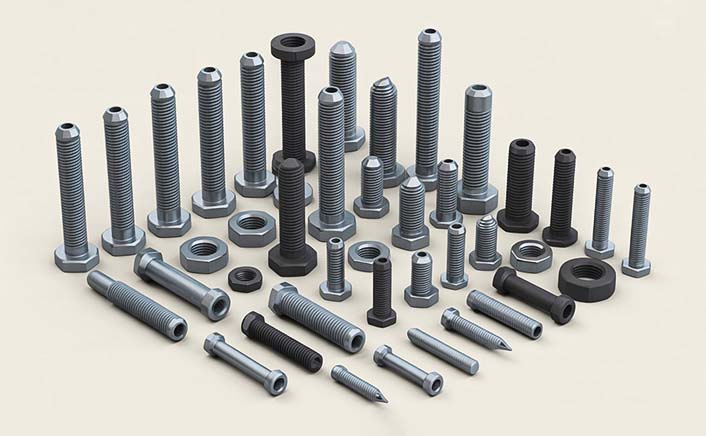
The product composition of the U.S. Threaded Fasteners Market showcases the diversity and specialization that characterizes this vital industrial sector. Screws, bolts, and nuts dominate consumption due to their extensive applications and versatility across various industries. Leading the market in volume, screws play an essential role in assembly operations, ranging from household products to high-precision machinery. Their capacity to provide a strong clamping force, adaptability to different materials, and compatibility with automated assembly lines make them a preferred choice among manufacturers.
U.S. Threaded Fasteners Market recorded a sale of 189 billion units in 2024 and is estimated to reach a volume of 226.98 billion units by 2032 with a CAGR of 0.7% during the forecast period.
| Product Type | Market Share (%) |
| Screws | 28.0 |
| Bolts | 22.5 |
| Nuts | 18.0 |
| Studs | 8.0 |
| Washers | 7.5 |
| Anchors | 5.0 |
| Threaded Rods | 6.0 |
| Specialty Fasteners | 5.0 |
Bolts hold a significant share of the market, stemming from their critical role in structural assemblies, automotive manufacturing, construction projects, and machinery installation. Bolts are highly valued for their high tensile strength and reliability in load-bearing applications, ensuring their continued prominence in industrial settings. Nuts, which complement bolts, also represent a substantial portion of the market as they provide the necessary fastening mechanism for securing components effectively. The frequent pairing of bolts and nuts across industries such as automotive, aerospace, and construction highlights their strategic significance and consistent demand within the U.S. threaded fasteners market.
While studs and washers contribute smaller shares compared to screws, bolts, and nuts, they are vital for ensuring assembly integrity and load distribution. Studs are notably utilized in high-performance engines, machinery, and industrial equipment, where precision alignment and enhanced strength are crucial. Washers mitigate stress concentration, prevent surface damage, and extend the longevity of assemblies, making them essential components in both high-volume and high-value applications.
Anchors, which encompass expansion anchors, sleeve anchors, and chemical anchors, are particularly relevant in construction and civil engineering projects, offering secure fastening solutions in various substrates. Their usage correlates with the pace of urban development, infrastructure projects, and renovation activities, reflecting the indirect impact of broader economic trends on the U.S. threaded fasteners market.
Threaded rods, while representing a niche segment, provide extended-length fastening solutions for applications demanding strong tension and alignment over greater distances. These are commonly utilized in construction, energy installations, and heavy machinery setups, where conventional bolts may not suffice. Although specialty fasteners command a smaller market share, they attract attention due to their tailored designs and material specifications, including high-performance alloys, corrosion-resistant coatings, and custom dimensions. Their adoption is increasing in aerospace, defense, and advanced industrial applications, where standard components fail to meet rigorous operational or environmental requirements. This focus on specialty fasteners underscores the market’s capacity for innovation and its responsiveness to evolving industrial standards, regulatory demands, and customer-specific needs.
In summary, the U.S. threaded fasteners market reflects a clear alignment between product types and end-use requirements. High-volume segments like screws, bolts, and nuts provide broad coverage across multiple industries, while smaller, specialized components address high-value, precision-oriented applications.
Ongoing industry trends, including the pursuit of lightweight and high-strength materials, the adoption of high-performance alloys, and the integration of advanced manufacturing techniques, continue to shape product demand. Screws and bolts benefit from automation, standardization, and large-scale industrial adoption, while studs, washers, anchors, threaded rods, and specialty fasteners are increasingly influenced by application-specific performance and compliance standards.
Emerging technologies within sectors such as automotive, aerospace, electronics, energy, and construction are continually shaping material selection, dimensional specifications, and mechanical performance criteria for fasteners, ensuring that manufacturers evolve to meet functional and regulatory requirements.
Overall, the product distribution in the U.S. threaded fasteners market illustrates a strategic balance between high-volume, standardized fasteners and specialized, application-specific solutions. Screws, bolts, and nuts lead in consumption due to their versatility and extensive industrial integration.
Meanwhile, studs, washers, anchors, threaded rods, and specialty fasteners, although representing smaller shares, enhance market depth by fulfilling critical performance, durability, and regulatory demands. The continuous evolution of industries such as automotive, aerospace, construction, and machinery ensures that all product types remain relevant, with advancements in materials, coatings, and precision engineering further enhancing their applications.