How Automotive EV Lightweighting and Aluminum Body Structures Are Driving Riveting Tool Demand in the U.S. Market
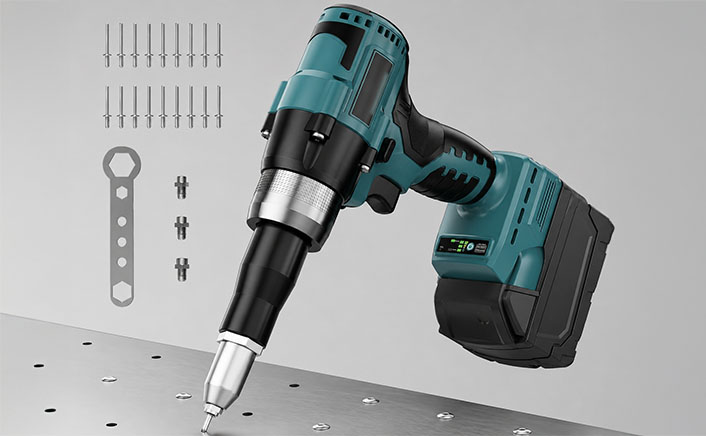
The end-use segmentation of the U.S. Riveting Tools Market Trendsreflects a structurally layered demand ecosystem where high-precision transportation manufacturing, aerospace structural assembly, and industrial fabrication collectively anchor baseline consumption, while emerging shifts in EV lightweighting and modular construction are reshaping tool adoption intensity and technology mix. Automotive and transportation remain the dominant end-use segment at approximately 28.4%, largely driven by the transition toward EV body-in-white architectures that rely heavily on aluminum and mixed-material joining systems. Unlike traditional ICE platforms that depend extensively on resistance spot welding, EV structures incorporate aluminum alloys and composite panels that require mechanical fastening solutions such as blind rivets and self-piercing rivets (SPR). A single EV platform can require 2,000–5,000 fastening points, and with OEMs targeting vehicle mass reductions of 8–15% to extend battery range, riveting intensity per unit continues to rise. This has led to increased deployment of automated riveting cells and cordless high-torque riveting tools in Tier-1 automotive supplier facilities across Michigan, Ohio, and Texas.
Aerospace and defense, accounting for around 18.6% of demand, represent the most technically intensive application segment, where riveting is not an optional process but a structural requirement. Aircraft fuselage assembly involves thousands of rivet joints per airframe, particularly in aluminum skin fastening, where fatigue resistance and vibration tolerance are critical. Industry benchmarks indicate that a single narrow-body aircraft can require 1–1.5 million fasteners, a significant portion of which are rivets installed using pneumatic and hydraulic systems. Additionally, the aerospace maintenance, repair, and overhaul (MRO) sector adds recurring demand through skin replacement, structural reinforcement, and aging fleet refurbishment programs. The long lifecycle of aircraft ensures sustained demand for high-precision riveting tools with extended durability and tight tolerance control.
Industrial manufacturing and metal fabrication together contribute nearly 26% of the market, forming the structural backbone of steady, replacement-driven tool consumption. This segment is characterized by continuous-use environments such as stamping plants, fabrication workshops, and OEM supplier networks where riveting tools operate under high-duty cycles. Replacement cycles in these environments typically range between 3–6 years for pneumatic tools and 4–8 years for electric systems, creating predictable aftermarket demand. The growing outsourcing of metal fabrication to specialized suppliers has also decentralized tool demand, increasing penetration across small and mid-sized fabrication units that rely heavily on handheld pneumatic and electric riveting systems.
Construction and infrastructure, contributing approximately 10.5%, is increasingly influenced by modular construction trends and off-site fabrication techniques. Prefabricated building systems require high-speed mechanical fastening for steel framing, HVAC modules, and façade assemblies, where riveting provides a faster and more flexible alternative to welding. The rise of commercial renovation activity and infrastructure modernization projects in the U.S. has further strengthened demand for portable and cordless riveting tools, especially in field-based installation environments where compressor-based pneumatic systems are less practical.
HVAC systems manufacturing, accounting for around 6.9%, is another important but often underappreciated driver, where riveting is widely used in duct assembly and sheet metal joining. The shift toward energy-efficient building systems and tighter air leakage standards has increased precision requirements in HVAC fabrication, indirectly driving demand for consistent and high-quality riveting tools.
Electronics and electrical equipment, while smaller at 4.7%, plays a specialized role in enclosure assembly, panel fastening, and lightweight structural joining. The miniaturization of electronic systems and increased use of aluminum housings in industrial electronics has created niche demand for precision riveting tools that offer controlled force application without damaging sensitive components.
Rail and heavy engineering (3.9%) and shipbuilding and marine applications (1.0%) represent niche but structurally critical segments. Rail manufacturing relies on riveting in vibration-resistant structural assemblies, while marine applications use rivets in corrosion-prone environments where welding may weaken material integrity over time. Although these segments are smaller in volume, they demand highly durable hydraulic and structural riveting systems, often contributing disproportionately to revenue per unit due to their specialized requirements.
Overall, the U.S. riveting tools market demonstrates a dual-engine demand structure: high-volume industrial fabrication and automotive manufacturing provide steady baseline consumption, while aerospace, EV production, and modular construction drive technology-intensive upgrades toward automated, cordless, and high-precision riveting systems. The market is increasingly shifting from manual and pneumatic dominance toward battery-powered and automated riveting solutions, reflecting broader trends in manufacturing automation, material innovation, and lightweight structural engineering. This evolution ensures that while volume growth remains moderate, value growth is accelerating due to rising tool sophistication and application complexity across end-use industries.