The Middle East’s expanding petrochemical integration, rising infrastructure investments, and growing demand for high-performance plastics are reinforcing the region’s position as a strategically important market for plastic additives across packaging, construction, and industrial applications.
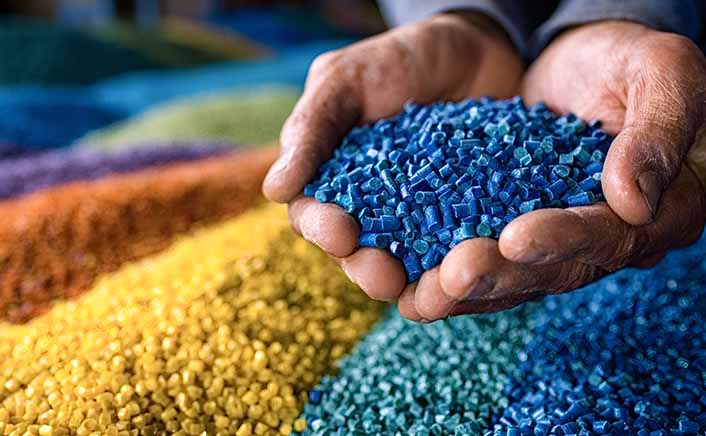
The Middle East Plastic Additives Market reached USD 3.10 billion in 2025 and is projected to grow to USD 4.87 billion by 2033, expanding at a CAGR of 5.80% from 2027 to 2033. Market expansion is supported by strong polymer production capacity, rising downstream plastic processing activity, and sustained demand from the construction and packaging sectors. Government-led industrial diversification initiatives, particularly in Saudi Arabia and the UAE, are accelerating investments in manufacturing and infrastructure, further driving additive consumption across multiple applications.
The region’s petrochemical strength plays a central role in shaping demand for plastic additives. The Middle East accounts for a significant share of global polymer production, with countries such as Saudi Arabia hosting some of the world’s largest integrated petrochemical complexes. Companies like SABIC continue to expand downstream capabilities, supporting the availability of raw materials for the plastics processing industry. This integrated value chain reduces feedstock costs and enhances competitiveness, enabling regional manufacturers to scale production of plastic products used across packaging, construction, and industrial applications.
Packaging remains the largest application segment, driven by rising food consumption, expanding retail networks, and increasing e-commerce penetration. Flexible packaging demand is particularly strong across the UAE and Saudi Arabia, where urbanization and changing consumer lifestyles are driving the need for lightweight, durable, and cost-efficient packaging solutions. Plastic additives such as antioxidants, stabilizers, and processing aids are essential in maintaining material performance, extending shelf life, and improving processing efficiency in packaging applications.
Construction activity across the Middle East is a major contributor to additive demand, particularly for stabilizers, flame retardants, and impact modifiers. Large-scale infrastructure projects such as Saudi Arabia’s NEOM development and urban expansion initiatives across the Gulf are driving demand for high-performance plastic materials used in pipes, insulation, cables, and structural components. Additives play a critical role in enhancing UV resistance, thermal stability, and fire safety, ensuring long-term durability in extreme climatic conditions characterized by high temperatures and intense solar exposure.
The transition toward specialty additives is becoming increasingly evident as end-use industries demand higher performance standards. UV stabilizers and flame retardants are gaining traction due to regulatory requirements and environmental conditions, while antioxidants are widely used to prevent material degradation during processing and end-use. This shift toward performance-oriented additives is contributing to higher average selling prices and improved margins for suppliers, particularly in construction and industrial applications.
Import dependency remains a defining characteristic of the market, especially for high-value specialty additives. While the region has strong capabilities in polymer production, advanced additive manufacturing is largely concentrated in Europe and Asia. This creates opportunities for global chemical companies to expand their regional footprint through distribution networks, partnerships, and localized production facilities. At the same time, governments are encouraging downstream industrial development to reduce reliance on imports and strengthen domestic manufacturing capabilities.
Industrial demand for plastic additives is also expanding across automotive, electrical, and consumer goods sectors. Automotive manufacturers are increasingly using lightweight plastic components to improve fuel efficiency and reduce emissions, driving demand for impact modifiers and high-performance additives. In electrical and electronics applications, flame retardants and stabilizers are essential for ensuring product safety and reliability. Consumer goods manufacturing is further supporting demand for colorants, processing aids, and specialty additives that enhance product aesthetics and functionality.
Competitive Landscape
The Middle East plastic additives market is supported by a mix of global chemical companies and regional petrochemical players, with competition centered on product performance, supply reliability, and technological capabilities. BASF SE, Clariant AG, and Evonik Industries AG maintain strong positions through extensive product portfolios and established distribution networks across the region. Lanxess AG and Arkema S.A. focus on high-performance additives, particularly in construction and industrial applications, while Albemarle Corporation plays a key role in flame-retardant solutions.
Songwon Industrial Co., Ltd. and Adeka Corporation are prominent suppliers of stabilizers and antioxidants, catering to the packaging and polymer processing industries. Solvay S.A. continues to expand its specialty chemicals portfolio, targeting high-value applications, while SABIC leverages its integrated petrochemical ecosystem to support downstream plastic processing and additive demand. The competitive landscape is increasingly shaped by innovation in specialty additives, with companies focusing on developing solutions that enhance material performance, improve sustainability, and meet evolving regulatory requirements.
The Middle East’s continued investment in infrastructure, industrial diversification, and downstream manufacturing is expected to drive sustained demand for plastic additives over the coming decade. As the market evolves, the balance between commodity and specialty additives is expected to shift toward higher-value products, creating new opportunities for suppliers with advanced technological capabilities. With strong petrochemical foundations, growing industrial demand, and increasing focus on performance and sustainability, the region is positioned to remain a key growth market within the global plastic additives industry.