Middle East Drilling Fluids Market to Reach USD 5.02 Billion by 2033 at a CAGR of 5.2%
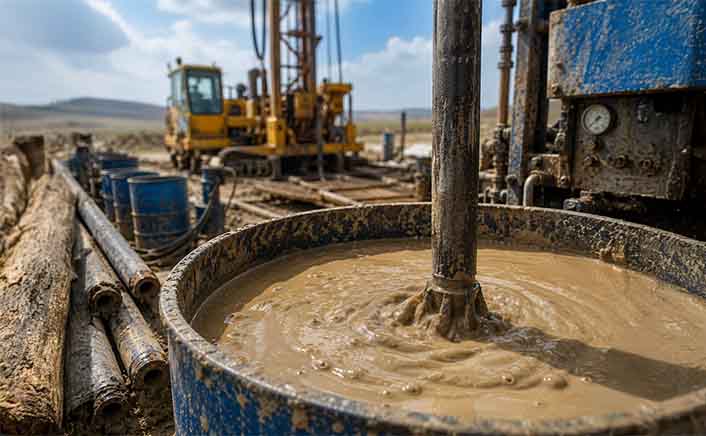
The Middle East Drilling Fluids Market is set for steady growth, fueled by ongoing upstream oil and gas investments and rising drilling complexity across the region. The market was valued at USD 3.20 billion in 2024 and increased to USD 3.25 billion in 2025. It is expected to reach USD 3.52 billion in 2026 and USD 5.02 billion by 2033, with a compound annual growth rate (CAGR) of 5.2% during the forecast period.
The market’s growth is closely linked to long-term production strategies led by national oil companies like Saudi Aramco and Abu Dhabi National Oil Company. Saudi Arabia continues to target a production capacity of 13 million barrels per day, while the UAE is working toward its goal of reaching 5 million barrels per day by 2030. These capacity expansion efforts are directly resulting in ongoing drilling activity, ensuring steady demand for drilling fluids in both onshore and offshore operations.
Unlike more volatile markets like North America, the Middle East benefits from policy-driven upstream development, which reduces sensitivity to short-term oil price fluctuations. This structural stability allows national oil companies to sustain long-term drilling programs, supporting steady consumption of drilling fluids. Additionally, the region’s low lifting costs enable operators to maintain drilling activity even during moderate price downturns.
A key trend shaping the market is the increasing complexity of drilling operations. The rising use of horizontal, directional, and extended-reach wells significantly boosts fluid requirements per well. These well types require advanced fluid systems that provide better thermal stability, lubrication, and pressure control. Offshore drilling, especially in the UAE and Saudi Arabia, further enhances market value, as offshore wells need much higher fluid expenditures than onshore wells.
From a product perspective, water-based fluids continue to dominate the market due to their cost-effectiveness and widespread use in onshore drilling. However, oil-based fluids remain essential for complex drilling environments where performance requirements are more demanding. Synthetic-based fluids are gaining popularity, especially in offshore applications, as operators increasingly prioritize environmental compliance and efficiency. These fluids strike a balance between operational effectiveness and reduced environmental impact, making them well-suited for modern drilling programs.
On the application side, onshore drilling makes up most market demand, supported by extensive conventional reserves in Saudi Arabia, Iraq, and Kuwait. However, offshore drilling is becoming a high-value segment, driven by increased investments in offshore fields like Abu Dhabi’s Upper Zakum. Offshore projects usually require higher-cost fluid systems, which contribute disproportionately to total market revenue despite accounting for a smaller share of wells.
Drilling activity remains the primary driver of demand for drilling fluids in the region. The Middle East maintains an average active rig count of approximately 400–420 rigs, according to data from Baker Hughes. Each rig drills an average of 10–12 wells annually, resulting in an estimated 4,500–5,000 wells per year. This high level of activity, combined with increasing well complexity, is sustaining market growth.
Regulatory frameworks in the region are largely governed by national oil companies, which enforce strict standards for drilling operations. Environmental considerations are becoming increasingly important, particularly in offshore projects, where regulations are encouraging the adoption of synthetic-based fluids over traditional oil-based systems. Localization initiatives, such as Saudi Arabia’s IKTVA program and the UAE’s In-Country Value program, are also reshaping the market by promoting domestic manufacturing and supply chain development.
The competitive landscape is moderately consolidated, with global oilfield service providers playing a dominant role. Companies such as Schlumberger Limited, Halliburton Company, and Baker Hughes Company lead the market through advanced technologies and integrated service offerings. Weatherford International plc continues to focus on drilling optimization solutions, while regional players such as Gulf Energy SAOC are expanding their presence through localization strategies and partnerships with national oil companies.
Looking ahead, the Middle East drilling fluids market is expected to benefit from continued upstream investments, offshore expansion, and the increasing adoption of advanced drilling technologies. At the same time, efficiency improvements and regulatory pressures may moderate volume growth, but the shift toward more complex and high-value drilling operations is expected to support steady revenue expansion over the forecast period.