Japan Construction Robotics Market Gains Momentum as Automation Becomes Critical to Address Workforce Shortages
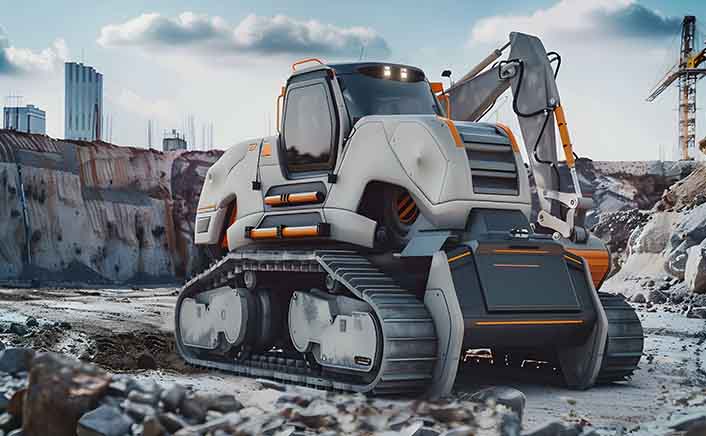
Japan’s Construction Sector is undergoing a structural transformation as robotics moves from experimental deployment to operational necessity. With the market valued at USD 0.12 Billion in 2025 and projected to reach USD 0.33 billion by 2033, the increasing reliance on automation reflects deeper demographic and productivity challenges rather than cyclical construction demand.
At the core of this shift is Japan’s aging workforce. More than one-third of construction workers are over the age of 55, while new workforce entry continues to decline. This imbalance has created persistent labor gaps across project types, particularly in infrastructure and large-scale industrial construction. As a result, companies are turning to robotics not as a complementary tool, but as a fundamental solution to maintain project timelines and cost efficiency.
Leading contractors such as Shimizu Corporation and Obayashi Corporation have already integrated robotic systems into active construction sites. These include automated welding systems, rebar installation robots, and autonomous material transport units. Unlike earlier pilot projects, current deployments are focused on scaling operations and improving repeatability in high-demand environments.
The adoption trend is particularly strong in material handling and site logistics, where repetitive tasks and labor intensity create immediate opportunities for automation. Autonomous construction equipment is also gaining traction, with manufacturers like Komatsu Ltd. developing smart excavators and bulldozers capable of operating with minimal human intervention. These systems leverage GPS, sensors, and AI algorithms to improve precision while reducing rework and operational delays.
Government policy is playing a decisive role in accelerating this transition. Japan’s i-Construction initiative, led by the Ministry of Land, Infrastructure, Transport and Tourism, is promoting the adoption of digital construction technologies across public projects. Incentives such as preferential bidding and financial support for automation are encouraging contractors to invest in robotics, particularly for infrastructure development and maintenance.
Another important development is the emergence of flexible adoption models. High upfront costs have historically limited the deployment of robotics to large contractors. However, leasing and Robotics-as-a-Service (RaaS) models are beginning to lower entry barriers, enabling mid-sized firms to access advanced technologies without significant capital expenditure. This shift is expected to broaden the adoption base and accelerate overall market growth.
Beyond productivity gains, robotics is also addressing safety concerns. Demolition and hazardous site operations are increasingly being automated, reducing worker exposure to risk. Inspection robots, including drones and ground-based systems, are being deployed for monitoring aging infrastructure such as bridges and tunnels, where manual inspection is both time-consuming and dangerous.
Despite these advancements, challenges remain. Construction environments are inherently variable, making full automation difficult to achieve. Integration timelines can extend due to the need for site digitization and workforce training. Additionally, smaller contractors continue to face financial and operational barriers, limiting widespread adoption in the short term.
However, the long-term outlook remains strong. As Japan continues to invest in infrastructure renewal and urban development, the demand for efficient, scalable construction solutions will increase. Robotics, supported by advances in AI and digital construction platforms, is expected to play a central role in reshaping how projects are executed.
The Japanese construction robotics market is therefore evolving as a high-value, technology-driven segment within the broader construction industry. Its growth is not driven solely by expansion in construction activity, but by the need to sustain productivity amid structural labor constraints. This positions Japan as a key reference market for other developed economies facing similar demographic and operational challenges.