High-Efficiency Thermal Management: U.S. Brazed Plate Heat Exchanger Market Forecast, Revenue, and Capacity Analysis
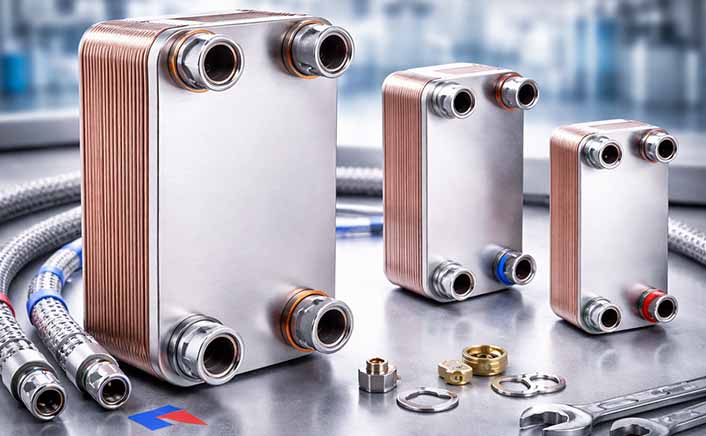
The U.S. Brazed Plate Heat Exchanger (BPHE) Market is experiencing steady growth, fueled by an increasing demand for high-efficiency, compact, and reliable thermal management solutions across various sectors, including industrial, commercial, and specialized applications. BPHEs are becoming preferred alternatives to traditional shell-and-tube and gasketed plate heat exchangers, thanks to their superior heat transfer efficiency, smaller footprint, lower maintenance needs, and advantages in lifecycle costs.
Unit sales in the U.S. are projected to grow from 320,000 in 2024 to approximately 493,341 by 2033, reflecting a compound annual growth rate (CAGR) of 4.7% between 2027 and 2033. Meanwhile, the average price per unit is expected to rise from USD 380 to USD 590 over the same period, indicating a shift towards premium, high-performance models. This combination of increased volume and improved pricing is expected to drive total market revenue from USD 122 million in 2024 to USD 291 million by 2033, achieving a CAGR of 9.5%. This trend underscores the growing significance of BPHEs in both established and emerging applications.
Industrial process cooling, which represents 32% of the market, continues to be the dominant application, driven by ongoing growth in the manufacturing, chemicals, and petrochemical sectors that require compact, efficient heat exchangers for optimizing energy usage and maintaining process reliability. HVAC and refrigeration applications, making up 28% of the market share, are also significant contributors to growth as both commercial and residential sectors increasingly adopt energy-efficient cooling systems to comply with regulatory standards and sustainability objectives.
Secondary segments such as food and beverage processing, pharmaceuticals, and power generation are also benefitting from the compact design, high thermal performance, and reduced maintenance of BPHEs. The market is segmented by capacity into small (<50 kW), medium (50–200 kW), and high (>200 kW) units, with medium-capacity systems capturing the largest share, approximately 40%, driven by commercial and mid-sized industrial applications. Small-capacity units cater to residential needs, while high-capacity units serve large industrial plants.
Technological advances, including optimized plate designs, improved brazing methods, and corrosion-resistant materials, are enhancing the efficiency, durability, and reliability of BPHEs, facilitating their adoption in demanding operating conditions and specialized applications. Leading companies, such as Alfa Laval, Danfoss, SWEP International, API Heat Transfer, and GEA Group, are actively investing in product innovation, expanding their production capabilities, and forming strategic partnerships to enhance their market presence and meet rising demand.
The market is also seeing consolidation and partnerships as companies strive to broaden their product portfolios and geographic reach. Additionally, regulatory standards and environmental compliance are increasingly influencing the U.S. BPHE market, particularly in industrial and commercial sectors, where energy efficiency, emissions reduction, and sustainable practices are shaping procurement decisions.
While rising raw material costs, especially for stainless steel and copper, could impact pricing, these challenges are somewhat mitigated by the high value provided through enhanced thermal performance and operational savings. Emerging opportunities are present in applications such as data centers, renewable energy facilities, and advanced industrial processes, emphasizing the need for compact, efficient heat exchangers that optimize performance while minimizing space and energy consumption.
Overall, the U.S. BPHE market is positioned for robust growth, characterized by consistent increases in unit sales, rising average prices, and broader adoption across varied applications. This growth is underpinned by technological innovation, regulatory support, and a growing trend toward energy-efficient and space-saving thermal management solutions. The ongoing expansion of industrial activities, as well as continued developments in HVAC and refrigeration systems, highlight the strategic importance of the U.S. BPHE market within the wider heat exchanger landscape through 2033.