Why Enterprise AI Adoption in Financial Services, Healthcare, and Manufacturing Is Driving Massive Demand for GPU Rental Platforms
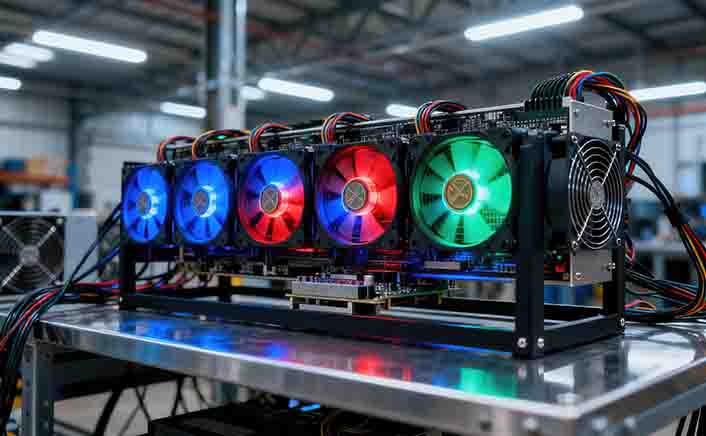
The IT & Telecom sector is projected to maintain its position as the leading contributor to the Global GPU Rental Market , expected to account for approximately 28% of total revenue by 2025. This dominance is largely attributed to the concentration of hyperscaler AI infrastructure, advancements in large language model development, and increasing enterprise cloud computing workloads. Key players in this sector are heavily investing in GPU-intensive AI services that cater to search, cloud productivity, enterprise automation, and generative AI APIs. Major hyperscalers such as AWS, Microsoft Azure, and Google Cloud are committing billions to expand their AI datacenter capabilities, with Microsoft planning capital expenditures exceeding $80 billion in fiscal 2025, a significant portion of which is directed towards scaling AI infrastructure.
Additionally, the rising use of enterprise copilots, retrieval-augmented generation systems, multimodal AI frameworks, and inference APIs has led to a growing preference for rented GPU compute resources over traditional on-premise hardware ownership. Telecom operators are also leveraging GPU infrastructure for network optimization, edge AI applications, predictive maintenance, and AI-enhanced traffic management, further reinforcing the sector's leadership in the GPU rental market.
In the BFSI sector, there is considerable appeal as financial institutions increasingly depend on GPU acceleration for a variety of tasks, including fraud detection, anti-money laundering efforts, high-frequency trading algorithms, risk analytics, and AI-driven customer support. Banks and insurance companies are employing generative AI copilots in their underwriting, compliance, and customer service operations, which has resulted in a marked increase in demand for inference compute. Given the regulatory landscape, financial firms tend to favor rented GPU infrastructure as it allows for scalable and swiftly deployable compute environments without cumbersome procurement processes.
The healthcare sector is rapidly adopting GPU rental services as well, driven by the growing use of AI in medical imaging diagnostics, genomics, protein structure analysis, and pharmaceutical development. GPU-accelerated AI models are becoming commonplace in radiology workflows, cancer detection systems, and personalized medicine research, where high-performance computing needs can fluctuate significantly during training and simulation phases. NVIDIA anticipates that healthcare AI workloads could become one of the fastest-growing segments for AI compute globally over the next decade, given the increasing embrace of AI-assisted diagnostics and drug discovery platforms.
The automotive industry has emerged as a significant player in the GPU rental market, contributing around 10–13% of demand. This is largely due to the vast simulation and AI training infrastructure needed for autonomous vehicle development. Companies focused on advanced driver-assistance systems and self-driving technologies are increasingly relying on rented GPU clusters for sensor fusion training, digital twin environments, and large-scale real-world driving simulations. The training workloads for modern autonomous vehicles involve processing petabytes of data from cameras, LiDAR, and radar, making flexible GPU infrastructure more economically viable than dedicated hardware ownership. Additionally, automotive OEMs and mobility startups are integrating generative AI into in-vehicle systems, predictive maintenance solutions, and manufacturing automation, leading to a rise in long-term compute needs.
Manufacturing is emerging as another robust growth area, fueled by the increasing adoption of industrial AI, robotics simulation, smart factory initiatives, and the use of digital twins. GPU-powered AI models are being utilized for quality inspection, predictive maintenance, supply chain optimization, and overall industrial automation in manufacturing operations worldwide. The implementation of industrial digital twins, in particular, is generating significant demand for high-density GPU compute, as simulation environments necessitate continuous rendering and real-time analytics.
The Media & Entertainment sector remains one of the most GPU-intensive areas, driven by rendering-heavy tasks in animation, visual effects, virtual production, and content creation using AI. The explosive growth of generative video platforms and AI-enhanced content production tools has led to a substantial increase in demand for cloud GPU infrastructure among studios, creators, and post-production facilities. The need for real-time rendering engines and AI-powered editing systems requires scalable compute resources that can accommodate highly variable workloads, aligning well with the economic advantages of rental-based GPU solutions. Meanwhile, the gaming sector contributes an estimated 6–9% to the GPU rental market, propelled by cloud gaming infrastructure, AI-fueled game development, procedural content generation, and real-time rendering needs. Companies that provide cloud gaming services require low-latency GPU infrastructure distributed across various regions, while enhancements in AI-generated non-player character behavior and real-time graphics are increasing computational requirements for each gaming session. Additionally, retail and e-commerce businesses are expanding their GPU consumption for applications such as recommendation engines, personalization algorithms, and demand forecasting systems.