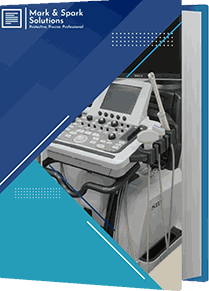
Global Portable Ultrasound Market Size: Analysis By Device Type (Handheld Ultrasound Devices, Mobile Ultrasound Devices), By Application, By End-User: Global and Regional Demand Supply Trends and Forecast-2027-2033
Market Outlook
The Portable Ultrasound Market was valued at USD 348.1 Million in 2025 and is projected to grow to USD 843.6 Million by 2033, with a compound annual growth rate (CAGR) of 11.7% from 2027 to 2033. The global portable ultrasound market encompasses a segment of the medical imaging industry dedicated to lightweight and compact ultrasound systems that are highly mobile. These devices are particularly useful for point-of-care diagnostics, making them ideal for settings like emergency rooms, rural clinics, ambulatory care facilities, and home healthcare. They deliver real-time imaging, which is essential for quick clinical assessments, thanks to their convenience, affordability, and enhanced image quality.

The market is expanding due to a number of causes, including an ageing population that frequently needs medical imaging, an increase in chronic diseases, and a growing requirement for point-of-care diagnostic solutions. Furthermore, the performance and accuracy of portable ultrasound devices have been significantly improved by technical developments such as the use of artificial intelligence (AI), wireless capabilities, and handheld designs. Their use is becoming more widespread in a number of specialities, including as emergency medicine, musculoskeletal imaging, cardiology, and obstetrics and gynaecology, which is promoting their use even more. The need for mobile diagnostic solutions is also being fuelled by the growing emphasis on enhancing healthcare access in distant and low-resource locations.
The market does, however, encounter certain challenges, the limited battery life of some devices and the high initial price of sophisticated portable ultrasound scanners can be obstacles. Concerns regarding image resolution in comparison to conventional stationary systems are also present. Effective usage may also be hampered by a lack of qualified staff to operate and interpret ultrasound images, especially in rural or undeveloped areas. Market expansion is made more difficult by regulatory obstacles and reimbursement problems in different nations. The worldwide portable ultrasound market is expected to continue expanding despite these obstacles due to continuous advancements and a move towards decentralized healthcare.
Key Insights
North America accounted for the largest share of the Portable Ultrasound market at 50.90% in 2025. North America leads the global portable ultrasound market, thanks to its advanced healthcare infrastructure, high adoption of innovative medical technologies, and a strong presence of key industry players. The region experiences increasing demand for point-of-care diagnostics and a growing prevalence of chronic diseases that require regular monitoring. Supportive government initiatives, favorable reimbursement policies, and significant investments in research and development further enhance market growth. The United States is at the forefront, driven by widespread usage in emergency medicine, cardiology, and obstetrics. Additionally, heightened awareness among healthcare professionals and the availability of skilled personnel bolster North America's dominance in the portable ultrasound market.
In terms of Device Type, the Handheld Ultrasound Devices accounted for a major share of 68.2%in 2025. The Handheld Ultrasound Devices segment leads the global portable ultrasound market due to its compact size, affordability, and ease of use. These devices are ideal for point-of-care diagnostics, allowing for quick assessments in emergency situations, rural areas, and home care settings. Recent technological advancements, including AI integration, wireless connectivity, and compatibility with smartphones, have further improved their functionality. As healthcare increasingly moves towards decentralized and telehealth models, handheld ultrasounds facilitate real-time imaging and remote consultations. Their growing adoption in primary care, sports medicine, and critical care also contributes to their market dominance, making them a preferred option over larger, more stationary mobile ultrasound systems.
Market Dynamics
Drivers:
Ongoing innovations have made portable ultrasound devices smaller, smarter, and easier to use, often with AI and wireless capabilities.
Portable ultrasound devices have seen a significant transformation due to recent advancements, becoming more intelligent, user-friendly, and compact. Ultrasound equipment used to be big and exclusive to hospitals. But because to developments in digital photography and microelectronics, portable systems that are handheld and cart-based now perform similarly. Clinicians may now carry high-resolution imaging devices in their pockets because to hardware miniaturization, and extended use in distant or emergency scenarios is made possible by advancements in battery technology.
Furthermore, the integration of artificial intelligence (AI) has revolutionized the functionality of these devices. AI-powered software can assist with image acquisition, automate measurements, detect abnormalities, and guide less experienced users through complex procedures, which speeds up diagnostics and enhances consistency. Machine learning algorithms also improve image clarity and reduce noise, leading to greater diagnostic accuracy.
Wireless connectivity is another crucial innovation, enabling real-time data transfer to smartphones, tablets, or cloud platforms. This feature is particularly beneficial for telemedicine and remote consultations, allowing experts to review scans and provide guidance from afar. Many devices can now seamlessly interface with electronic health record (EHR) systems, ensuring efficient documentation and improving clinical workflows.
These advancements have expanded the applications of portable ultrasound, making it useful in settings ranging from emergency rooms and ambulances to rural clinics and sports fields. They have also empowered a broader range of healthcare providers, including general practitioners and paramedics, to perform point-of-care imaging. As innovation continues, the increasing sophistication of portable ultrasound systems is expected to reduce barriers to access, enhance patient care, and solidify their role in modern medical diagnostics.
Stringent approval processes and unclear reimbursement policies can slow market growth and product adoption.
Stringent regulatory approval processes and unclear reimbursement policies present significant challenges to the growth of the portable ultrasound market. Manufacturers must navigate complex and time-consuming regulatory pathways, such as obtaining FDA clearance in the United States or CE marking in Europe, before they can launch new devices. While these processes are essential for ensuring safety and efficacy, they can delay product availability and increase development costs.
Furthermore, the ambiguity or lack of standardized reimbursement guidelines for portable ultrasound procedures discourages healthcare providers from adopting these technologies. In many regions, portable imaging may not be reimbursed at the same rate as traditional, stationary ultrasound exams, which limits its use in clinical settings. This financial uncertainty makes it difficult for healthcare institutions, especially smaller or rural ones, to justify investing in these devices. Together, these regulatory and reimbursement hurdles can hinder innovation, slow market penetration, and restrict access to the benefits of portable ultrasound in everyday medical practice.
| Key Pointers | Values |
| Report Focus | Global |
| Largest Region | North America |
| Fastest Growing Region | Asia Pacific |
| Base Year | 2024 |
| CAGR % (2027-2033) | 11.7% |
| Forecast Year | 2027-2033 |
| Historical Year | 2015-2024 |
| Market Size in 2025 | USD 348.1 Million |
| Market Size in 2033 | USD 843.6 Million |
| Countries Covered | U.S., Canada, Mexico, Germany, UK, France, Italy, Spain, Turkey, Israel, China, Japan, India, South Korea, Australia, SEA, Brazil, Chile, Argentina, Saudi Arabia, UAE, Qatar, South Africa, Rest of World |
| Key Driver & Challenges | Technological advancements, such as miniaturization and AI integration, enabling real-time diagnostics in diverse settings. High initial costs, limited reimbursement policies, and a shortage of trained sonographers, which may hinder widespread adoption. |
| Segments Covered | By Device Type, By Application, By End-User |
Segmental Analysis
Based on Device Type, Portable Ultrasound market is segmented into Handheld Ultrasound Devices, Mobile Ultrasound Devices.

The Handheld Ultrasound Devices segment is at the forefront of the global portable ultrasound market, and it’s easy to see why. There’s a growing need for point-of-care diagnostics, and these devices perfectly meet that demand due to their portability and user-friendly design. They’re lightweight, compact, and battery-operated, which makes them incredibly versatile. Whether in hospitals, emergency rooms, rural clinics, or even at home for remote patient monitoring, these devices are easy to use.
One of the biggest advantages of handheld ultrasounds is that healthcare professionals can perform immediate diagnoses right at the bedside or in the field, even where access to traditional ultrasound machines is limited. Technological advancements have really improved handheld ultrasounds. Many of the latest models feature AI-enhanced imaging for clearer results that help doctors make quick decisions. Plus, many come with wireless connectivity, allowing healthcare providers to share images instantly for remote consultations, which is a big boost for telemedicine.
Cost is another major factor. Handheld ultrasounds are typically more affordable than larger, mobile machines, making them accessible to a wider range of healthcare providers, especially those in resource-constrained areas. Their growing use in primary care, sports medicine, emergency care, and critical care is solidifying their strong presence in the market.
Furthermore, the trend towards decentralized healthcare—where patients are treated at home or in settings outside of traditional hospitals—has increased the demand for these handheld devices. With their ability to provide quick, non-invasive imaging right at the point of care, it’s clear why healthcare providers around the world prefer handheld ultrasounds.
| Segments | Values |
| By Application | Cardiology Obstetrics and Gynecology Musculoskeletal Vascular Urology Abdominal Emergency Medicine Others |
| By End-User | Hospitals Diagnostic Centers Ambulatory Surgical Centers Maternity Clinics Homecare Settings Military and Remote Medical Services |
Regional Landscape
In the context of regional analysis, the Portable Ultrasound market includes North America, Europe, Asia Pacific, South America, and the Middle East and Africa.
The market size of the North America was valued at USD 177.19 Million in 2025 and is expected to reach USD 429.39 Million by 2033, with a CAGR of 50.90% during the forecast period. North America leads the global portable ultrasound market due to several factors, including technological advancements, a well-established healthcare infrastructure, and a high demand for diagnostic imaging devices. The region, particularly the United States, boasts a robust healthcare system that prioritizes the adoption of innovative medical technologies, including portable ultrasound devices. These devices are highly valued for their ease of use, mobility, and cost-effectiveness, making them suitable for a variety of healthcare settings, such as hospitals, clinics, ambulatory care, and emergency services.

The increasing prevalence of chronic diseases, such as cardiovascular disorders, along with a growing aging population in North America, further drives the demand for portable ultrasound devices. Additionally, the region's high healthcare expenditure ensures that medical facilities and professionals can access the latest ultrasound technology.
Furthermore, North America is home to several leading companies in the portable ultrasound market, including GE Healthcare, Philips Healthcare, and Siemens Healthineers. These companies are continuously innovating and expanding their product portfolios, which helps to drive the market through ongoing research and development and strong distribution networks.
Government support, through healthcare reforms and reimbursement policies, also plays a crucial role in promoting the adoption of portable ultrasound devices in the region. Moreover, the increasing preference for point-of-care diagnostics, especially in remote and underserved areas, has bolstered the demand for portable ultrasound solutions in North America, further solidifying its dominant market position.
Competitive Landscape
Some of the major companies operating within the Portable Ultrasound market are: GE Healthcare, Koninklijke Philips N.V., FUJIFILM Sonosite, Inc., ALPINION MEDICAL SYSTEMS Co., Ltd., Hitachi Ltd., Shenzhen Mindray Bio-Medical Electronics Co., Ltd., EDAN Instruments, Terason Corporation and Others.