Electronics & Semiconductors: High-purity gases driving Europe’s semiconductor and electronics revolution
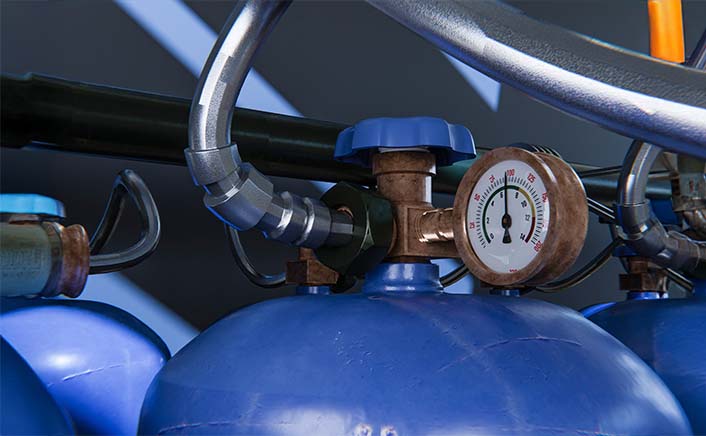
The Europe Industrial Gases Market features a wide array of end-use industries, each playing a significant role in overall demand while representing the region's advanced industrial landscape, technological advancements, and regulatory considerations. A detailed analysis of market share reveals the sectors that lead in consumption and highlights emerging segments with substantial growth potential, demonstrating that the European industrial gases market is influenced by both volume and technology.
| End-Use Industry | Market Share % |
| Healthcare & Medical | 15 |
| Chemical & Petrochemical | 25 |
| Food & Beverage | 12 |
| Metal Fabrication & Manufacturing | 20 |
| Electronics & Semiconductors | 8 |
| Energy & Power | 7 |
| Automotive | 5 |
| Glass & Ceramics | 3 |
| Others (Pharmaceuticals, Water Treatment, Aviation) | 5 |
At the forefront is the Chemical and Petrochemical industry, which holds approximately 25% of the market share, making it the largest consumer of industrial gases in Europe. This predominance is due to the essential roles that gases such as oxygen, nitrogen, hydrogen, carbon dioxide, and specialty gases play in processes like chemical production, refining, and polymer manufacturing. For example, nitrogen is commonly used for inerting and blanketing chemical reactions, while hydrogen is crucial for hydrogenation, ammonia synthesis, and various refining operations. The use of industrial gases allows chemical producers to ensure safety, process efficiency, and high-quality outputs, solidifying their necessity in this foundational sector of Europe’s industrial economy.
Following closely, the Metal Fabrication and Manufacturing sector accounts for around 20% of the market share, which reflects the region's strong steel, aluminum, and specialty metal production. Essential gases such as oxygen and acetylene are utilized for metal cutting, welding, and surface treatment, while argon and nitrogen provide inert atmospheres crucial during welding and heat treatment operations. European metal producers, particularly in Germany, France, and Italy, leverage the benefits of these gases to enhance precision and material quality. The efficiency and reliability of gas supply in this sector are directly linked to productivity and cost competitiveness, underscoring the importance of industrial gases for manufacturing operations.
The Healthcare and Medical sector contributes about 15% to the total market share, serving as another vital driver of the European industrial gases market. Gases like medical oxygen and nitrous oxide are pivotal in patient care, surgeries, intensive care units, and emergency medical services. The COVID-19 pandemic highlighted the critical importance of maintaining a reliable gas supply for healthcare facilities, prompting upgrades in infrastructure, on-site generation, and storage capacity. As Europe’s population ages and healthcare spending increases, the demand for medical gases is projected to grow steadily, securing this segment's status as a key contributor to the market.
Food & Beverage applications represent 12% of the market and are primarily driven by nitrogen and carbon dioxide, which are essential for packaging, carbonation, and preservation. These gases play a crucial role in extending shelf life, maintaining quality, and ensuring the safety of processed foods, beverages, and packaged goods. The increasing consumer preference for convenience foods, ready-to-eat meals, and carbonated beverages has resulted in steady growth in this sector, bolstered by regulatory standards regarding food safety that promote industrial gas usage.
The Electronics and Semiconductors sector, comprising 8% of the market, reflects the growing importance of specialty gases in advanced manufacturing processes. High-purity gases such as nitrogen and hydrogen, along with specialty gases like silane, phosphine, and arsine, are utilized in semiconductor fabrication, flat-panel displays, and LED production. Europe's commitment to technological sovereignty and local semiconductor manufacturing, alongside the ongoing global chip shortage, has heightened the reliance on specialty gases to ensure precision and contamination-free environments.
The Energy and Power sector accounts for 7% of the market share, utilizing industrial gases for a variety of applications, including hydrogen for fuel cells, oxygen in power generation, and nitrogen for energy storage and pipeline inerting. As Europe moves towards decarbonization and the integration of renewable energy sources, the demand for clean energy gases, particularly hydrogen, is expected to grow, further enhancing this segment's contribution.
Other sectors such as Automotive (5%), Glass & Ceramics (3%), and Pharmaceuticals, Water Treatment, and Aviation (5%) account for smaller market shares but hold strategic importance. Automotive manufacturing employs gases for welding, heat treatment, and surface finishing, while the glass and ceramics industries depend on nitrogen and oxygen for melting, forming, and finishing processes. Additionally, pharmaceuticals, water treatment, and aviation sectors utilize specialty gases to meet stringent quality, safety, and regulatory compliance standards.
Overall, the European industrial gases market exhibits a balanced structure between large-volume industrial applications and high-value specialty applications. Commodity gases like oxygen and nitrogen dominate the volume-driven sectors such as chemicals and metal fabrication, while specialty gases play a pivotal role in electronics, healthcare, and emerging energy applications. This end-use market distribution reflects a dynamic interplay between traditional industries and innovative sectors.