Transformer Coils and the Future of Power Grids: Why This Component Is Becoming Strategically Important
A Market Powering Global Electrification
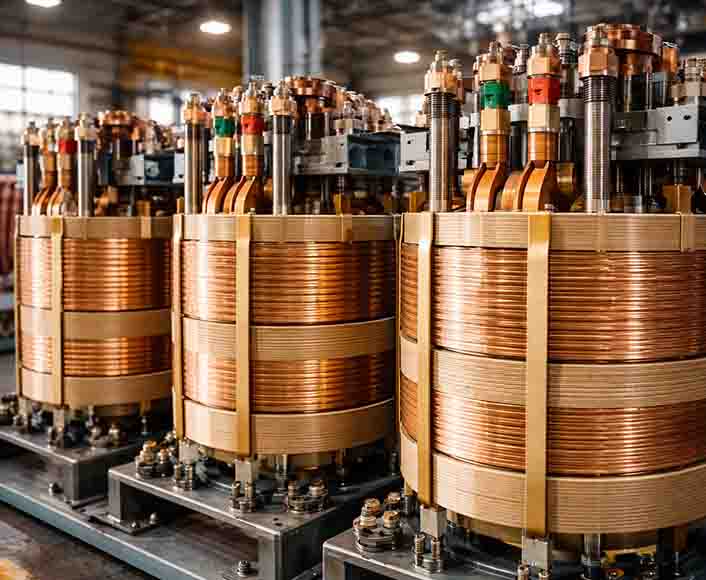
Transformer coils may not be the most visible component of the energy system, but they play a critical role in the functioning of power grids worldwide. These coils are responsible for transferring electrical energy efficiently between circuits within transformers, making them essential for power generation, transmission, and distribution.
As global electricity demand rises and countries modernize their energy infrastructure, the demand for transformer components is increasing steadily. According to market estimates, the global transformer coil market recorded sales of 488,012 tons in 2024 and is expected to reach 809,172 tons by 2032, expanding at a CAGR of 7.0% between 2026 and 2032.
This growth reflects a broader shift toward electrification, renewable energy integration, and grid modernization across both developed and emerging economies.
Aging Grid Infrastructure Driving Replacement Demand
One of the most significant forces supporting the transformer coil market is the replacement of aging power grid infrastructure. Many transformers currently operating in developed regions were installed decades ago and are nearing the end of their service lives.
In the United States alone, more than 70% of large power transformers are over 25 years old, according to the U.S. Department of Energy. Many units installed during the post-war industrial expansion have already served for 40–60 years.
This aging infrastructure creates two major challenges for utilities and energy operators:
• Declining transformer efficiency leading to energy losses
• Increased risk of unexpected failures that threaten grid reliability
• Rising maintenance costs for older electrical equipment
• Long replacement lead times that can exceed 12–18 months for custom transformers
Because transformer failure can cause significant outages and emergency replacement costs—often 10 to 20 times higher than planned upgrades—utilities are increasingly adopting proactive replacement and refurbishment programs. This ensures steady, long-term demand for transformer coils used in new units and for rewinding and refurbishment services.
Price Volatility and the Role of Raw Materials
The transformer coil market is highly sensitive to raw material costs, particularly copper and grain-oriented electrical steel (GOES). These materials form the core components of transformer windings and directly influence overall manufacturing costs.
The years following the COVID-19 pandemic highlighted this vulnerability. In 2021, transformer coil prices surged to around $22,600 per ton, driven by supply chain disruptions, strong industrial demand, and a sharp increase in copper prices. Freight costs and shortages of key materials further amplified the price spike.
Market pricing remained volatile through the mid-2020s due to geopolitical factors and rising global energy costs. However, long-term forecasts indicate that prices may gradually stabilize, with projections suggesting a decline toward approximately $20,100 per ton by 2032.
Several structural shifts are expected to support this stabilization:
• Improved manufacturing efficiency and production scale
• Greater adoption of aluminum conductors in certain applications
• Increased use of advanced materials such as amorphous metal cores
At the same time, energy efficiency regulations are shifting the focus away from simply reducing material costs toward improving the total cost of ownership (TCO) of transformers over their lifetime.
Utilities Remain the Largest End-Use Segment
Demand for transformer coils varies significantly across industries, but utilities remain the dominant end-use sector, accounting for 46.51% of the global market. Power generation, transmission, and distribution networks require a continuous supply of transformers for grid expansion and modernization.
Other important sectors also contribute to market growth. The industrial segment, representing 25.11% of the market, requires transformers designed to operate in demanding environments such as mining, oil and gas, and heavy manufacturing facilities.
Meanwhile, electrification trends are creating new opportunities in transportation. Although still smaller, the transportation segment accounts for 8.20% of the market and is expanding due to railway electrification and the development of electric vehicle charging infrastructure.
Regional Dynamics Shaping Market Growth
The Asia Pacific region dominates the global transformer coil market, accounting for approximately 46.90% of the total market value. Rapid industrialization, urban expansion, and large-scale investments in power infrastructure are major contributors to the region’s leadership.
China and India are investing heavily in grid expansion, ultra-high-voltage transmission systems, and renewable energy integration. Southeast Asian countries are also strengthening electricity networks to support industrial growth and urban development.
In contrast, North America and Europe represent mature markets where demand is largely driven by grid modernization and the replacement of aging transformers. Although these regions have lower unit volumes, they typically require high-value
transformer systems with advanced efficiency standards.
Emerging markets in the Middle East, Africa, and Latin America are also gaining importance as countries invest in national power infrastructure, renewable energy projects, and industrial development.
A Market Linked to the Future of Energy Systems
The transformer coil market ultimately reflects broader changes occurring across the global energy sector. Electrification, renewable energy integration, and grid resilience are becoming central priorities for governments and utilities worldwide.
As power systems become more complex and demand for electricity continues to grow, transformers—and the coils at their core—will remain fundamental components of energy infrastructure. Manufacturers that can balance cost efficiency, advanced materials, and high-performance engineering will be best positioned to succeed in this evolving market.