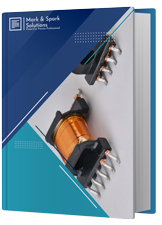
Global Transformer Coil Market Analysis by Transformer type (Power Transformer Coils, Distribution Transformer Coils, Instrument Transformer Coils (Current, Potential), Other Transformer Coils (Traction, Furnace, etc.)), Core Materials, and End Use Industry: Production Capacity (Tons), Pricing Analysis, CAPEX, Trends and Forecast Till 2032
Market Overview
Global Transformer Coil Market recorded a sale of 488,012 tons in 2024 and is estimated to reach a volume of 809,172 tons by 2032 with a CAGR of 7.0% during the forecast period 2026-2032.

The replacement of aging grid infrastructure continues to serve as a significant and measurable demand driver for the global transformer coil market. In regions such as North America and Europe, a considerable portion of the existing transformer base has either surpassed or is nearing the end of its typical operational lifespan of 40 to 50 years. This situation creates urgency for utilities and industrial operators. According to the U.S. Department of Energy (DOE), more than 70% of large power transformers in the United States are 25 years or older, with many units installed during the post-war boom now exceeding 60 years of service.
This aging transformer fleet presents two major challenges. First, declining efficiency leads to wasted energy and increased operational costs. Second, these older transformers are more susceptible to catastrophic failures, which poses serious risks to grid reliability and security. As a result, there is a consistent and essential demand for replacement coils and entire units, which shields a core segment of the transformer coil market from economic fluctuations.
While the demand for new capacity can vary with economic growth, the need for replacement is driven by the unavoidable degradation of materials and the urgent need for improved grid resilience. This situation is further intensified by the high costs associated with replacing a failed transformer in emergency conditions, which can be 10 to 20 times greater than that of a planned retrofit and may take over 12 to 18 months for the delivery of a custom unit, as highlighted by industry organizations like IEEE.
In response to these challenges, proactive asset management programs are increasingly being prioritized. This trend translates into long-term order books for manufacturers that specialize in both new replacement units and essential aftermarket services such as rewinding and refurbishment. Ultimately, this sustained wave of replacements ensures that, despite fluctuations in new infrastructure spending, a fundamental demand pillar for the transformer coil market remains strong, driven by the inescapable issues of metal fatigue and insulation decay that underpin the electrical grid.
Pricing Analysis
The provided pricing data for the global transformer coil market illustrates a narrative marked by significant post-pandemic volatility, followed by anticipated long-term stabilization and a gradual decline. This trajectory highlights the market's acute sensitivity to raw material costs and geopolitical events, ultimately shifting towards greater efficiency and material substitution.

In 2021, the market experienced a dramatic spike to $22,600/ton, reflecting the immediate aftermath of the COVID-19 pandemic when pent-up industrial demand met disrupted supply chains and soaring commodity prices. The price of copper, a primary material for coils, surged over 50% from its 2020 lows, directly inflating the costs of coils. This situation was further exacerbated by shortages in critical components, such as grain-oriented electrical steel (GOES), along with rising global freight costs.
The period of heightened volatility from 2022 through 2027, which includes a secondary peak of $22,300/ton in 2026, demonstrates the market's ongoing adjustment to a new geopolitical and energy landscape. The conflict in Ukraine intensified energy costs in Europe, a significant manufacturing hub, further disrupting supply chains for essential materials. However, the data indicates that the market is adapting. Price resilience observed in the mid-2020s is supported by robust demand from grid modernization and renewable energy projects, enabling some cost pass-through.
Conversely, the steady decline projected from 2028 onwards, reaching approximately $20,100/ton by 2032, signifies a critical shift driven by three main factors: increased manufacturing efficiency and scale, a gradual transition to lower-cost aluminum conductors where feasible, and the increased use of advanced materials like amorphous metal. Although amorphous cores entail higher initial material costs, their growing market adoption is leading to more standardized production and increased competition, exerting downward pressure on the overall coil pricing structure.
Additionally, as global energy efficiency regulations tighten, the total cost of ownership (TCO) is becoming more significant than the initial coil price. This situation encourages designs that may utilize less material overall or focus on long-term performance rather than just raw tonnage cost.
In summary, the pricing analysis indicates a market evolving from a state of cost-driven crisis to one of value-driven optimization. The shocks endured in the early 2020s prompted a thorough reevaluation of supply chains and material strategies.
The anticipated stabilization and gradual decline forecast a future in which the transformer coil market is less vulnerable to raw material hyper-volatility, thanks to improved hedging, diversified sourcing, and a fundamental shift in design priorities towards sustainable and efficient performance rather than sheer mass. This changing pricing environment will favor manufacturers with agile supply chains and advanced material expertise, while compelling traditional, commodity-focused producers to shift towards lower-margin segments.
Segmental Analysis
Based on end use industry, global transformer coil market is segmented into Utilities (Power Generation, Transmission & Distribution), Industrial (Manufacturing, Oil & Gas, Mining), Commercial & Residential, Transportation (Railways, Electric Vehicles), others.

The segmentation of the global transformer coil market by end-use industry reveals dynamics and growth prospects that are fundamentally linked to the macroeconomic and technological developments within the core sectors of the global economy. The Utilities segment, commanding a significant share of 46.51%, underscores the critical role of transformer coils as the circulatory system of national and regional power grids. Demand within this segment is driven by two primary factors: capacity expansion necessitated by the integration of renewable energy, which requires the establishment of new substations and collector systems and the non-discretionary replacement of an aging global fleet of power transformers. This dual demand creates a resilient, long-cycle base for high-value, large-format coils, contributing to overall market stability.
Conversely, the Transportation segment, with an 8.20% market share, is emerging as a transformative growth opportunity. The global initiative toward railway electrification and the substantial development of electric vehicle (EV) charging infrastructure is generating unprecedented demand for specialized transformers and their coils. This segment necessitates coils designed to withstand frequent load cycles, higher power densities, and compact configurations, thereby encouraging innovation in design and materials while attracting new investment into the coil supply chain.
The Industrial segment, which holds a 25.11% market share, serves as a high-value, application-specific engine for the market. Demand in this sector is characterized more by performance under challenging conditions than by volume; coils intended for mining, oil and gas, and heavy manufacturing must be resilient enough to endure extreme temperatures, corrosive environments, and fluctuating loads. This segment drives advancements in insulation systems and ruggedized designs, enabling higher margins for manufacturers with specialized engineering capabilities. Growth within this segment is closely linked to global industrial capital expenditures (CAPEX) and the ongoing trend toward the electrification of industrial heating and processes.
In contrast, the Commercial & Residential segment, which accounts for 15.09% of the market, represents the high-volume, steady-state foundation of the distribution transformer market. Although characterized by standardized products, it is increasingly influenced by stringent global energy efficiency regulations, such as those from the U.S. Department of Energy (DOE). These regulations are catalyzing a shift from traditional silicon steel cores to amorphous metal cores, not only sustaining demand but actively reshaping the material composition and value of a substantial portion of the coil market.
Overall, this industry analysis highlights a global transformer coil market in transition. While the Utilities sector remains the bedrock of demand, future growth narratives are predominantly shaped by the electrification of transportation and the modernization of industry. The market's evolution will be defined by a balance between standardization for high-volume segments (Commercial/Residential) and extreme customization for high-performance applications (Industrial, Transportation).
Success for coil manufacturers will hinge on their ability to meet this dual challenge: achieving cost efficiency and scale for grid and building applications, while simultaneously mastering advanced materials and precision engineering for the rigorous demands of next-generation infrastructure. Ultimately, the fortunes of the coil market reflect global investments in electrification, decarbonization, and industrial productivity, making its segments an accurate map of the world's shifting energy and technological priorities.
Regional Analysis
The regional distribution of the global transformer coil market highlights a division between high-volume growth engines and high-value replacement economies, with the Asia-Pacific region recognized as the primary center for both demand and production.
Commanding an estimated 46.90% of the global market value, the dominance of Asia-Pacific is driven by several megatrends: substantial investments in ultra-high-voltage (UHV) transmission in China to connect renewable-rich inland areas with coastal demand centers; India’s initiatives for comprehensive grid strengthening and last-mile electrification; and the rapid industrialization and urban development occurring in Southeast Asia. This region serves not only as the largest consumer but also as the main manufacturing hub, fostering an integrated ecosystem that significantly impacts global pricing and the diffusion of technology for coils.

In contrast, the North American with a 25.11% market share and European 18.90% market share markets are characterized by their maturity and replacement-driven demand. Despite lower unit volumes, these regions capture a significant market value due to their emphasis on high-cost, large power transformers aimed at grid modernization and a regulatory-mandated transition toward advanced, high-efficiency distribution transformers utilizing premium amorphous metal or high-grade steel cores. North America and Europe are positioned as the frontiers of innovation for coil technology, propelled by stringent efficiency standards and the need for digital grid integration.
Meanwhile, the Middle East & Africa 5.09% share and Latin America 4% share regions, although smaller in terms of current market share, represent vital growth frontiers. Their increasing market share is supported by foundational investments in national grid infrastructure, mining and industrial activities, and large-scale renewable energy projects (such as solar in the Middle East and hydro/wind in Latin America). The demand for coils in these regions often pertains to transformers designed for harsh environments, necessitating robust design specifications.
An analysis of the 2023 unit sales estimates, totaling approximately 11-14 million transformers globally, underscores a significant scale disparity. Asia-Pacific's anticipated sales of 8.5-10.5 million units reflect its volume-driven market, where distribution transformers represent the core product. Conversely, the lower volumes in North America and Europe correlate with a significantly higher average value per unit, affirming their focus on premium, high-power, and high-efficiency segments of the coil market.
This regional bifurcation imposes distinct strategic imperatives for coil manufacturers. Achieving success in Asia-Pacific demands excellence in volume production, supply chain management, and cost optimization. Meanwhile, success in North America and Europe relies on advanced materials mastery, custom engineering for grid-scale applications, and compliance with complex regulatory frameworks. The evolving markets in the Middle East & Africa and Latin America present opportunities for both standardized volume products and ruggedized solutions.
In summary, the global transformer coil market encompasses a collection of regional markets at various stages of development, each driven by unique factors. The future trajectory suggests that Asia-Pacific will consolidate its volume dominance, while innovation and value growth will be predominantly fueled by the replacement and efficiency mandates in Western economies, with emerging regions steadily increasing their share as global electrification progresses.
Company Analysis
Global transformer coil market comprises analysis of following companies Hitachi Energy, Siemens Energy, GE Grid Solutions, CG Power & Industrial Solutions, TBEA Co., Ltd., Hyosung Heavy Industries, BHEL , Others.
