What’s Driving the Auto Industry Forward? 5 Technologies at the Core
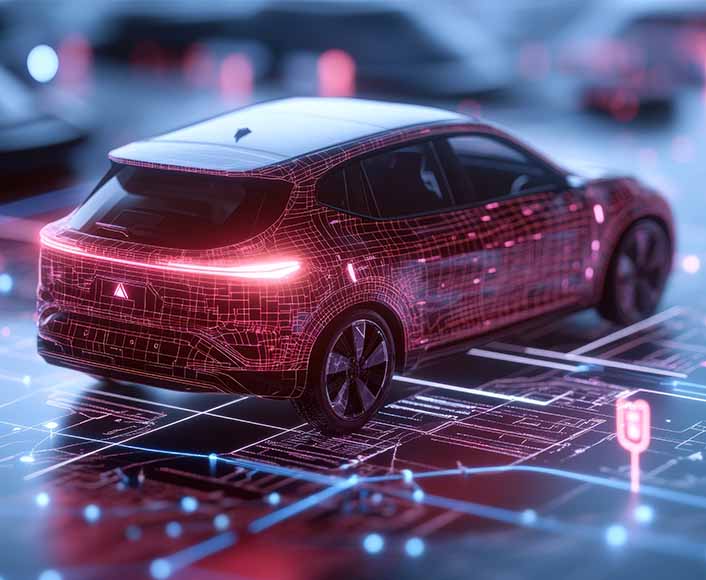
The Global Automotive Industry is undergoing a major shift in 2025, driven by rapid advances in electrification, automation, and connectivity. Automakers are no longer competing only on mechanical performance but are increasingly focusing on software, safety systems, and smart features. Regulatory pressure, customer demand for greater safety, and increased investment in future mobility solutions are accelerating the adoption of advanced automotive technologies. As a result, several fast-growing technology segments are becoming important revenue sources across the automotive supply chain. The following five technologies are expected to be crucial in shaping market growth in 2025.
1. Autonomous Driving Systems
Autonomous driving remains one of the most transformative forces in the automotive industry. In 2025, the sector is shifting from advanced driver assistance (Level 2) to conditional automation (Level 3) in select markets. Automakers and tech companies are investing heavily in AI-powered perception systems, sensor fusion, and real-time decision-making algorithms. Pilot deployments of robotaxis and autonomous fleets in urban areas are gaining momentum, especially in regions with supportive regulations.
The commercial viability of autonomous systems is steadily improving as hardware costs decrease and software capabilities advance. Although full autonomy is still in development, partial automation already impacts vehicle design, safety standards, and consumer expectations. This positions autonomous driving as a long-term growth driver, with near-term applications expanding.
2. Advanced Driver Assistance Systems (ADAS)
ADAS technologies continue to form the foundation of vehicle safety and automation. Features such as adaptive cruise control, lane-keeping assistance, automatic emergency braking, and blind-spot detection are becoming standard in mid-range and premium vehicles. Regulatory agencies across Europe, North America, and Asia are requiring the integration of certain ADAS features, thereby further accelerating adoption.
In 2025, advancements in sensor accuracy, AI-based object detection, and real-time data processing are boosting the effectiveness of ADAS solutions. The integration of radar, cameras, and ultrasonic sensors is providing more reliable performance across different driving conditions. As safety becomes a key factor in purchasing decisions, ADAS is expected to maintain strong demand, significantly contributing to overall market growth.
3. Silicon Carbide (SiC) Power Electronics
Electrification is transforming the automotive industry, with silicon carbide (SiC) power electronics becoming a vital part of efficient electric vehicles (EVs). SiC-based components offer higher thermal conductivity, greater efficiency, and lower energy losses than traditional silicon semiconductors. This leads to longer driving ranges, quicker charging, and enhanced overall vehicle performance.
In 2025, the adoption of SiC technology is rapidly expanding, especially in high-voltage EV architectures like 800V systems. Leading automakers are increasingly incorporating SiC-based inverters and power modules into their EV platforms to improve efficiency and decrease system weight. As EV production grows worldwide, the demand for advanced power electronics is expected to increase significantly, making this segment a major part of the automotive semiconductor market.
4. Vehicle Cybersecurity Solutions
As vehicles become more connected and software-reliant, cybersecurity has become a key concern for both manufacturers and regulators. Modern cars feature multiple connected interfaces, such as telematics systems, infotainment platforms, and over-the-air (OTA) update capabilities, all of which create potential access points for cyber threats.
In response, the automotive industry is investing in strong cybersecurity frameworks, including intrusion detection systems, secure communication protocols, and data encryption technologies. Regulatory standards like UNECE WP.29 require cybersecurity compliance, further encouraging adoption. By 2025, cybersecurity will no longer be optional but a core requirement, especially for connected and autonomous vehicles. This opens new opportunities for technology providers that focus on automotive security solutions.
5. Connected Vehicle Technologies (5G and V2X)
Connected vehicle technologies are turning cars into integrated digital platforms that can communicate with other vehicles, infrastructure, and cloud networks. The rollout of 5G networks is facilitating high-speed, low-latency communication, which is crucial for applications such as real-time navigation, remote diagnostics, and autonomous driving support.
Vehicle-to-everything (V2X) communication is gaining popularity because it improves road safety and traffic flow by allowing vehicles to share information with their environment. Car manufacturers are increasingly adding connected features to enhance user experience, support predictive maintenance, and provide subscription-based services. By 2025, connectivity will become a fundamental part of vehicle design, helping to diversify revenue and boost functionality.
Future Outlook: Convergence Driving the Next Phase of Growth
The automotive technologies described above are not developing in isolation but are increasingly merging to form a smarter, more efficient, and connected mobility ecosystem. Autonomous driving depends heavily on ADAS and connectivity, while electrification is closely linked to advances in power electronics. Simultaneously, cybersecurity supports all digital and connected functions, ensuring system integrity and user safety.
As automakers continue investing in these technologies, the industry is expected to see accelerated innovation, new business models, and increased competition. Companies that successfully incorporate these capabilities into scalable and affordable solutions will be well-positioned to seize emerging opportunities. In this context, 2025 marks a pivotal phase in which technological advancements are directly driving measurable market growth and long-term industry transformation.