Solar Shingles vs Traditional Panels: What Net-Zero Homes Are Actually Choosing
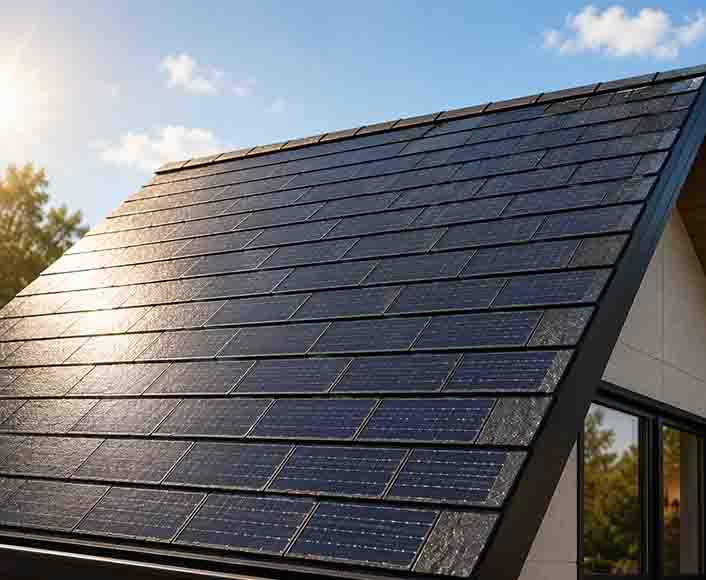
A homeowner in Austin gets a call from their insurance adjuster after a hailstorm: the roof needs to be fully replaced. That single event is not an environmental awakening or a tax credit ad, but it is increasingly the moment when solar shingles enter the conversation. Not as an upgrade someone sought out, but as an option that suddenly makes financial sense because the roof was coming off anyway.
That's the real story behind adoption trends in the U.S. Solar Shingle Market , and it's a more interesting one than the usual "clean energy is growing" narrative. This is a market shaped less by environmental ambition and more by timing, geography, and roofing economics.
The Replacement Trigger
Most homes don't proactively install solar shingles. They do so only when a roof replacement is already underway due to age, storm damage, or a home sale. Millions of houses built during the late 1990s and early 2000s housing boom are now reaching the age when roofs need replacement, regardless of energy plans.
Timing matters enormously. A traditional rooftop panel system is an added expense on top of a roof job. A solar shingle system replaces the roofing material itself while generating power, so the homeowner isn't comparing "roof cost" with "roof plus panels cost." They're comparing two ways to pay for a roof they need anyway.
This reframing makes the decision fundamentally different from a typical solar purchase. Someone shopping for panels alone is adding a discretionary expense. Someone shopping for shingles is reallocating an expense they were already going to incur.
Verdict: Panels win when the roof is in good condition. Shingles win when the roof isn't.
The Aesthetic Veto
In many affluent Sunbelt suburbs, homeowners' associations have design rules that restrict or outright ban rack-mounted panels. That's not a minor obstacle; it's a hard stop for anyone in those neighborhoods who wants solar.
Solar shingles sidestep this because they read as roofing material rather than as add-on hardware. For a homeowner boxed out by HOA restrictions, the choice isn't really shingles versus panels; it's shingles versus nothing. That distinction gets lost in most cost comparisons, which tend to treat the two technologies as interchangeable options competing on price. In HOA-restricted markets, they aren't competing at all.
Verdict: In restricted neighborhoods, this comparison doesn't exist. Shingles are the only path to solar.
The Cost Reality Nobody Frames Honestly
A full solar shingle system for a single-family home typically costs $30,000 to over $90,000 installed, which is significantly more than a comparable rack-mounted panel system plus a separate roof. Roughly 40–50% of that cost is in the shingle modules themselves, since embedding photovoltaic cells in a roofing material requires specialized manufacturing that a standard panel doesn't.
Labor adds another 20–30%, and it's not simple: labor installation requires roofing crews and electricians working in coordination, and complex rooflines add real time and cost. Electrical infrastructure and interconnection hardware add another 10–15%, and homeowners increasingly bundle in battery storage, pushing totals even higher. Permitting, inspections, and utility interconnection approvals typically add another 2–5%, with real variation depending on the municipality.
This is the honest reason solar shingles haven't outcompeted panels everywhere: the premium is real, and it only makes financial sense when you're already paying for a roof.
Verdict: Shingles are rarely the cheaper option. They're the smarter option only under specific conditions.
Where the Sun Actually Helps
Geography does much of the remaining work. Sunbelt states — Texas, Florida, Arizona, and Nevada combine high solar irradiation with lower labor and permitting costs than in states like California or New York. That combination shortens payback periods and makes the economics considerably more forgiving than in cloudier, higher-labor-cost markets.
It's also where storm-driven insurance claims are most common, which loops back to the replacement trigger: Sunbelt homeowners are disproportionately likely to be replacing roofs anyway, at exactly the moment when solar shingles' cost math works best. Older homes in these regions sometimes need deck repairs, waterproofing upgrades, or structural reinforcement before installation, adding cost, but that's a factor across both technologies, not unique to shingles.
Verdict: Region isn't a minor variable here — it's close to the deciding one.
What This Means for the Net-Zero Housing Conversation
Growth in this category isn't happening because shingles are winning a straightforward argument against panels on cost or performance. It's growing because a specific set of conditions, an aging roof, an HOA restriction, a storm claim, a Sunbelt zip code, keep intersecting more often as housing stock ages and severe weather events continue.
For homeowners, the real decision isn't ideological. It's situational: are you replacing a roof anyway, and does your neighborhood allow panels at all?
For builders and installers, that means the growth opportunity isn't in convincing homeowners that solar shingles are universally better; it's in recognizing exactly when those specific conditions line up and being ready with the right product. As roof replacement cycles from the last housing boom continue to arrive over the next decade, that window will only open more often, not less.