The Warehouse Robots Quietly Sorting Every Package You Order
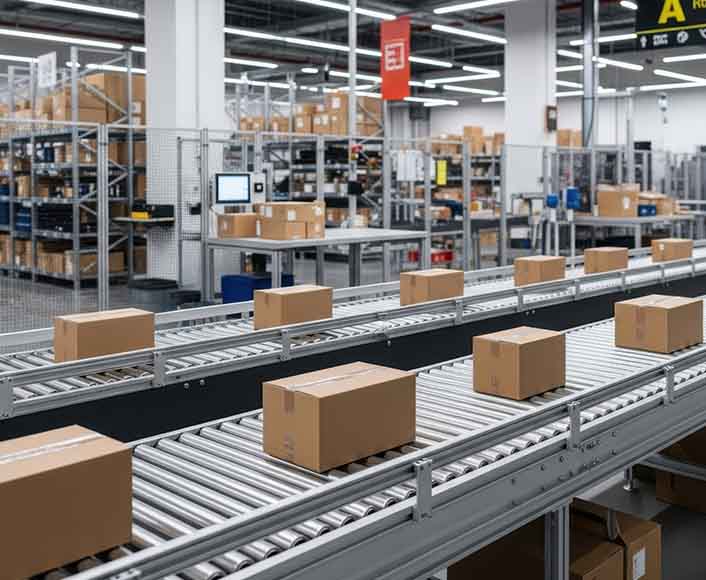
Every online order you place passes through a machine you've probably never thought about. Before a package reaches a delivery truck, it moves through a sortation system, a corner of the U.S. Sortation System Market so unglamorous that most consumers, and even many business leaders, have no idea it exists.
Yet these systems are becoming one of the most consequential investments in American logistics. The reason isn't dramatic. It's structural. As fulfillment gets more complex, with more SKUs, more delivery promises, and more channels, getting the right package to the right truck has become a genuine engineering problem. Sortation systems are the quiet answer.
Why 3PL Growth Is the Real Demand Driver
Most people assume e-commerce growth alone explains warehouse automation spending. It's only half the story.
The bigger driver is the rise of third-party logistics providers that run fulfillment for other brands rather than for their own inventory. A 3PL warehouse doesn't handle a single, predictable product mix. It serves dozens of clients simultaneously, each with different SKUs, packaging, and shipping rules.
That variability is what breaks manual sorting at scale. Sortation systems exist to make that chaos routable.
The Labor Math Nobody Talks About
Warehouse automation conversations often get framed as robots replacing people. The more accurate framing is arithmetic.
Wages have risen steadily. Workforce availability hasn't kept pace with fulfillment demand.
Repetitive manual sorting is exactly the task that labor economics pushes companies away from first.
That's why investment in sortation tends to accelerate during tight labor markets, not during recessions. It isn't a cost-cutting reflex; it's a throughput strategy. A facility that automates sorting processes can handle more volume per square foot, which matters as commercial real estate in logistics hubs continues to get pricier.
The Sortation Technology Landscape, Simplified
Not all sortation systems solve the same problem. Each format exists because a different part of the warehouse has a different constraint:
• Cross-belt sorters — largest market share. Built for versatility: handles varied package sizes and destinations simultaneously, the safe default for high-volume e-commerce hubs.
• Sliding shoe sorters — durable, high-throughput, suited to standardized cartons. The workhorse of grocery and retail distribution.
• Tilt-tray sorters — gentle handling for categories like apparel and pharmaceuticals, where a damaged product becomes a return.
• Pouch sorters — combine storage and transport, useful where item flow is irregular, common in fashion and omnichannel fulfillment.
• Pop-up wheel and pusher sorters — lower-cost, lower-speed, favored where simplicity matters more than throughput.
• Robotic sorters — smallest share today, fastest growing. AI-driven computer vision and mobile robots skip the need for fixed conveyor infrastructure entirely.
That last one is worth pausing on.
Robotic Sorting Is Small Today — That's the Point
Fixed sortation systems are a capital commitment: expensive to install, expensive to reconfigure. Robotic systems offer smaller fulfillment operations a way into automation without a warehouse-wide retrofit.
As product mixes shift faster than ever, especially in fashion and omnichannel retail, that flexibility becomes a competitive advantage, not a technical curiosity.
Sortation Is Becoming Software, Not Just Hardware
The more interesting shift isn't mechanical. It's the growing integration between sortation hardware and warehouse execution systems (WES) and warehouse management systems (WMS).
A sorter that communicates with a facility's software stack in real time enables predictive maintenance, dynamic workload balancing, and improved equipment utilization. That's the quiet reason sortation is graduating from equipment purchase to strategic infrastructure decision in boardroom conversations.
What This Means for the Next Investment Cycle
Sortation technology sits at an unusual intersection: unglamorous enough to be overlooked, foundational enough to determine whether a fulfillment network can deliver on its promises.
As 3PL providers absorb more of retail's fulfillment complexity and e-commerce volumes continue to pressure labor-dependent operations, businesses treating sortation as strategic infrastructure — not a back-office purchase — will set the delivery-speed benchmarks everyone else has to chase.