Modernizing the Skies: How Air Traffic Control Equipment Is Powering the Next Phase of Global Aviation
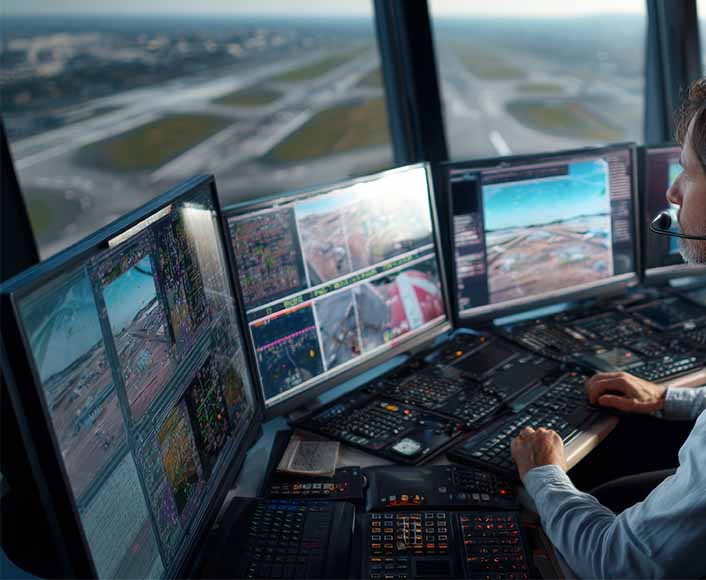
Air traffic control equipment plays a critical role in ensuring the safety and efficiency of global aviation. Every commercial flight relies on a sophisticated network of systems that monitor aircraft movement, guide pilots through controlled airspace, and coordinate traffic across airports and flight routes. As air travel continues to grow and airspace becomes more congested, modernizing these systems has become a priority for aviation authorities worldwide.
The global air traffic control (ATC) equipment market reflects this need for modernization and technological advancement. The market was valued at USD 10 billion in 2024 and is projected to reach around USD 17 billion by 2032, expanding at a compound annual growth rate (CAGR) of 7.0%. Unlike many technology sectors, growth in this market is driven largely by infrastructure investments and government-led aviation programs rather than short-term consumer demand.
One of the key drivers behind this growth is the increasing complexity of global air traffic. As international travel, cargo transport, and regional aviation networks expand, managing airspace efficiently requires more advanced systems for communication, surveillance, and automation. Many countries are therefore upgrading older air traffic control infrastructure that has been in operation for decades. Legacy systems often have operational lifespans of 20 to 30 years, and once they approach end-of-life, they become costly to maintain and less capable of handling modern traffic volumes.
Surveillance systems represent the largest segment of the ATC equipment market. These systems are responsible for tracking aircraft positions in real time and maintaining safe separation between flights. In 2024, surveillance systems accounted for about 34% of the total market, valued at approximately USD 3.4 billion. Technologies such as radar, Automatic Dependent Surveillance–Broadcast (ADS-B), and multilateration systems form the backbone of modern airspace monitoring.
Investment patterns in this industry are strongly influenced by government procurement cycles. Air traffic control equipment is typically purchased by civil aviation authorities, air navigation service providers, airport operators, and defense agencies. Because these systems are safety-critical, procurement processes involve strict regulatory approvals and technical evaluations. As a result, project cycles can take 12 to 36 months before installation begins.
Most current spending is focused on upgrading existing infrastructure rather than building entirely new systems. Upgrade and modernization projects account for about 46% of the market, allowing authorities to enhance system capabilities without replacing entire networks. Replacement installations represent around 34%, mainly driven by aging equipment in developed aviation markets, while new installations contribute about 20%, largely linked to new airport construction and expanding aviation infrastructure.
Regionally, North America leads the global market with roughly 35% share, supported by advanced aviation infrastructure and ongoing system upgrades. Europe follows with about 28%, where efforts to improve airspace interoperability and digitalization are driving modernization programs. Meanwhile, Asia Pacific accounts for around 22% of the market and is among the fastest-growing regions, driven by rising passenger traffic and rapid airport expansion.
As aviation continues to evolve, air traffic control technology will remain essential for maintaining safe and efficient skies. Continuous modernization, digital integration, and improved surveillance capabilities will define the future development of this infrastructure-driven market.