Sustained investments in airspace modernization and the rising complexity of air traffic are accelerating global demand for air traffic control equipment.
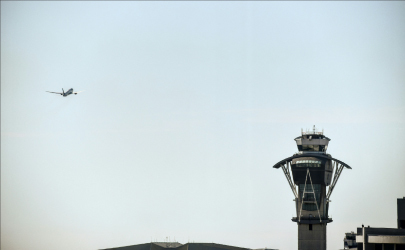
The Global Air Traffic Control Equipment Market is experiencing steady growth, driven by long-term investments in airspace modernization, rising air traffic density, and the replacement of aging ATC infrastructure. Governments and aviation authorities worldwide are focusing on upgrading surveillance, communication, and automation systems to improve safety and operational efficiency as global air travel continues to grow.
The global air traffic control equipment market was valued at USD 10 billion in 2024 and is expected to reach approximately USD 17 billion by 2032, expanding at a compound annual growth rate (CAGR) of 7.0% during the forecast period. The market’s growth is mainly driven by government-led modernization initiatives, rising congestion in controlled airspace, and the need to enhance capacity and reliability in national air traffic management systems.
Surveillance systems dominate the equipment market segment, holding the largest share of market value due to their essential role in real-time aircraft monitoring, separation management, and airspace safety. These systems are required across en-route, terminal, and airport operations, making them a top investment priority for aviation authorities worldwide.
North America leads the market, while Asia Pacific emerges as the fastest-growing region.
North America currently leads the global air traffic control equipment market, driven by advanced aviation infrastructure, high air traffic volumes, and ongoing system upgrades. The region’s emphasis on upgrading older systems through phased modernization efforts has created steady demand for high-value ATC equipment.
Meanwhile, the Asia Pacific is emerging as the fastest-growing region, driven by rising air passenger traffic, expanding airport infrastructure, and increasing airspace congestion. Countries across the region are investing in new airport projects, runway expansions, and modernization of existing ATC systems to handle growing domestic and international flight movements. These factors are speeding up the deployment of modern surveillance, communication, and automation technologies.
Upgrade and modernization projects dominate installation demand.
Upgrade and modernization activities account for the largest share of installations in the global ATC equipment market. Instead of complete system overhauls, aviation authorities are increasingly prioritizing the enhancement of performance, capacity, and compliance of existing infrastructure. Replacement projects also play a significant role in market value, especially in developed regions where legacy systems are nearing the end of their operational life. New installations mainly focus on emerging aviation markets and Greenfield airport developments.
Long-term procurement cycles ensure market stability.
The air traffic control equipment market is defined by lengthy procurement cycles, tender-based purchasing, and multi-year capital investment plans. These structural features lead to predictable, infrastructure-driven growth, shielding the market from short-term fluctuations in aviation demand. As airspace complexity rises, investments in advanced ATC technologies are likely to remain a strategic focus for aviation authorities worldwide.
Competitive Landscape
Major companies in the global air traffic control equipment market include Thales (Thales Group), Indra (Indra Sistemas, S.A.), Frequentis (Frequentis AG), Leonardo (Leonardo S.p.A.), Saab (Saab AB), Collins Aerospace (RTX Corporation), Honeywell Aerospace (Honeywell International Inc.), and SITA ATC (SITA Group).