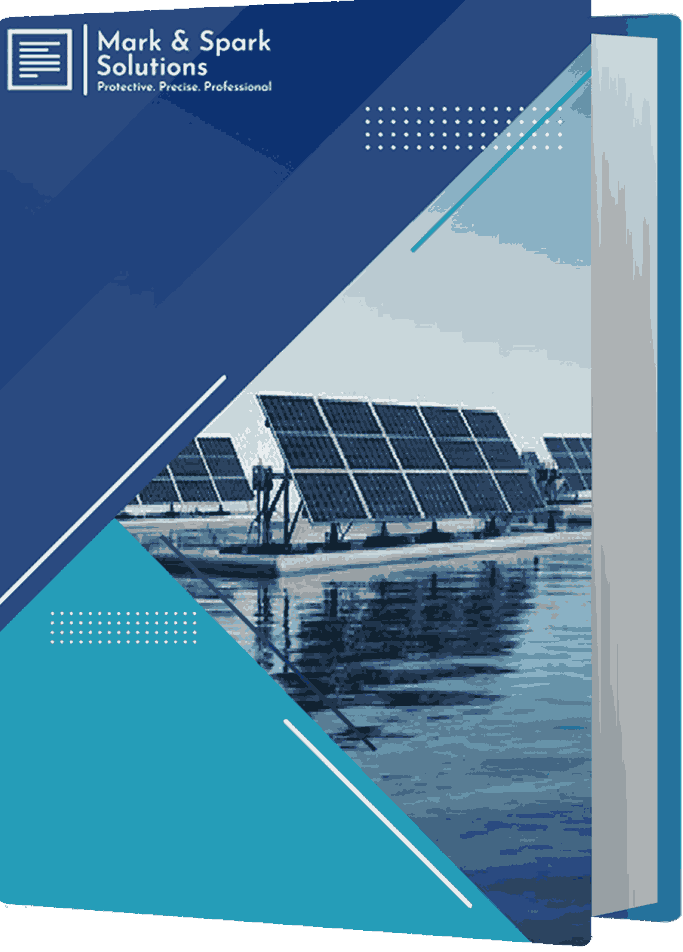
Europe Floating Solar Panels Market Analysis by Component (Solar Panels (Photovoltaic Modules), Floating Structures (Platforms/Pontoons), Anchoring and Mooring Systems, Inverters, Mounting and Racking Systems, Cabling and Electrical Components, Monitoring and Control Systems), Capacity Range, Application and Country Analysis: Installed Capacity (MW), Pricing Analysis, Trends and Forecast Till 2033
Market Overview
Europe Floating Solar Panels Market recorded an installed capacity of 170 MW in 2025 and is estimated to reach 611 MW by 2033, with a CAGR of 19.2% during the forecast period.

The floating solar panels market in Europe is experiencing significant growth, driven by higher efficiency resulting from cooling effects. Developers are increasingly opting for water-based photovoltaic systems over traditional ground-mounted ones due to this key technical advantage. Solar panels typically suffer efficiency losses as their operating temperature rises, with output diminishing by approximately 0.3% to 0.5% for each degree Celsius above standard test conditions. However, floating solar installations benefit from the natural cooling effect of the water beneath them, which serves as an effective heat sink, keeping module temperatures much lower than those of land-based systems.
This cooling mechanism, in addition to minimizing dust and soiling, contributes to energy yields that are 10% to 15% higher than those of conventional installations, according to industry data. In Europe, where land scarcity and high costs are prevalent, this efficiency gain is especially advantageous. The cooler conditions over water allow panels to operate closer to their optimal performance, thereby increasing annual energy generation without requiring additional land.
Research indicates that lower module temperatures not only enhance short-term output but also reduce long-term degradation, thereby improving the overall lifespan of floating solar arrays. The benefits of efficiency extend beyond temperature; water surfaces also help to diminish dust accumulation on panels, resulting in less frequent cleaning and maintenance, which further boosts net energy production over time. Moreover, water's reflective properties can enhance the light incidence on bifacial panels, leading to incremental energy capture gains.
For the floating solar panels market in Europe, where climate goals and renewable energy targets are becoming increasingly ambitious, these performance advantages translate into more favorable project economics. Higher energy output per installed megawatt facilitates a quicker return on investment and enhances the competitiveness of electricity costs. Consequently, floating solar presents a provocative option for utilities, commercial developers, and public-sector energy planners. As Europe advances its decarbonization efforts and seeks to optimize its renewable energy mix, the cooling-related efficiency gains of floating solar are expected to continue being a key driver of market adoption.
Cost Structure Analysis
The cost structure of the European floating solar panels market is influenced by a blend of hardware, installation, and site-specific engineering costs, which collectively shape the overall economics of projects. Capital expenditure is the primary component, generally representing the largest portion of total project costs. The solar panels themselves constitute a significant share, followed by floating structures, including pontoons or high-density polyethylene floats designed to support modules on water surfaces. Additionally, anchoring and mooring systems are essential cost factors, as they provide stability against wind, waves, and water-level fluctuations, which pose greater challenges in floating environments than in ground-mounted systems.

The electrical infrastructure, encompassing inverters, cabling, and transformers, also adds considerably to the total investment, especially for projects that integrate with existing grid connections or nearby substations.
Installation and commissioning costs are typically higher than those of conventional solar projects due to the logistical complexities of working on water bodies, which require specialized equipment, labor, and safety precautions. Moreover, soft costs such as permitting, engineering design, environmental assessments, and project management are crucial, particularly in Europe, where regulatory compliance and environmental standards are stringent.
Ongoing operations and maintenance expenses are usually moderate but involve regular inspections of floats, cleaning of panels, and monitoring of anchoring systems to ensure long-term reliability. Overall, while economies of scale and technological advancements are gradually lowering per-unit costs, floating solar systems still command a premium over ground-mounted installations due to their structural and engineering complexities. However, this higher initial investment is often justified by greater efficiency, improved land utilization, and higher energy yield, thereby strengthening the value proposition in the European floating solar panel market.
Segmental Analysis- Component
The segmentation of the European floating solar panels market by capacity range reveals a balanced distribution across small-, medium-, and large-scale installations. Medium-scale systems, ranging from 1 MW to 10 MW, hold the largest share at 40.00%. This prominence reflects their practical suitability for a diverse array of end users, including industrial facilities, municipal utilities, and regional energy providers. These medium-scale projects strike an optimal balance between investment size, operational complexity, and energy output, making them the preferred choice in the European market.

Small-scale systems, those below 1 MW, account for 33.00% of the market. Pilot projects, research initiatives, and installations on smaller water bodies such as ponds, canals, and reservoirs drive their popularity. These systems are often used by commercial establishments or local authorities seeking to adopt renewable energy with lower upfront investment and minimal infrastructure requirements.
Meanwhile, large-scale systems exceeding 10 MW account for 27.00% of the European floating solar panels market. This segment is still developing but shows promise, primarily associated with large reservoirs, hydropower integration, or government-supported renewable energy programs. Although such installations require higher capital expenditure and more complex engineering, they benefit from economies of scale and yield substantial power generation capacity, making them appealing for long-term energy planning.
The relatively lower share of large-scale projects compared to medium-scale systems suggests that Europe is on the path toward greater utility-scale adoption; however, project development continues to be influenced by permitting challenges, environmental considerations, and site availability. Overall, the market segmentation indicates a gradual transition from smaller experimental deployments to more commercial and utility-scale projects, with medium-scale systems serving as the key growth driver in the European floating solar panels market.
Country Analysis
The country-wise distribution of the floating solar panels market in Europe reveals a concentrated landscape in which a few early-adopter nations dominate installed capacity. France leads the market with a 33.00% share, driven by robust policy support for renewable energy, the presence of large reservoirs, and the commissioning of multiple utility-scale floating solar projects. Its proactive approach to integrating floating solar technology with existing water infrastructure has established France as the primary contributor to this market in Europe.

Following France, the Netherlands holds a 20.00% share, leveraging its long-standing expertise in water management and limited land availability, which encourages the use of alternative surfaces, such as lakes and inland water bodies, for solar installations. The United Kingdom accounts for a 14.00% share, with the adoption of floating solar primarily supported by commercial and industrial projects on reservoirs and at water treatment facilities, indicating a gradual yet steady expansion in this sector.
Germany, with an 11.00% share, is in an emerging stage, gaining momentum through pilot projects and growing interest in innovative renewable solutions that align with its energy transition objectives. Italy accounts for an 8.00% share, benefiting from favorable solar conditions and rising investments in renewable energy, although its adoption rates remain moderate compared to the leading nations.
Spain accounts for 4.00% of installations, showcasing limited but growing activity, spurred by its strong solar potential and evolving regulatory environment. Collectively, the remaining countries in Europe account for 10.00%, indicating early-stage adoption in smaller markets across Eastern and Northern Europe.
In summary, the distribution of floating solar panels across the European market highlights the clear leadership of Western European countries, while other regions are gradually entering the market as awareness, technological maturity, and supportive policies expand deployment opportunities across the continent.
Company Analysis
The European Floating Solar Panels Market includes key companies such as BayWa r.e., Ciel & Terre International, Zimmermann PV Steel Group, Sunlit Sea, RWE, along with several other market participants