Analyzing U.S. Solar Glass Demand Across Monocrystalline, Polycrystalline, and Thin-Film Panels: Trends, Pricing, and Forecasts
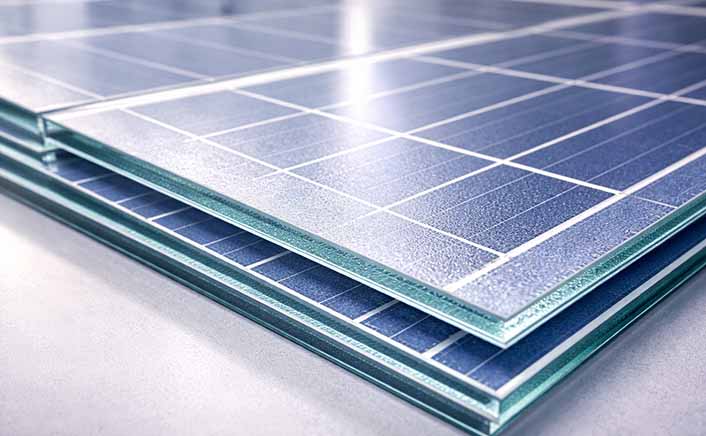
The U.S. solar Glass Market is segmented primarily by the type of photovoltaic (PV) panels, which include monocrystalline, polycrystalline, and thin-film PV panels. Each type demonstrates distinct adoption trends, performance characteristics, and growth drivers. Monocrystalline PV panels lead the market, expected to account for around 50% of total U.S. solar glass consumption in 2024–2025. Their popularity stems from superior energy conversion efficiency, typically ranging from 20–23%. This makes them suitable for residential rooftops, commercial installations, and utility-scale solar farms, especially in areas with limited land availability where maximizing energy yield per unit area is crucial. Monocrystalline panels are particularly prevalent in high-irradiance regions like California, Texas, and Arizona, significantly contributing to U.S. solar glass market volume. As cumulative solar installations are projected to exceed 100 GW by 2030, the demand for tempered and anti-reflective glass designed for monocrystalline panels is expected to grow significantly, driven by requirements for both efficiency and durability.
Polycrystalline PV panels represent about 35% of the U.S. solar glass market, serving as a cost-effective alternative to their monocrystalline counterparts. These panels are preferred in large-scale utility projects and commercial applications where budgetary considerations take precedence over maximum efficiency. Polycrystalline panels typically offer energy conversion efficiencies of 15–18%, with their lower manufacturing costs enabling developers to deploy additional capacity within financial constraints. This segment benefits from domestic manufacturing expansions, as U.S.-based glass suppliers scale their production to meet the demands of utility-scale solar farms and align with local content requirements set by federal incentives like the Inflation Reduction Act (IRA). The combination of affordability and adequate performance ensures polycrystalline panels maintain a strong presence, especially in the Southeast and Midwest, positively impacting solar glass consumption and value growth.
Thin-film PV panels make up roughly 15% of the market, occupying a niche segment but holding strategic importance in specific applications such as building-integrated photovoltaics (BIPV), portable solar devices, and low-light or flexible solar modules. Thin-film technologies like CdTe, CIGS, and amorphous silicon require specialized glass substrates that are thinner and more flexible than standard tempered glass, which can raise costs slightly per square meter. Despite lower efficiencies of around 10–13%, thin-film panels provide advantages in lightweight and flexible design, making them ideal for urban settings and architectural projects where traditional rigid panels may be impractical. This trend is gradually promoting increased adoption, particularly in commercial real estate and renewable-integrated building design, fostering diversification within the U.S. solar glass market.
Technological advancements across all PV types are influencing the U.S. solar glass market, with manufacturers increasingly integrating anti-reflective (AR) coatings, self-cleaning surfaces, and low-iron glass formulations to enhance module performance and durability. AR-coated glass can improve energy yields for monocrystalline and polycrystalline panels by 3–5% annually, which directly affects market demand for higher-end solar glass products. Laminated or double-glass configurations are also gaining popularity in both utility-scale and BIPV installations, providing additional protection against hail, wind, and thermal stress, thus supporting long-term market growth.
Pricing dynamics play a crucial role in influencing application-level demand. The average U.S. solar glass price per square meter is projected to range from USD 30 in 2024 to USD 34 in 2033, with a peak of USD 42 anticipated in 2027 due to temporary supply constraints and increased demand for advanced coatings. These pricing trends closely align with the distribution of solar glass across different PV panel types, as monocrystalline and AR-coated glasses command higher unit prices, while polycrystalline and thin-film applications typically utilize standard tempered glass, striking a balance between cost and performance. The U.S. solar glass market is estimated to reach a value of USD 7.79 billion by 2033, reflecting a CAGR of 7.1% from 2027 to 2033, with consumption volumes projected to rise from 90 million m² in 2024 to 229 million m² in 2033.
Additionally, the growth of the U.S. solar glass market is influenced by domestic manufacturing capacity and import dynamics. Currently, Vietnam and China dominate U.S. solar glass imports, accounting for approximately 50% and 33% of shipments, respectively. However, U.S. companies such as First Solar, Saint-Gobain, Guardian Glass, and Xinyi Solar Holdings are increasingly ramping up local production to meet domestic demand.