Rising Demand for Liquid Cooling in Gaming PCs Drives Performance and Thermal Efficiency Across the U.S. Market
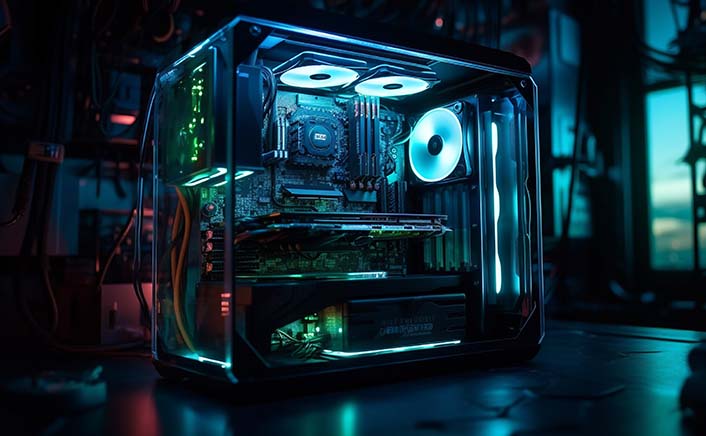
The segmentation of the U.S. PC liquid Cooling Market reveals a diverse demand landscape shaped by varying performance needs, workload intensity, and evolving computing use cases. Gaming PCs hold the largest share at approximately 38 percent, primarily driven by the widespread use of high-performance graphics cards and processors that generate significant heat during prolonged usage. The gaming community places a strong emphasis on system stability, thermal efficiency, and aesthetic customization, all of which are effectively addressed by liquid cooling solutions. The growth of competitive gaming, streaming, and immersive gaming experiences has further reinforced the necessity for advanced cooling systems capable of sustaining peak performance while minimizing thermal throttling and noise.
High performance computing (HPC) represents around 18 percent of the market, with demand fueled by workloads involving complex simulations, scientific modeling, and large-scale data processing. These systems typically endure continuous heavy loads, making efficient heat dissipation a critical requirement. Liquid cooling offers superior thermal conductivity compared to traditional air cooling, allowing HPC systems to maintain optimal performance while improving energy efficiency. The increasing adoption of parallel processing architectures and multi-core processors has intensified heat generation, further sharpening the relevance of liquid cooling in this sector.
Workstations contribute approximately 14 percent of the market and cater to professionals engaged in tasks such as 3D rendering, video editing, animation, engineering design, and software development. These users require reliable and consistent system performance over extended periods, making thermal stability a key consideration. Liquid cooling systems help maintain steady operating temperatures, thereby reducing the risk of performance degradation and prolonging hardware lifespan. Additionally, workstation users often prioritize quieter environments, where liquid cooling offers a significant advantage in noise reduction compared to conventional cooling methods.
Overclocking enthusiasts account for about 10 percent of the market, forming a niche yet influential segment. These advanced users intentionally push their hardware beyond factory specifications to achieve enhanced performance levels. Overclocking significantly increases heat output, thereby necessitating robust cooling solutions capable of handling extreme thermal loads. Custom loop liquid cooling systems are particularly favored in this segment due to their flexibility, scalability, and superior cooling capacity. Aesthetic customization is also a prominent factor, as enthusiasts often build visually appealing setups featuring transparent cases, RGB lighting, and carefully arranged components.
AI and machine learning systems comprise approximately 12 percent of the market and are rapidly gaining significance as computational workloads become more intensive. Training large models and conducting inference tasks require substantial processing power, generating increased heat in GPUs and CPUs. Consequently, liquid cooling is increasingly being adopted in AI-focused systems to maintain efficiency, mitigate thermal throttling, and support continuous operation under high utilization. As the growth of AI applications spans industries like healthcare, finance, and technology, demand in this segment is expected to expand further.
Data centers and servers account for around 8 percent of the market within the context of PC liquid cooling, though their importance is steadily growing. As data centers become more dense and power-intensive, traditional air cooling methods are nearing their operational limits. Liquid cooling presents a more efficient alternative for managing heat in compact server environments, especially in high-density racks. While this segment is still relatively smaller compared to gaming and workstation applications, it is gaining traction due to an increasing focus on energy efficiency, sustainability, and reduced operational costs in data center operations.
In summary, the application segmentation highlights a market driven primarily by consumer and professional computing needs, with gaming PCs leading in demand due to widespread adoption and performance requirements. Meanwhile, emerging sectors such as AI, HPC, and data center cooling are supporting long-term growth, reflecting a shift toward more compute-intensive workloads across industries. The combination of performance demands, thermal challenges, and evolving technology trends ensures that liquid cooling continues to expand its role across multiple application areas within the U.S. market.