How Material Innovation Is Reshaping the U.S. Paint Protection Film Industry
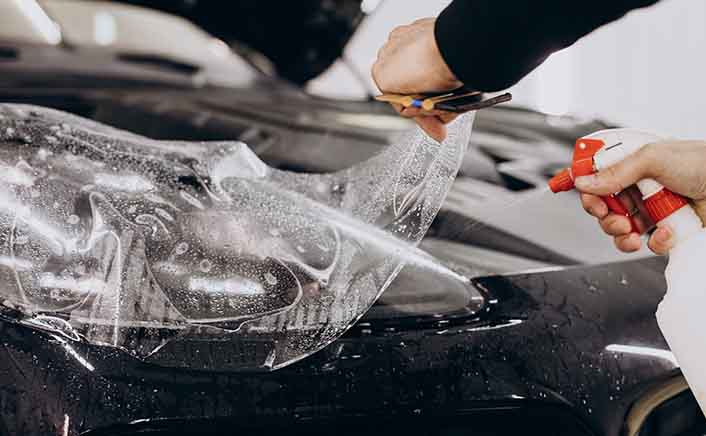
The U.S. Paint Protection Film (PPF) Market exhibits a distinct preference for thermoplastic polyurethane (TPU), which constitutes approximately 82% of total demand. This trend highlights a performance-driven market rather than one solely focused on cost. TPU’s dominance can be attributed to its exceptional mechanical and optical properties, particularly its self-healing capabilities, which allow minor scratches to vanish when exposed to heat, and its remarkable elongation flexibility of over 300%. These factors are crucial in an environment where more than 60–70% of installations involve full or partial front-end wraps that demand durability and visual clarity. Typically, TPU films have a lifespan of 5–10 years, significantly longer than the 2–3 years offered by PVC, which necessitates a reconsideration of lifecycle costs. Although TPU comes with a 20–40% price premium over PVC, its longer replacement cycle ultimately reduces the effective annual cost, making it the material of choice for both premium and increasingly mid-tier vehicle owners.
This strong preference for TPU is further supported by the vehicle demographics in the U.S., where vehicles priced above $40,000 account for more than 50% of new car sales. These vehicles often utilize softer, water-based paint systems that are more vulnerable to scratches and environmental hazards, heightening the demand for high-performance protective films. Consequently, TPU adoption in the luxury and electric vehicle segments is estimated to be 2–3 times greater than in mass-market vehicles, solidifying its market presence. The trend towards full-body wraps, requiring 18–25 square meters of film per vehicle, also enhances TPU’s volume leadership, as consumers seeking full coverage are generally less price-sensitive and more focused on long-term protection and quality finish.
On the other hand, PVC-based films, which hold about 10% of the market share, are increasingly limited to entry-level and temporary applications, such as leased vehicles or budget-conscious consumers. The inherent limitations of PVC such as yellowing under UV exposure, lower impact resistance, and diminished elasticity render it unsuitable for long-term use. Consequently, PVC demand is stagnating and declining, with its market share gradually shrinking as price-sensitive consumers shift toward hybrid or more affordable TPU alternatives. The economic argument for PVC diminishes even further when frequent replacements (every 2–3 years) result in higher cumulative costs over a 6–8 year ownership span, effectively countering its initial cost advantage.
The hybrid or multi-layer film segment, accounting for approximately 8% of the market, represents a transitional category that aims to bridge the gap between TPU performance and PVC affordability. These films typically feature a TPU topcoat combined with lower-cost substrate layers, offering partial self-healing properties and improved durability at a price point that is 10–20% lower than full TPU films. Although still relatively small, this segment is gaining traction among mid-tier vehicle buyers who are more price-sensitive yet still require a baseline level of performance. This trend is particularly relevant as the market moves beyond luxury vehicles towards broader mainstream adoption, making the balance between cost and performance a critical factor.
Another pivotal aspect influencing material preferences is the installation ecosystem and the impact of dealership channels. Dealerships, which are increasingly bundling PPF into financing plans, tend to favor TPU-based products due to their lower risk of customer complaints and warranty claims. As dealer-installed PPF continues to account for a growing share of total installations, this channel inclination further reinforces TPU’s market dominance. Additionally, manufacturers are making significant investments in advanced TPU formulations, including improved hydrophobic coatings, anti-stain layers, and enhanced UV resistance, which consistently widen the performance gap compared to alternative materials.
In terms of pricing, the market is experiencing a gradual normalization, with average prices projected to decrease from approximately $9.6 per square meter in 2027 to around $8.3 per square meter by 2033. However, TPU remains the standard for premium offerings. This decline in price is fueled by scale efficiencies and increased competition, but it does not significantly alter the material mix, as performance expectations remain high. Instead, this trend accelerates TPU's penetration into previously underserved segments while further marginalizing PVC.
Overall, the material segmentation within the market underscores a landscape where technological superiority translates directly into market share, and cost advantages alone are insufficient for sustained relevance. TPU's stronghold is not merely a result of current demand but also a reflection of structural alignment with consumer expectations, vehicle trends, and installation economics. While hybrid films continue to evolve and pricing gaps narrow, the competitive landscape may slightly broaden; however, the fundamental hierarchy TPU as the leading material, hybrids as a growth intermediary, and PVC as a waning legacy option is expected to remain stable in the foreseeable future.