Exploring the Role of Nitinol Strips and Sheets in Advanced Robotics and Orthopedic Devices
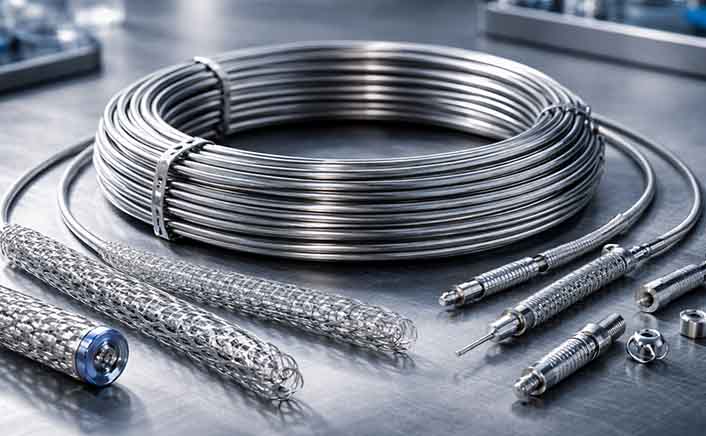
The U.S. Nitinol Market showcases a well-organized distribution of product types, highlighting the versatility and specialized qualities of nickel-titanium alloys in medical and industrial applications. Nitinol wire holds the largest market share, accounting for approximately 55% of consumption. This predominance is driven by the widespread utilization of nitinol wire in minimally invasive medical devices such as stents, guidewires, and various surgical instruments. The unique combination of superelasticity and shape memory enables nitinol wire to effectively navigate complex anatomical pathways while maintaining the necessary radial force for treatment, particularly in cardiovascular procedures.
In 2023, the medical sector represented around 70% of total nitinol consumption, with wire products serving as the foundation for the material’s usage. The rising demand for wire is further intensified by the increasing prevalence of cardiovascular diseases, affecting over 30% of adults in the United States. This has led to a heightened need for high-performance stents and guidewires that rely significantly on high-quality nitinol wire.
The second-largest segment, nitinol tubes, constitutes approximately 25% of the market and is crucial for applications requiring hollow, cylindrical forms, including catheter-based medical devices, micro-actuators, and fluid control components in industrial machinery. Tubes play a vital role in applications demanding both flexibility and structural integrity, as their hollow design allows for complex bending and expansion while ensuring durability. The tube segment has experienced steady growth due to rising investments in robotic-assisted surgeries and minimally invasive procedures, which require precision tubing for improved device maneuverability. Furthermore, nitinol tubes are utilized in the aerospace and industrial sectors, where their high fatigue resistance and lightweight properties make them suitable for adaptive structures, sensors, and actuators, thereby enhancing nitinol product adoption in the U.S. industrial market.
Nitinol strips and sheets account for approximately 15% of the U.S. market, primarily serving applications that require flat or semi-flat components. These products are essential in industrial automation, robotics, and specialized medical devices like orthodontic appliances and surgical plates. The appeal of strips and sheets lies in their capability to leverage nitinol’s shape-memory effect across wider surface areas, facilitating innovative designs in complex mechanical assemblies. In industrial contexts, these strips are often integrated into actuators and precision components, where repetitive bending and recovery are vital for long-term operational reliability. The demand for strips and sheets is also bolstered by advancements in cutting, laser processing, and surface finishing technologies, enabling manufacturers to produce components that meet stringent tolerances for medical and industrial uses.
Although nitinol foils represent a smaller segment of the U.S. Nitinol Market at around 5%, they cater to niche applications requiring ultra-thin, precision-engineered materials. Foils are found in micro-devices, sensors, and experimental aerospace applications, where lightweight, superelastic, and shape-memory properties are essential. Their limited production volume reflects the complexities and costs involved in manufacturing ultra-thin nitinol products, along with the specialized applications they target. Nonetheless, ongoing research into high-performance alloys and microfabrication techniques is expected to facilitate gradual growth in the foil segment, particularly in fields such as micro-robotics, advanced medical devices, and precision instrumentation.
The segmentation within the U.S. Nitinol Market clearly aligns material form with end-use applications. Nitinol wire dominates due to its critical importance in cardiovascular and minimally invasive procedures, while tubes are expanding in response to industrial and surgical demands. Strips and sheets offer versatility for robotic and orthopedic devices, and foils are tailored for high-precision niche applications. Pricing trends for these product types vary based on factors such as complexity, tolerances, and certification requirements. Generally, wire and tubes command higher average prices per kilogram due to their extensive medical applications and the necessity for compliance with ASTM and FDA standards. Strips and sheets have moderate pricing reflective of their broader industrial roles, while foils, despite their limited volume, often carry premium pricing due to specialized fabrication needs.
In summary, the U.S. Nitinol Market is defined by a diverse product mix that balances high-volume medical applications with specialized industrial uses. The prominence of wire and tubes emphasizes the importance of medical devices and minimally invasive procedures.