Structural Dependence of U.S. Lead Acid Battery Demand on Automotive and Industrial Backup Power Applications
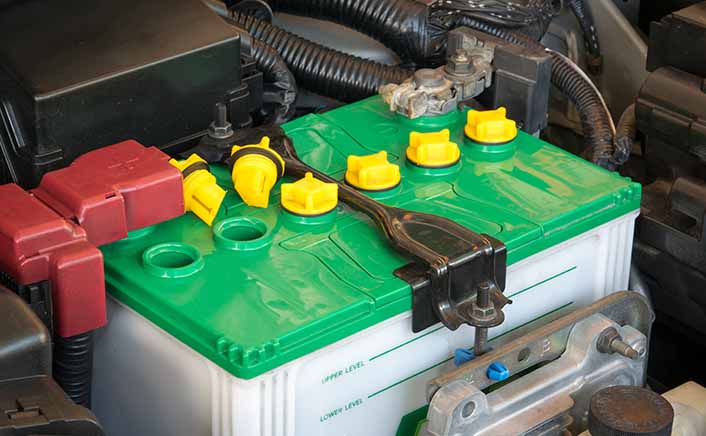
The U.S. Lead Acid Battery Market demonstrates a structurally mature yet resilient demand landscape, where growth no longer hinges on the adoption of new end-uses, but rather on replacement cycles, operational requirements, and infrastructure reliance across the automotive sector and critical backup power systems. The automotive passenger vehicle segment is the largest, accounting for approximately 38.9% of the market. This dominance is largely attributed to a significant vehicle parc exceeding 280 million units in the U.S. and a well-established replacement cycle of 3 to 5 years for starting, lighting, and ignition (SLI) batteries. Notably, demand is driven more by fleet aging than by new vehicle sales, as the average age of vehicles is around 12.5 years, ensuring ongoing aftermarket battery turnover regardless of the trends toward electrification. Even with the rise of electric vehicles (EVs) in new sales, internal combustion engine vehicles still represent the majority of the active fleet, maintaining a steady demand for lead acid batteries.
The commercial vehicle segment, including light commercial vehicles (LCVs) and medium to heavy-duty trucks, is particularly valuable due to its higher battery capacity needs, greater cycling stress, and shorter replacement intervals compared to passenger vehicles. Fleet operators in logistics and freight transportation operate under demanding conditions, resulting in accelerated battery wear and replacement cycles that can be as short as 2 to 3 years. This segment is bolstered by the growth of e-commerce logistics and last-mile delivery fleets, where operational uptime is crucial, and battery failures can lead to significant revenue losses. Thus, commercial vehicle applications provide a stabilizing force for demand even during fluctuations in the automotive market.
Uninterruptible power supply (UPS) systems comprise around 12.8% of the market and are among the most strategically significant non-automotive applications. Although lithium-ion alternatives are gradually emerging, lead acid batteries remain prevalent in UPS systems due to their lower initial costs, reliability in brief discharge scenarios, and established maintenance support. Data center operators and enterprise IT facilities often rely on valve-regulated lead acid (VRLA) batteries for backup power, particularly in hybrid setups where lithium-ion batteries are utilized for extended support. This dual-chemistry approach ensures that lead acid batteries continue to play a vital role in evolving digital infrastructure.
Forklifts and material handling equipment represent an additional segment contributing approximately 10.7%, characterized by deep-cycle battery needs and consistent replacement demand. The expansion of warehousing, driven by adjustments in supply chains and the growth of distribution hubs across the Midwest and Southern U.S., has strengthened demand stability in this area. Unlike the automotive sector, this segment is less affected by electrification trends due to the high initial costs and operational complexities associated with lithium-based power systems in heavy-duty industrial applications.
Telecom backup systems, which account for roughly 7.9% of the market, are propelled by the continuous densification of networks, notably with the rollout of 5G infrastructure and small cell installations. These systems require highly reliable standby power sources to ensure uninterrupted service, especially in scenarios of grid instability. Lead acid batteries remain the preferred choice in many cases, owing to their proven reliability and low maintenance needs, even though the adoption of lithium-ion batteries is slowly increasing in densely populated urban areas.
Industrial equipment and data centers contribute a mid-single-digit market share but hold strategic significance due to their roles in critical infrastructure. Industrial applications include backup systems for manufacturing equipment and emergency power units. Meanwhile, data centers increasingly employ hybrid energy storage configurations where lead acid batteries provide short-term bridging power during outages. Although renewable energy storage currently represents about 2.9% of the market, it is emerging in off-grid solar and wind applications, particularly in rural and microgrid settings where cost considerations take precedence over energy density.
Marine, rail, and powersports applications collectively form a niche segment but are essential for specialized mobility needs. Marine applications depend on deep-cycle batteries for auxiliary power and engine starting in both inland and coastal vessels. Rail and transport systems utilize lead acid batteries for signaling and backup operations in controlled settings. Although powersports and two-wheeler applications are relatively small in the U.S. context, they still contribute to consistent replacement demand in recreational and specialty vehicle markets.