Rising Role of Cooling Tanks, Heat Exchangers, and CDUs in the Expansion of the U.S. Immersion Cooling Market Ecosystem
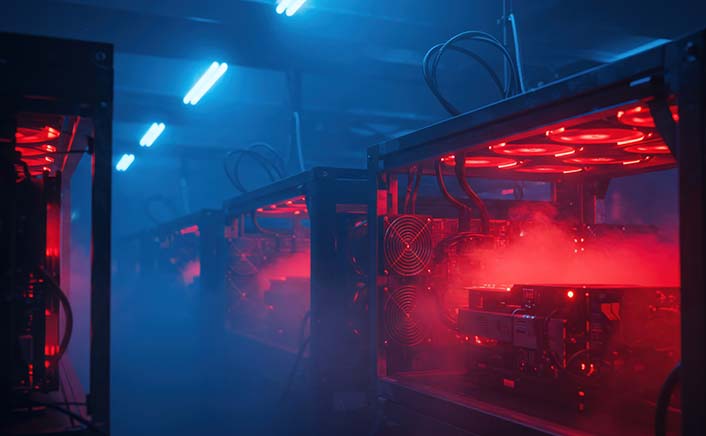
The component landscape of the U.S. Immersion Cooling Market illustrates an engineering ecosystem that is rapidly evolving, with critical attention being paid to thermal performance, fluid dynamics efficiency, and system-level integration, all of which are becoming as vital as the compute hardware itself. Cooling tanks currently take the lead in market share, serving as the foundational structure of immersion systems. Their design directly impacts fluid containment efficiency, server density configuration, and maintenance accessibility.
In high-density AI data centers, especially those utilizing GPU clusters that exceed 80–120 kW per rack, there is a noticeable shift in cooling tank design. These tanks are evolving from simple containment vessels into highly engineered thermal modules, now incorporating corrosion-resistant alloys, advanced sealing systems, and optimized fluid flow geometries. Following closely in importance are heat exchangers, which play a vital role in transferring absorbed heat from dielectric fluids to external cooling loops like chilled water or dry coolers. Their increasing usage correlates strongly with the expansion of hyperscale AI infrastructure, which requires stable thermal dissipation to support continuous 24/7 computing loads without temperature fluctuations that could impair GPU performance or diminish training efficiency for large language models.
Coolant Distribution Units (CDUs) are emerging as a crucial intermediary component in these systems. They regulate fluid temperature, flow rate, and pressure balance across immersion systems, which facilitates scalable deployment in modular data center architectures. This role is especially significant in hybrid deployments where immersion cooling is being integrated with existing air-cooled infrastructure, allowing for a gradual transition without the need for complete facility redesign.
Pumps and fluid circulation systems are becoming increasingly strategic, as their efficiency directly influences overall system energy consumption and thermal uniformity. Modern AI-driven workloads create uneven heat zones within compute racks, necessitating adaptive pumping systems that can dynamically adjust flow rates based on real-time thermal feedback. This has prompted the integration of smart pumping technologies with AI-based thermal management software.
Immersion racks, while still structurally similar to traditional server racks, are being redesigned to account for higher mechanical loads, specific fluid compatibility, and improved cable management systems suited for high-density GPU configurations. These racks are evolving into fully integrated thermal-compute platforms, especially in deployments led by hyperscale operators like Microsoft, Google, and Meta Platforms, which require both scalability and reliable thermal management for extensive AI infrastructure.
Monitoring and control systems are also advancing in sophistication, driven by the need for real-time insights into fluid temperature gradients, dielectric fluid health, system pressure variations, and server-level thermal loads. These systems now incorporate predictive analytics and machine learning algorithms, enabling them to foresee thermal spikes in AI workloads, thereby reducing downtime risks and enhancing energy efficiency.
While fluid filtration systems represent a smaller market share, they remain essential for long-term system efficiency by eliminating particulate contamination, oxidation byproducts, and micro-debris generated during continuous operation. Their significance increases in mineral oil and hydrocarbon-based systems, wherein fluid degradation can considerably affect thermal conductivity over time.
Sensors and thermal management software are among the fastest-evolving components within this ecosystem, as they facilitate the intelligent automation of immersion cooling systems. Advanced sensor arrays, embedded in tanks and racks, provide continuous feedback on temperature distribution, fluid dielectric strength, and system integrity. This data is processed by software platforms designed to adjust cooling parameters in real time. This integration of hardware and software is transforming immersion cooling from a static infrastructure solution into a dynamic, self-optimizing thermal management system.
Across all components, a clear trend is emerging towards modularization and AI-driven control, reflecting the increasing complexity of modern data center workloads. As rack densities continue to rise due to GPU-intensive AI training, digital twin simulations, and high-performance computing (HPC) workloads, the interoperability of components and system intelligence are becoming key differentiators. Consequently, the U.S. Immersion Cooling Market is evolving from a hardware-centric industry into an integrated thermal intelligence ecosystem. Here, cooling tanks, heat exchangers, CDUs, pumps, and sensors function as a coordinated network rather than isolated mechanical units. This evolution is expected to accelerate further as the demand for energy-efficient, high-density computing infrastructure continues to expand across AI, cloud, and edge data center deployments.