U.S. EV Charging Ports vs Stations: Investment, Revenue, and CAPEX Trends Shaping the Market
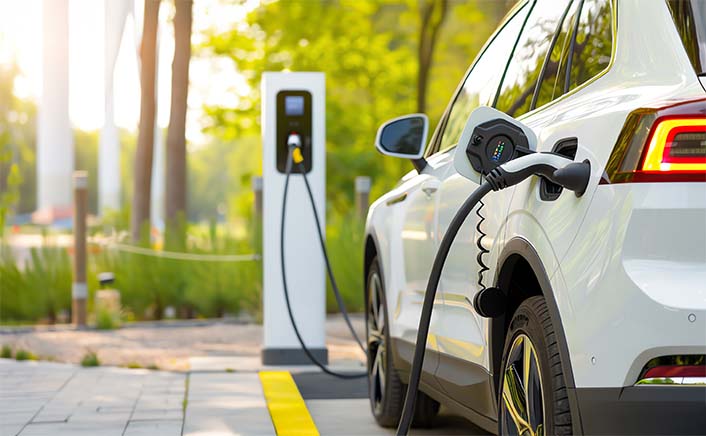
The U.S. Electric Vehicle (EV) Charging Station Market is currently witnessing significant growth, fueled by an increasing adoption of electric vehicles, favorable government policies, and expansive infrastructure initiatives like the NEVI Formula Program. A thorough analysis of annual revenue projections from 2023 to 2033 reveals a dynamic and evolving market with prominent contributions from both newly installed stations and charging ports.
In 2023, the revenue generated from newly installed charging stations, encompassing hardware and installation, was approximately $200 million. In contrast, revenue from new charging ports reached $450 million, culminating in a total annual market revenue of $650 million. This suggests that, even at the early stages of broader deployment, charging ports play a substantially larger role in market revenue than individual stations due to the multi-port nature of many installations and the emphasis on scalable, high-capacity infrastructure.
The period from 2023 to 2025 is characterized by a phase of intense investment in both stations and ports. Revenue from new stations is expected to increase from $200 million in 2023 to $432 million in 2025. At the same time, revenue from new ports is projected to decline slightly from $450 million to $392 million in 2025, reflecting fluctuations during the initial deployment of high-capacity corridor installations and variations in annual hardware costs. Despite these short-term changes, the overall trend points upward, indicating sustained market growth. The combined annual revenue for the market is anticipated to rise from $650 million in 2023 to $824 million in 2025, showcasing strong investor interest and proactive infrastructure development across residential, commercial, and highway applications.
From 2026 to 2033, the market is expected to enter a mature growth phase marked by large-scale deployments and increased network density. Revenue from new stations is projected to gradually increase from $448 million in 2026 to $916 million in 2033, achieving a compound annual growth rate (CAGR) of 10.7% between 2027 and 2033. This consistent growth is a reflection of the rising adoption of EVs nationwide, alongside the broadening of public charging networks and electrification programs in corporate and fleet sectors. Meanwhile, revenue from new ports is anticipated to follow a more aggressive growth path, spiking from $519 million in 2026 to $3.619 billion by 2033, with a CAGR of 27.5% during the same span. This sharp increase underscores a market shift toward multi-port, high-capacity DC fast charging stations, necessitating significant investments to accommodate the growing demand for long-distance travel and urban fleet operations.
The overall market revenue, incorporating both stations and ports, is projected to grow from $967 million in 2026 to $4.535 billion by 2033, reflecting a robust overall CAGR of 22.3%. This rapid growth signifies the strategic importance of charging ports in driving revenue, as investments in multi-port stations and DC fast chargers dominate capital expenditures. The revenue distribution suggests that while single-station installations are vital for network coverage, the substantial contributions to market value emerge from larger installations featuring multiple ports and advanced charging capabilities. This trend aligns with the larger U.S. strategy aimed at establishing a solid, reliable, and scalable charging network that supports a transitioning electrified transportation ecosystem.
Several key factors are driving this revenue trajectory. First, federal and state incentives, including the NEVI Formula Program, provide committed funding for high-speed charging along interstate corridors, mitigating investment risks for private operators and facilitating faster deployment. Additionally, the growing adoption of fleet electrification by corporate and municipal entities increases the demand for depot-based multi-port charging infrastructure, which tends to require higher capital expenditures per site. The expansion of residential and workplace chargers, particularly in urban and suburban regions, further contributes to incremental revenue. Lastly, technological advancements such as networked smart charging, renewable energy integration, and enhanced DC charging capabilities raise both costs and revenue potential for stations, reinforcing the market’s positive growth trajectory.
In summary, the U.S. electric vehicle charging station market is set for sustained growth, with projections indicating revenue could increase by more than six times, soaring from $650 million in 2023 to over $4.5 billion by 2033. The analysis shows that while new station installations provide a steady stream of incremental revenue, the explosive growth of charging ports, especially in high-capacity and multi-port configurations, will dominate overall market value. With strategic deployment supported by government programs, technological innovations, and trends in EV adoption, the U.S. market is on track for rapid expansion, culminating in a robust, scalable, and reliable charging network that can effectively support the nation's transition to electrified transportation.