Rising Dominance of Rigid Metal Dryer Vents in the U.S. Market Driven by Fire Safety and Airflow Efficiency Standards
The product type segmentation of the U.S. Dryer Vents Market indicates a notable shift from low-cost, flexible ducting systems to engineered, compliance-focused rigid and safety-enhanced venting solutions. This transition is primarily driven by the need for fire risk mitigation, improved airflow efficiency, and housing retrofit cycles, rather than solely by growth in new installations. Currently, rigid metal dryer vents dominate the market, emerging as the preferred choice for both residential retrofits and new installations due to their superior airflow performance and significantly lower lint accumulation when compared to flexible options. Rigid aluminum and galvanized steel systems can reduce internal airflow resistance by an estimated 20–35% compared to foil-based ducts, which helps lower drying cycle times and minimize the risk of overheating—a crucial consideration for preventing lint ignition. As a result, HVAC contractors and building inspectors are increasingly specifying rigid systems in compliance-driven regions, especially in states with stringent residential fire codes.
Semi-rigid aluminum vents occupy a significant secondary market position as they strike a balance between installation flexibility and better airflow characteristics. These vents are commonly used in retrofit applications where structural constraints prevent the use of fully rigid ducting, particularly in older homes not designed for modern high-efficiency dryers. Their demand is further supported by the do-it-yourself segment, where their ease of handling and moderate costs make them a practical upgrade from flexible foil ducts without the need for comprehensive system redesigns.
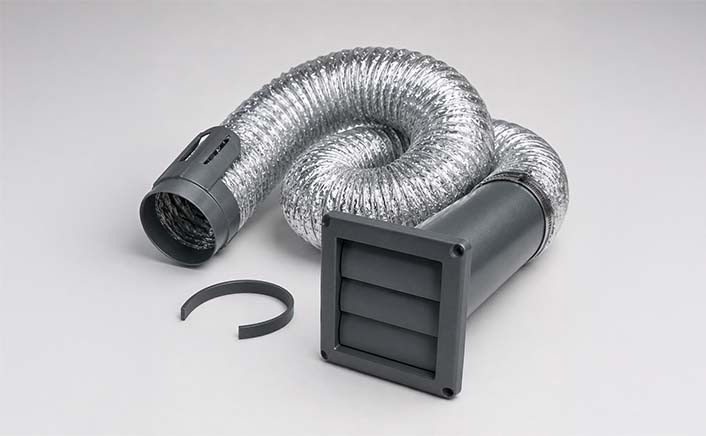
While flexible foil dryer vents remain part of the installed base, their market presence is steadily declining due to growing awareness of their safety issues. Such systems are prone to issues like lint trapping, sagging, and collapse due to thermal cycling, which significantly raises fire risk over time. Although these vents are still favored in low-cost housing and temporary setups due to their low initial price, regulatory pressures and compliance checks linked to insurance are gradually diminishing their relevance. In many retrofit situations, inspectors are now specifically flagging flexible ducts for replacement with rigid or semi-rigid alternatives.
Plastic dryer vents, typically made from PVC or ABS materials, are also experiencing a decline due to their poor thermal tolerance and susceptibility to deformation from continuous heat exposure. Their usage is increasingly limited by modern building codes, particularly in new residential constructions, where fire safety standards discourage the use of combustible or low-melting-point materials in dryer exhaust paths. Consequently, plastic vent systems are primarily found in legacy installations or low-cost replacement scenarios, with their long-term market share expected to continue falling.
Insulated dryer vents are gaining traction in specific environmental contexts, especially in colder regions where condensation management is essential. These systems are designed to prevent moisture accumulation within ducts, which can otherwise lead to lint buildup and mold growth. Their adoption is especially noteworthy in multi-family housing units and basement laundry setups, where there are significant temperature differences between indoor and external venting paths. Although they represent a smaller market segment compared to rigid metal systems, their performance-oriented value proposition allows them to command higher prices and promote niche adoption.
Fire-resistant dryer vents are among the fastest-growing product categories, driven by increasing regulatory scrutiny and compliance enforcement related to insurance. These systems often feature flame-retardant coatings, reinforced metal structures, and enhanced sealing mechanisms designed to impede flame spread through duct pathways. Their growth is closely tied to residential fire statistics, with dryer-related incidents causing approximately 2,900–3,200 structural fires annually in the U.S., largely due to lint accumulation. Consequently, fire-resistant systems are increasingly utilized in high-density residential buildings, rental properties, and commercial laundry facilities where liability exposure is significant. Property insurers are further driving this trend by incentivizing or requiring upgrades to fire-rated venting systems in high-risk settings.
Overall, the product landscape is clearly shifting towards safety-optimized and performance-enhanced systems, with rigid metal and fire-resistant vents collectively accounting for the majority of incremental demand. This transition is influenced not only by advances in technology but also by various external factors, including regulatory compliance requirements and municipal inspections.