Why Cylindrical LFP Batteries Dominate the U.S. Lithium Ion Phosphate Market with Over 55% Share
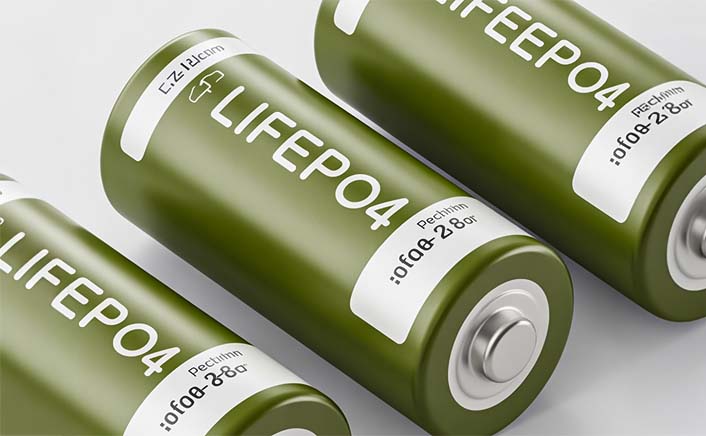
The U.S. lithium ion phosphate (LFP) Market exhibits a distinct preference for cylindrical batteries, which account for 55.91% of the total market share, reflecting their widespread adoption across electric vehicles (EVs), portable electronics, and industrial applications. Cylindrical LFP batteries have become the backbone of the U.S. market due to their standardized form factors, high scalability in manufacturing, and well-established thermal management solutions, which make them ideal for mass-market EV deployment. EVs, particularly entry-level and fleet vehicles, drive a substantial portion of this demand, as cylindrical LFP cells offer a compelling combination of lower cost, high safety, and long cycle life, making them a preferred choice for automakers seeking to balance affordability and performance. The cost advantage is reinforced by LFP chemistry’s avoidance of nickel and cobalt, which are more expensive and subject to price volatility, allowing cylindrical batteries to maintain competitive pricing while meeting rigorous safety standards. The flexibility in packaging and assembly also allows automakers and system integrators to optimize energy density, thermal management, and mechanical robustness, which further cements cylindrical LFP cells as the dominant battery type in the U.S. market.
Prismatic LFP batteries represent the second-largest segment at 32.09%, driven primarily by stationary energy storage systems (ESS), commercial EVs, and utility-scale installations. Prismatic cells offer superior volumetric efficiency and ease of module integration, enabling system designers to achieve higher energy density per unit volume and streamlined thermal management in ESS applications. This is particularly critical for grid-scale and commercial energy storage projects, where optimization, modular assembly, and consistent performance space across large arrays are essential. In addition, prismatic batteries are increasingly adopted in commercial EV fleets, such as buses and delivery vehicles, where battery packs must provide reliable performance under heavy-duty operational cycles and allow for straightforward maintenance and replacement. Their versatility makes prismatic LFP cells a crucial enabler of the U.S. lithium ion phosphate market’s expansion into both stationary storage and commercial mobility, where their combination of safety, long cycle life, and scalable design provides strong value over competing chemistries.
Pouch LFP batteries, while smaller at 12.00% market share, occupy a critical niche for specialized applications requiring lightweight, flexible, and customizable form factors. Pouch cells are increasingly used in consumer electronics, specialized ESS modules, and automotive applications requiring non-standard shapes or compact packaging. Their lightweight construction and adaptability allow for design innovation, particularly in portable devices and compact energy storage solutions, where space and weight constraints are paramount. Although they account for a smaller portion of the U.S. lithium ion phosphate market, pouch cells enable the industry to address a wider range of applications and provide tailored solutions for high-value, low-volume markets.
The distribution of battery types in the U.S. LFP market also reflects the intersection of technological maturity, application-specific requirements, and cost-effectiveness. Cylindrical cells dominate because of scale and standardization, prismatic cells capture growth in commercial and stationary applications due to modularity and volumetric efficiency, and pouch cells provide flexibility for specialized, high-design-value applications. This structure supports a diversified market that balances high-volume EV adoption with long-term ESS deployment and niche specialized markets, mitigating the risks associated with relying on a single application or battery type.
Additionally, the trend toward domestic manufacturing and supply chain localization under policies such as the Inflation Reduction Act reinforces the adoption of all LFP battery types in the U.S., as manufacturers prioritize scalability, safety, and cost-effective production. Cylindrical cells benefit most from this scale-driven adoption, but prismatic and pouch designs also gain from the secure domestic sourcing of iron and phosphate, which reduces dependence on imported raw materials and minimizes exposure to geopolitical supply chain risks.
In conclusion, the U.S. lithium ion phosphate market’s battery type segmentation highlights cylindrical LFP cells as the core driver of growth, prismatic cells as the enabler of stationary and commercial applications, and pouch cells as the flexible niche solution. Together, these types reflect the strategic alignment of safety, cost efficiency, scalability, and application versatility, positioning the U.S. LFP market for continued expansion across electric mobility, grid storage, and specialized energy applications. This diversified battery type mix ensures that the market can meet evolving energy storage needs while maintaining a competitive and resilient domestic supply chain.