Revolutionizing Urban Landscapes: The Role of Heavy Construction Equipment in U.S. Building Construction Projects
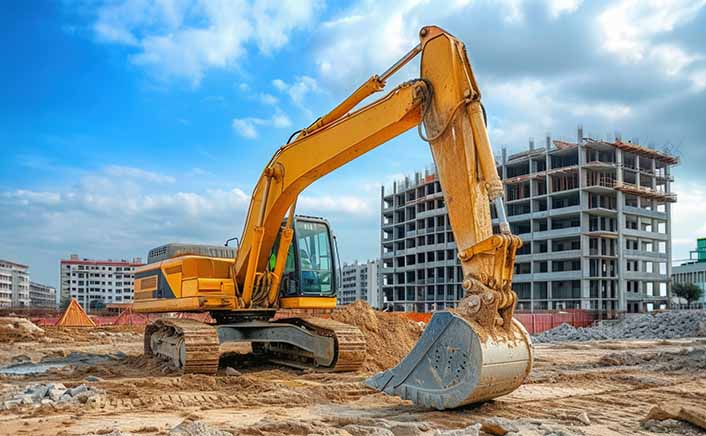
The U.S. Heavy Construction Equipment Market is significantly influenced by the performance and growth of various sectors, with demand tailored to specific applications driving equipment adoption and sales trends. Building construction, which comprises around 30% of the market, is the largest segment. This area includes residential, commercial, and urban development projects, such as high-rise buildings, housing complexes, and commercial facilities. The trend of urbanization and the necessity to modernize aging infrastructure in metropolitan regions have intensified the demand for versatile machinery like excavators, loaders, bulldozers, and backhoe loaders. Contractors are increasingly dependent on multi-functional equipment to enhance productivity on diverse construction sites where space limitations and tight project schedules require adaptable and efficient solutions.
Infrastructure and road projects closely follow, holding approximately 25% of the market. This reflects ongoing investment in highway expansions, bridge constructions, urban transit systems, and road repair efforts. Continued governmental emphasis on enhancing national infrastructure, paired with state initiatives to modernize transportation networks, has led to consistent procurement of motor graders, pavers, asphalt equipment, and compactors. These machines play a critical role in grading, paving, and soil compaction, making them vital for large-scale infrastructure initiatives. Additionally, the rise of public-private partnerships for urban mobility projects and airport expansions has further bolstered demand in this sector.
The mining and quarrying sector, contributing about 15% of the market, also serves as a key driver for heavy construction equipment adoption. This sector often requires large-scale machinery capable of earthmoving, material transport, and site excavation in tough terrains. Haul trucks, excavators, loaders, and specialized drilling machinery are prominent in this segment. The growth of domestic mining for essential minerals, aggregates, and construction materials has enhanced the demand for robust, high-capacity equipment designed for continuous operation in challenging environments. Factors such as efficiency, fuel economy, and technological advancements like automation and telematics are pivotal in selecting equipment for mining operations.
In the oil and gas sector, which represents approximately 10% of the market, specialized machinery is employed for exploration, drilling, pipeline construction, and facility development. This sector relies on high-performance excavators, cranes, and material handling equipment for complex projects that demand precision and reliability. As the U.S. progresses with expanding its energy infrastructure particularly concerning shale oil and gas and integrating renewable energy there remains a strong demand for equipment capable of safely operating in remote and challenging areas.
Energy and power projects, accounting for around 8% of the market, involve deploying equipment for power plant construction, renewable energy installations, and battery manufacturing facilities. These initiatives typically require compact loaders, cranes, and concrete handling machinery adept at precision operations in industrial settings. The shift toward renewable energy and battery manufacturing has introduced new demands for specialized, durable, and adaptable construction equipment.
The industrial and manufacturing sector, making up roughly 7% of the market, encompasses the construction of factories, warehouses, and production facilities. Increasingly, equipment such as forklifts, material handling systems, and compact earthmoving machines are being utilized to optimize space and expedite facility setups. Companies are integrating machinery that supports automation and connectivity to enhance operational efficiency in extensive industrial projects.
Finally, the "Others" segment, accounting for 5% of the market, addresses niche applications in ports, airports, and railways. This includes specialized cranes, loaders, and paving equipment for terminal expansions, runway constructions, and railway maintenance. Although smaller in market share, these projects often necessitate highly specialized machinery and skilled operators, supporting high-value contracts and long-term infrastructure planning.
Overall, the U.S. heavy construction equipment market reflects a diverse and balanced distribution across various applications. High-volume sectors such as building construction, infrastructure, and mining predominantly drive demand. The market is characterized by increasing technological sophistication, including electric and hybrid machinery, telematics, and automation, which improves productivity and operational efficiency across sectors. Moreover, macroeconomic factors like reshoring of manufacturing, government investments in infrastructure, and large-scale industrial projects continue to sustain market growth, prompting manufacturers and contractors to adopt equipment that is versatile, durable, and optimized for both general and specific applications.