Why Large Breweries Dominate Value While Microbreweries Drive Volume in the U.S. Brewery Equipment Market
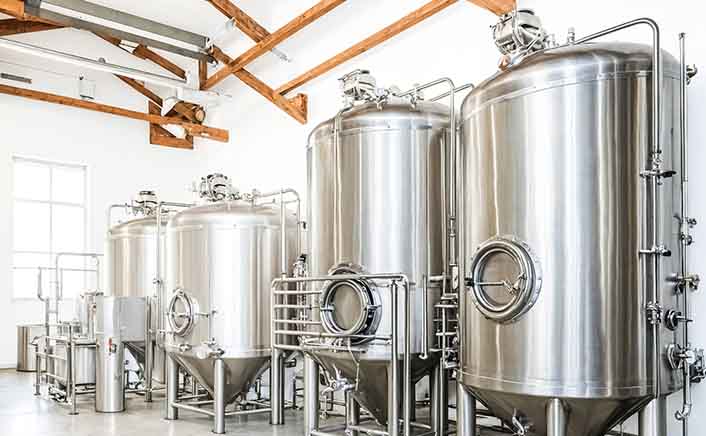
The end-use segmentation of the U.S. Brewery Equipment Market reveals a notable distinction between value concentration and volume distribution. Large industrial breweries account for approximately 48% of the total market value, despite their relatively small number of facilities. This disproportionate share arises from the capital expenditure (capex) intensity associated with these operations rather than the frequency of equipment installations. Industrial-scale breweries tend to invest in fully automated brewhouses, high-capacity fermentation systems, and advanced packaging lines, with individual projects often exceeding several million dollars. Their spending is less affected by short-term declines in beer consumption since their investment decisions focus on long-term efficiency improvements, cost optimization, and portfolio diversification that includes non-alcoholic and low-alcohol variants. Consequently, even in declining consumption environments, this sector maintains a steady demand for high-value equipment, particularly through retrofits and system upgrades rather than new facility expansions.
Regional breweries, representing around 22% of the market, play a crucial role as they sit strategically in the middle. While they are more susceptible to fluctuations in local demand compared to large industrial players, they still possess enough scale to make periodic capital investments. Their equipment demand increasingly leans toward modular upgrades, enabling them to make incremental capacity adjustments without fully committing to large-scale expansions. This segment prioritizes operational flexibility by investing in systems that can accommodate various product types, batch sizes, and seasonal variations. Their share reflects not only their size but also their adaptive investment strategies, which balance growth ambitions with the need to mitigate risks in an unpredictable demand landscape.
Microbreweries account for roughly 20% of the market value, showcasing a different dynamic where high equipment installation volumes do not equate to a proportional revenue share. The average ticket size for microbrewery equipment is considerably lower, often due to limited access to capital and smaller production capacities. Nevertheless, this segment remains vital as it drives fundamental demand for entry-level and mid-scale systems, particularly for fermentation tanks and compact brewhouses. Recently, the dip in craft beer consumption has more visibly impacted microbreweries, leading to fewer new installations and a heightened focus on cost control. As a result, many are delaying expansion plans and instead concentrating on extending the lifespan of existing equipment, indirectly bolstering the maintenance and refurbishment market.
Brewpubs and taprooms, holding around a 10% market share, exemplify the most localized and experience-driven end-use category. Their equipment demand is significantly influenced by real estate dynamics, tourism, and urban consumption patterns, rather than the wider beer market trends. Equipment needs in this segment tend to be compact, modular, and integrated into the customer experience, which limits overall spending on each installation. However, this segment demonstrates resilience through diversification; many brewpubs are expanding into hybrid beverage offerings such as craft sodas, hard seltzers, and non-alcoholic brews. This shift necessitates versatile, small-batch systems, creating a niche but stable demand that is less dependent on traditional beer consumption patterns.
Across all segments, a common theme emerges: a shift from expansion-driven demand to efficiency-centered investment. The decline in beer consumption does not affect all segments uniformly; instead, it reshapes spending priorities. Large breweries focus on enhancing automation and process optimization, regional players invest in flexible solutions, microbreweries center their attention on survival and cost efficiency, while brewpubs diversify their product offerings. This segmentation indicates that market growth is less about the number of new breweries and more about the strategic intentions behind each investment.
Another significant insight from this structure is the increasing relevance of the installed base as a revenue anchor. With thousands of breweries already operational, the cumulative demand for maintenance, spare parts, and incremental upgrades is becoming pivotal for market stability. This trend notably benefits equipment manufacturers that provide after-sales services, customization, and retrofit solutions, rather than those who rely solely on new equipment sales.
Ultimately, the end-use distribution paints a picture of a market that is structurally mature yet strategically evolving. Value is concentrated in areas where capital intensity and long-term planning dominate, while smaller players sustain volume through increasingly constrained investment decisions. The interplay among these segments highlights a market focused on optimization, adaptability, and the lifecycle management of existing assets rather than mere expansion.