AI Data Center Expansion and Its Impact on High-Density Battery Rack Demand in the United States
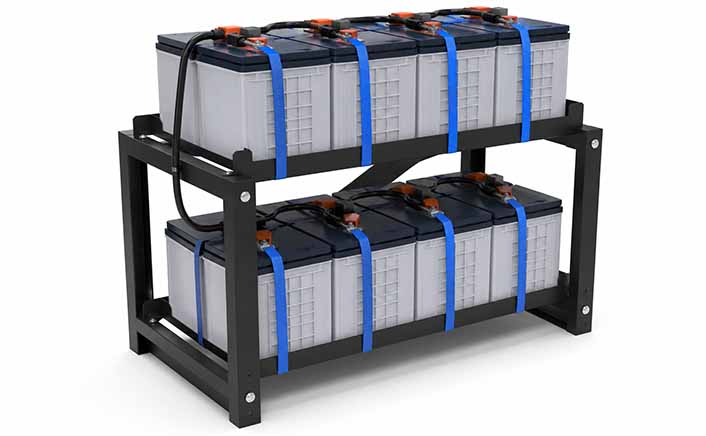
Energy Storage Systems (ESS) are emerging as the largest segment within the U.S. Battery Racks Market , projected to account for nearly one-fourth of total industry demand by 2025. This growth is largely driven by the shift from pilot installations to essential grid infrastructure for utility-scale storage. The need for battery racks in ESS applications far exceeds that in traditional backup systems due to the reliance on densely packed modular lithium-ion rack arrays integrated into containerized setups for modern utility-scale projects. In regions like Texas, California, Arizona, and Nevada, large-scale deployments often involve hundreds to thousands of rack modules per site. The interconnection queues at ERCOT and CAISO have increased significantly as the economic reliance on four-hour lithium-ion storage systems becomes more apparent, particularly for managing renewable energy intermittency and evening peak loads.
Today's ESS deployments favor high-density lithium iron phosphate (LFP) chemistry, necessitating advanced rack designs that incorporate thermal spacing, seismic compliance, cable management, and fire isolation features. This evolution has raised the average value of racks per installation while simultaneously driving up the overall unit demand. Texas has positioned itself as a leading global market for battery storage, with significant gigawatt-scale projects being developed by companies such as Jupiter Power, Fluence, Tesla, and Wärtsilä, directly influencing large-scale rack procurement. Many utility-scale projects are now adopting modular rack architectures to streamline maintenance, enhance scalability, and reduce installation timelines for EPC contractors.
Data Centers and UPS Systems rank as the second-largest demand segment, significantly fueled by the rapid expansion of AI infrastructure across the U.S. Major cloud computing providers, particularly hyperscale operators, are investing in larger UPS battery rooms to support high-density GPU clusters, where even brief power interruptions can disrupt critical AI model training and inference tasks. As traditional UPS setups that historically relied on VRLA batteries transition to lithium-ion rack systems, the benefits include reduced footprint, improved cycle life, and greater rack density. This trend is notably accelerating in regions such as Northern Virginia, Texas, Arizona, and Ohio, where the construction of hyperscale data centers is rapidly increasing. The higher electricity consumption of AI server clusters compared to traditional cloud infrastructure is intensifying the need for backup power, driving the demand for larger battery rack arrays. Moreover, operators are increasingly seeking integrated monitoring capabilities, predictive maintenance software, and advanced cooling compatibility within these systems. Unlike telecom or industrial deployments, which may have decade-long replacement cycles, hyperscale facilities prioritize high-performance systems with more frequent technology upgrades, supporting higher average selling prices in this segment.
Telecom Infrastructure continues to be a fundamental market for battery racks, as telecom towers, switching stations, fiber hubs, and distributed network nodes require uninterrupted backup power. The U.S. telecom industry is gradually transitioning from legacy lead-acid systems to lithium-ion backup solutions, especially in urban 5G deployments where power density and space optimization are paramount. Lithium-based telecom racks offer smaller footprints, lower maintenance costs, and enhanced operating life compared to VRLA systems. Additionally, telecom operators are modernizing their infrastructure to support edge computing and low-latency networks, leading to increased deployment of compact rack-mounted battery systems at distributed sites. The prevalence of severe weather events, grid instability, and outages caused by wildfires in various U.S. regions has further heightened the investment in resilient telecom backup infrastructure, particularly in the Southeast and West Coast. The telecom sector’s market share remains stable as the volume of smaller rack installations ensures consistent demand, despite their smaller size compared to utility-scale ESS installations.
The Renewable Energy Storage and Utility Grid Storage segments are becoming increasingly interconnected, though they exhibit distinct purchasing behaviors and deployment architectures. Renewable energy storage primarily revolves around solar-plus-storage and wind-plus-storage projects, which aim to optimize renewable generation and minimize curtailment losses. In contrast, utility grid storage focuses on applications like frequency regulation, spinning reserve replacement, transmission congestion relief, and black-start capabilities. Both segments rely heavily on modular rack systems that allow for rapid scalability. In California, utilities are increasingly acquiring storage assets to stabilize evening demand peaks following the decline in solar generation, while developers in Texas are exploring arbitrage opportunities in the market.