United States Automated Material Handling Equipment Market Set to Reach USD 26.8 Billion by 2033 as Automation Becomes Central to Warehouse Economics
The United States Automated Material Handling Equipment (AMHE) Market is entering a structurally transformative phase, driven by large-scale warehouse automation, rising labor costs, and the operational demands of e-commerce fulfillment. The market stood at USD 13.4 billion in 2025 and is projected to reach USD 26.8 billion by 2033, reflecting a 9.2% CAGR from 2026 to 2033. This growth is underpinned by a fundamental shift in how logistics infrastructure is designed and operated nationwide.
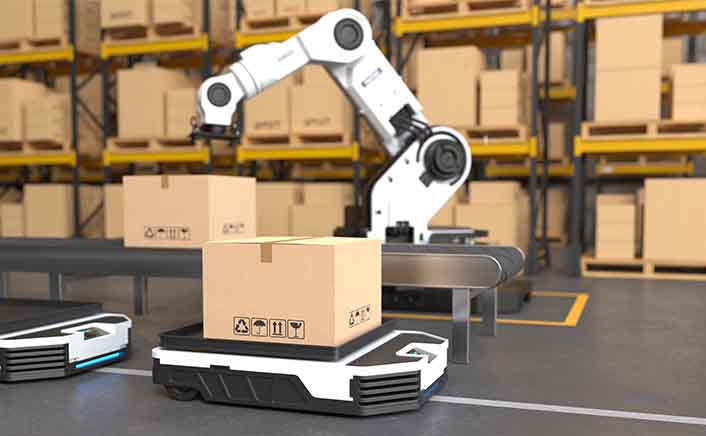
Automated material handling systems, including conveyors, automated storage and retrieval systems (AS/RS), and autonomous mobile robots (AMRs), are increasingly being deployed to improve throughput, reduce reliance on manual labor, and enhance order accuracy. With the U.S. logistics network spanning more than 20 billion square feet of warehouse space, automation is no longer a niche investment but a core operational strategy.
Labor Constraints and E-Commerce Scale Driving Adoption
The U.S. warehousing sector continues to face persistent labor shortages, with high turnover and rising wage pressures that undermine operational efficiency. Warehouse wages have steadily increased, making manual operations less economically viable in high-volume fulfillment environments. Automation provides a predictable cost structure, enabling companies to maintain consistent performance while reducing reliance on labor-intensive processes.
At the same time, the scale of e-commerce is reshaping logistics requirements. Companies such as Amazon have set new benchmarks for fulfillment efficiency by deploying more than 750,000 robots across their facilities. This level of automation enables rapid order processing and supports same-day and next-day delivery models, now industry standards. Retailers such as Walmart are accelerating investments in automated distribution centers to remain competitive, further expanding the addressable market for AMHE solutions.
Shift Toward Flexible and Scalable Automation Systems
One of the defining trends in the market is the shift from fixed automation systems to flexible solutions such as AMRs. Unlike traditional Automated Guided Vehicles (AGVs), AMRs use real-time navigation and require minimal infrastructure changes, making them well-suited for retrofitting existing warehouses. This flexibility is especially important in the U.S., where a significant share of facilities are legacy warehouses being upgraded rather than newly built.
Technology providers are responding by integrating artificial intelligence into warehouse operations. Advanced systems now optimize picking routes, inventory placement, and order sequencing in real time, boosting overall efficiency. Digital twins, virtual simulations of warehouse environments, are also gaining traction, enabling companies to test and refine automation strategies before deployment.
Evolving Pricing Models Enhancing Accessibility
The high upfront cost of automation has traditionally been a barrier, with large-scale projects ranging from USD 2 million to more than USD 10 million per facility. However, the rise of robotics-as-a-service (RaaS) is reshaping procurement dynamics. Subscription-based models enable companies to deploy automation without significant capital expenditure, making advanced systems accessible to mid-sized operators and third-party logistics providers.
In addition, declining costs of key components, such as sensors and controllers, are gradually improving affordability. Although hardware remains the largest cost component, system integration and software continue to play a critical role, often accounting for more than one-third of total project costs. This reflects the growing complexity and customization required for modern automation systems.
Expanding Applications Across Industries
While e-commerce and retail dominate demand, other sectors are rapidly adopting AMHE solutions. The food and beverage industry is investing in cold-chain automation to improve inventory accuracy and reduce spoilage in temperature-controlled environments. The automotive sector is integrating automated systems into production lines to improve efficiency and reduce work-in-progress inventory. Similarly, pharmaceutical companies are leveraging automation to meet stringent regulatory requirements and ensure precise inventory handling.
Micro-fulfillment centers are also emerging as a key growth area. These compact, urban facilities are designed to support rapid delivery timelines and require high-density automation systems to operate efficiently within limited space. This trend is particularly relevant in metropolitan areas where real estate costs constrain large-scale warehouse development.
Competitive Landscape Focused on Innovation and Integration
The AMHE market in the United States is moderately consolidated, with leading players focusing on technological innovation and integrated solutions. Companies such as Honeywell International Inc. and Dematic offer end-to-end systems that integrate hardware, software, and services. Global players such as Daifuku Co., Ltd. and SSI Schaefer are expanding their presence through strategic partnerships and investments in robotics and AI-driven solutions.
As competition intensifies, differentiation is increasingly based on system flexibility, scalability, and the ability to integrate advanced analytics. Companies are also focusing on after-sales services and maintenance contracts to build long-term client relationships and generate recurring revenue streams.
Outlook
The United States AMHE market is positioned for sustained growth, supported by structural drivers including labor shortages, e-commerce expansion, and ongoing technological advancements. As automation becomes integral to supply chain efficiency, investment in AMHE systems is expected to remain a strategic priority for businesses across industries. The market’s evolution will be defined by the adoption of flexible technologies, innovative pricing models, and the integration of intelligent systems that enable data-driven warehouse operations.