Growth of FMCG-Driven Gravure Printing Demand in Southeast Asia Flexible Packaging Industry
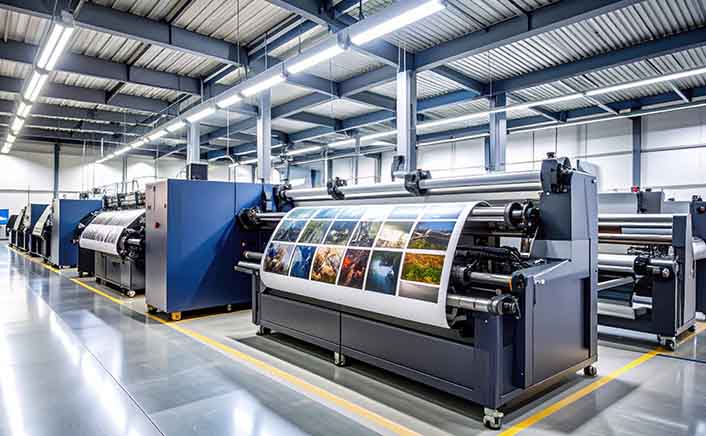
The Southeast Asia Gravure Printing Market is significantly influenced by the Food & Beverage sector, which holds a commanding structural share of 34.8%. This dominance stems from the region's packaging demands driven by high-frequency, low-unit-price mass-consumption product categories. These products necessitate extensive print runs with consistent visual quality. In contrast to Western markets known for their high SKU fragmentation, Southeast Asia’s fast-moving consumer goods (FMCG) packaging is characterized by mass production of a limited range of fast-moving SKUs, including instant noodles, snack foods, edible oils, coffee sachets, dairy products, and ready-to-eat meals. This environment favors gravure printing as the most cost-effective technology, capable of supporting long print runs of several million impressions per cylinder set with minimal quality loss. Notably, FMCG packaging converters in Indonesia and Vietnam often operate presses at utilization rates over 70-80%, which drives higher gravure ink consumption intensity during production cycles. The increasing use of flexible multilayer laminates, such as BOPP/PE and PET/AL/PE, has further enhanced the relevance of gravure printing, as these materials require excellent ink adhesion, quick-drying solvents, and precise color registration at high speeds exceeding 300 meters per minute.
Following closely is the Consumer Goods segment, accounting for 18.5% of the market share. Southeast Asia boasts one of the fastest-growing middle-class consumer bases worldwide, fostering ongoing growth in packaging for household care items, detergents, cleaning agents, and daily essentials. Unlike food packaging, consumer goods packaging tends to incorporate visually rich branding with multi-color gradients and frequent design updates, making gravure printing a preferred choice over flexographic methods. This preference stems from gravure’s superior tonal consistency and lower per-unit costs in bulk production. The so-called sachet economy plays a crucial role, particularly in countries like the Philippines, Indonesia, and Myanmar, where low-income consumers heavily rely on single-use flexible packaging. This reliance subsequently amplifies gravure’s usage in low-margin, high-volume SKUs, where cost efficiency per thousand impressions is imperative.
The Tobacco segment captures 10.9% of the market and represents one of the most technically challenging applications for gravure printing. Indonesia stands out as one of the largest cigarette markets globally, with annual production reaching hundreds of billions of sticks, necessitating packaging lines that operate continuously at an industrial scale. Gravure printing is critical in this sector due to its capability to produce ultra-high-definition imagery, metallic finishes, and micro-text security features, including anti-counterfeit patterns like guilloches and hidden identifiers. Each cigarette pack generally requires between 6-10 color stations, which significantly heightens ink consumption density compared to standard FMCG packaging. Additionally, the frequent design modifications driven by regulatory shifts and branding strategies create a constant demand for new cylinder engravings, making tobacco packaging a valuable segment despite its moderate market share.
The Personal Care & Cosmetics sector adds 11.2% to the market, increasingly driven by the sachet distribution model that predominates in Southeast Asia. Unlike Western retail practices, personal care products such as shampoos, conditioners, lotions, and facial cleansers are commonly sold in single-use sachets in countries like Indonesia and the Philippines. This model generates heightened demand for gravure printing to ensure vibrant, high-quality packaging at very low unit costs. Furthermore, the segment necessitates high color accuracy and moisture resistance, particularly in the humid tropical climates where ink adhesion stability becomes crucial. As multinational FMCG companies expand their production capabilities in ASEAN packaging hubs, gravure printing is increasingly utilized to achieve consistent global branding across localized packaging SKUs.
Pharmaceuticals constitute 9.6% of the market, bolstered by a surge in blister packaging, flexible strip packaging, and medical sachets for over-the-counter and prescription drug distribution. Growth in this segment is driven not only by volume but also by compliance requirements, as gravure printing is favored for its precision in printing batch codes, regulatory information, and tamper-evident markings. With Southeast Asia's improving healthcare access, particularly in Thailand and Vietnam, there has been an uptick in pharmaceutical packaging output. Additionally, Malaysia's export-driven pharmaceutical manufacturing further fuels the demand for high-quality gravure printed packaging materials.
Lastly, e-commerce packaging has emerged as a rapidly growing segment, capturing 6.7% of the market share. This reflects a significant structural shift towards online retail ecosystems across Southeast Asia. Countries like Indonesia, Vietnam, and Thailand are experiencing remarkable growth in digital commerce platforms, which has led to increased requirements for branded courier bags, protective mailing films, and laminated packaging.