2–5 kWh Battery Segment Leads South Korea Battery Swapping Market as Commercial Urban Mobility Shapes Capacity Demand Patterns
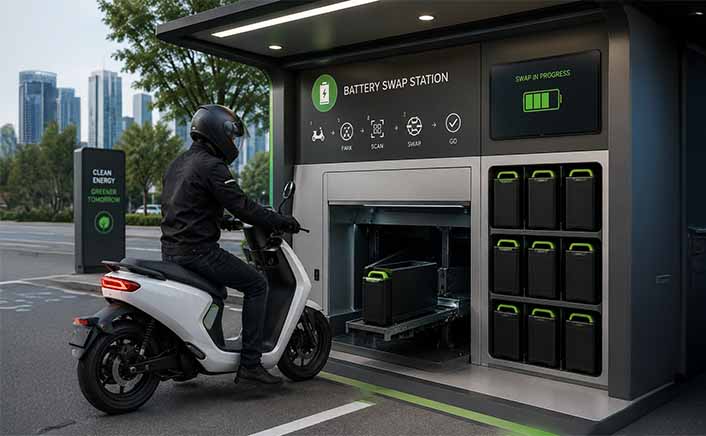
The battery capacity landscape within South Korea’s Battery Swapping Market is indicative of the country’s highly urbanized transportation structure, commercial delivery ecosystem, and evolving electrification priorities. The 2–5 kWh battery segment, which accounts for approximately 34.6% of market revenue, represents the largest category due to its strong alignment with the operational needs of electric scooters, e-motorcycles, and light urban delivery vehicles. Unlike other markets where battery swapping is primarily focused on passenger cars, South Korea's implementation has been heavily influenced by its dense metropolitan environments and the rapid growth of app-based delivery services. In major cities like Seoul and Busan, a typical delivery rider may cover over 100 kilometers a day while completing numerous deliveries. Batteries in the 2–5 kWh range are effective as they provide a balance between vehicle range, battery weight, charging efficiency, and inventory management for swap stations. Fleet operators prefer this capacity range since it enables rapid battery exchanges while keeping battery handling manageable for both riders and station personnel. Moreover, swapping networks can maintain larger battery inventories at a lower capital cost than higher-capacity systems, facilitating broader deployment across urban mobility corridors.
The Below 2 kWh segment, holding about 31.8% of the market share, remains significant due to the increased adoption of lightweight electric mobility solutions. This category encompasses compact e-scooters, shared mobility fleets, autonomous micro-delivery devices, and urban transportation platforms that emphasize portability and low operating costs. The dense urban districts of South Korea encourage the use of compact electric vehicles that can navigate congested streets and limited parking. Battery swapping infrastructure supporting these vehicles can reduce replacement times and increase throughput per station. Operators can store a larger number of low-capacity battery packs within a smaller footprint, which is an essential advantage in metropolitan areas where commercial real estate costs are among the highest in Asia. This segment also benefits from growing experimentation with robotic delivery systems, often requiring compact battery modules designed for quick replacement rather than extended charging cycles.
The 5–10 kWh segment, representing approximately 15.2% of the market, is gaining importance as battery swapping expands into more sophisticated mobility applications beyond traditional two-wheelers. Vehicles utilizing batteries in this range include premium electric motorcycles, utility-focused mobility platforms, and certain compact commercial vehicles. This segment is attracting attention from logistics operators who are looking for longer operational ranges without sacrificing the benefits of battery swapping. With the rise of e-commerce and increasing delivery expectations, fleet operators are considering vehicles that can cover larger service areas while minimizing downtime. Batteries in the 5–10 kWh range strike a practical balance between energy density and swap feasibility, allowing for extended operational hours while remaining compact enough for effective manual or semi-automated battery replacement. Furthermore, advancements in battery management systems are enhancing cycle life and operational reliability, making these larger swappable batteries increasingly appealing for commercial fleet deployment.
The 10–50 kWh segment, accounting for approximately 11.4% of market share, reflects South Korea’s gradual exploration of battery swapping for passenger vehicles and light commercial fleets. Although conventional charging remains the primary method for replenishing passenger EVs, several market participants are evaluating battery swapping as a viable solution for high-utilization fleet operations. In sectors such as ride-hailing, rental fleets, municipal services, and urban logistics, there is a strong emphasis on vehicle availability and operational efficiency. For these applications, battery swapping presents a compelling alternative to fast charging by significantly reducing downtime from hours to mere minutes. However, the relatively smaller market share of this segment highlights ongoing challenges related to battery standardization, vehicle compatibility, and infrastructure investment. Since passenger vehicle batteries are larger and heavier than those used in two-wheelers, they require more advanced automation systems, safety mechanisms, and higher capital investments for station deployment. Despite these challenges, this segment is projected to gain momentum as South Korean automakers and battery manufacturers continue to explore standardized battery architectures and battery-as-a-service business models. The Above 50 kWh segment currently contributes approximately 7.0% of total market revenue and remains the smallest among the categories.