Singapore Semiconductor Testing Equipment Market to Reach USD 310 Million by 2033 Amid Rising AI and Advanced Packaging Demand
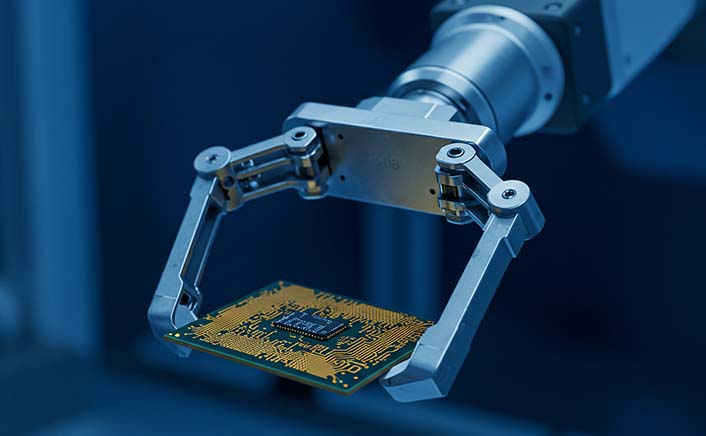
The Singapore Semiconductor Testing Equipment Market was valued at USD 170 million in 2025 and is projected to reach USD 310 million by 2033, expanding at a CAGR of 7.8% during the forecast period. The market is benefiting from Singapore’s strategic position within the global semiconductor supply chain, supported by advanced manufacturing infrastructure, backend semiconductor specialization, and increasing investments in AI-driven semiconductor production.
Semiconductor testing equipment plays a critical role in validating the functionality, reliability, and performance of chips before they are integrated into electronic devices. The market includes automated test equipment (ATE), wafer probing systems, burn-in equipment, handlers, and inspection platforms used across logic, memory, analog, automotive, and AI semiconductor applications.
Singapore has established itself as a major hub for semiconductor manufacturing and advanced packaging in Asia. According to the Singapore Economic Development Board (EDB), electronics remains the country’s largest manufacturing sector, with semiconductors accounting for a substantial share of manufacturing output and exports. Global semiconductor companies, including Micron Technology, GlobalFoundries, Infineon Technologies, and United Microelectronics Corporation (UMC), continue to expand their semiconductor operations in Singapore, increasing demand for advanced testing infrastructure.
The rapid expansion of artificial intelligence, cloud computing, and automotive electronics is significantly increasing the complexity of semiconductor testing. AI accelerators and high-bandwidth memory (HBM) chips require longer test times, higher-speed signal validation, and more advanced thermal reliability analysis than conventional semiconductor devices. These factors are accelerating the adoption of next-generation automated test equipment capable of supporting advanced semiconductor architectures.
The automotive semiconductor segment is also driving market expansion. Electric vehicles, advanced driver-assistance systems (ADAS), and industrial automation technologies require highly reliable semiconductor components that can operate under demanding environmental conditions. This trend is increasing demand for burn-in testing, thermal stress testing, and reliability validation systems across semiconductor manufacturing facilities.
Singapore’s strong position in advanced packaging and backend semiconductor operations is further strengthening market demand. The industry’s transition toward chiplet architectures, heterogeneous integration, and 2.5D/3D packaging technologies is increasing the importance of wafer-level testing and advanced inspection systems. Semiconductor manufacturers are increasingly investing in testing solutions to improve yield management and reduce defect propagation in complex packaging environments.
By equipment type, Automated Test Equipment (ATE) accounts for the largest share of the market, driven by widespread adoption across AI processors, memory semiconductors, and high-performance computing applications. Wafer probing systems are also recording steady growth as semiconductor companies increase focus on early-stage defect detection and wafer-level validation.
By application, final testing remains the largest segment because semiconductor devices require functionality validation before commercial deployment. However, advanced packaging testing is expected to grow more rapidly as the adoption of advanced semiconductor integration technologies increases.
Consumer electronics currently represents the leading end-user industry, supported by Singapore’s strong electronics manufacturing ecosystem. Meanwhile, demand from automotive electronics and AI infrastructure applications is accelerating due to increasing semiconductor content in electric vehicles, cloud computing infrastructure, and data center expansion.
The competitive landscape remains moderately consolidated, with leading global testing equipment suppliers focusing on innovation, automation, and AI-enabled testing solutions. Companies such as Advantest, Teradyne, Cohu, Chroma ATE, ASMPT, and Tokyo Electron continue to strengthen their semiconductor testing capabilities through advanced software integration, high-speed testing platforms, and next-generation reliability validation technologies.
Industry analysts indicate that Singapore’s stable regulatory environment, intellectual property protection framework, skilled semiconductor workforce, and advanced logistics infrastructure will continue to support long-term semiconductor investment and demand for testing equipment. As semiconductor manufacturers prioritize yield optimization, automation efficiency, and advanced packaging integration, the Singapore Semiconductor Testing Equipment Market is expected to remain an important strategic segment within Southeast Asia’s semiconductor ecosystem.