Saudi Arabia’s vast hydrocarbon reserves, integrated petrochemical complexes, and expanding downstream chemical investments are reinforcing the country’s position as one of the world’s most influential hubs for petrochemical production.
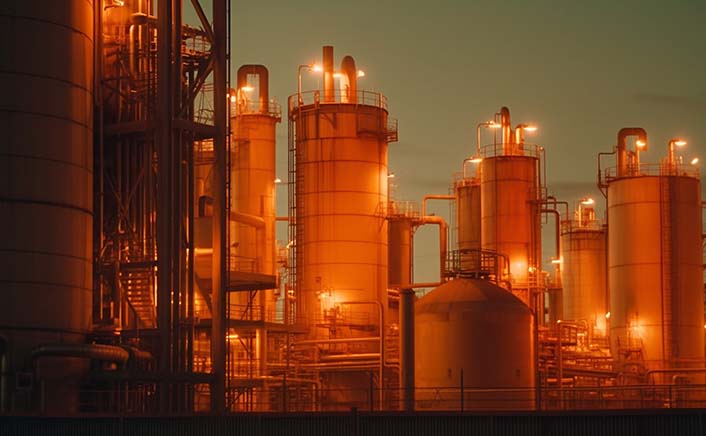
Saudi Arabia continues to strengthen its role in global chemical supply chains as industrial diversification and export demand drive growth in petrochemical production. The Saudi Arabia Petrochemicals Market reached USD 58 billion in 2025 and is projected to grow to USD 83 billion by 2033, expanding at a CAGR of 4.6% from 2027 to 2033. Growth is supported by strong global demand for polymer materials, large-scale integration of refining into chemicals, and continued investments in petrochemical infrastructure across major industrial zones such as Jubail and Yanbu.
Saudi Arabia’s petrochemical sector benefits from abundant hydrocarbon feedstocks and an integrated industrial infrastructure that allows producers to convert natural gas liquids and crude oil into a wide range of chemical derivatives. The country’s petrochemical production capacity exceeds 118 million tons annually, placing it among the largest chemical manufacturing bases globally. Industrial cities such as Jubail Industrial City in the Eastern Province and Yanbu Industrial City on the Red Sea coast host multiple petrochemical complexes producing olefins, polymers, aromatics, and chemical intermediates used in global manufacturing industries.
Ethylene derivatives dominate the Saudi petrochemicals market due to their widespread use in packaging materials, industrial plastics, and consumer goods manufacturing. Polyethylene and polypropylene are widely exported to international markets where they serve as critical raw materials for flexible packaging films, plastic containers, and industrial components. Aromatic petrochemicals such as benzene, toluene, and xylene are also important chemical intermediates used in the production of synthetic fibers, resins, and coatings across construction and manufacturing sectors.
Demand in the Saudi petrochemicals market is strongly linked to downstream manufacturing activity and global trade flows. Packaging and plastics manufacturing represent the largest end-use segment, driven by rising demand for polymer-based packaging materials in global supply chains. Construction and infrastructure development also contribute significantly to petrochemical consumption, particularly for polymer pipes, insulation materials, coatings, and adhesives used in residential and commercial projects.
The automotive and transportation sector is emerging as another important consumer of petrochemical materials. Plastics and advanced polymer components are increasingly used in vehicle manufacturing to reduce weight and improve fuel efficiency. Polymer-based materials are commonly used in interior panels, bumpers, dashboards, and electrical systems, creating consistent demand for polypropylene and engineering plastics produced in Saudi petrochemical facilities.
Export markets remain a major driver of petrochemical production in Saudi Arabia. The country supplies large volumes of polymers and chemical intermediates to manufacturing hubs across Asia and Europe through long-term supply contracts and established shipping routes. These export flows reinforce Saudi Arabia’s role as a key supplier within global chemical supply chains and support stable production volumes across large industrial complexes.
Large-scale investments in petrochemical infrastructure continue to expand production capacity and product diversification. One of the most significant projects currently under development is the $11 billion Amiral petrochemical complex in Jubail, designed to produce 1.65 million tons of ethylene annually, along with several downstream chemical products. Such projects expand Saudi Arabia’s ability to produce advanced polymers and chemical derivatives while strengthening its competitiveness in international markets.
Another major industry trend is the integration of refining and petrochemical operations. Saudi energy companies are pursuing strategies to convert larger volumes of crude oil into chemical products rather than traditional fuels. Plans to convert up to 4 million barrels of crude oil per day into petrochemicals by 2030 underscore the scale of this transition and emphasize the sector’s importance in the country’s long-term industrial strategy.
Competitive Landscape
The Saudi Arabian petrochemicals market is supported by a group of large integrated chemical producers and joint-venture operators that collectively manage extensive petrochemical production infrastructure. Major companies operating in the market include Saudi Basic Industries Corporation (SABIC), Saudi Aramco, Sadara Chemical Company, Petro Rabigh, Tasnee (National Industrialization Company), Sipchem (Saudi International Petrochemical Company), Advanced Petrochemical Company, Sahara International Petrochemical Company, Saudi Kayan Petrochemical Company, and Yansab (Yanbu National Petrochemical Company).
SABIC remains one of the world’s largest petrochemical producers, operating numerous manufacturing facilities across Saudi Arabia and international markets while producing polymers, fertilizers, and chemical intermediates used in industrial manufacturing. Saudi Aramco plays a central role in the sector through its strategy to expand crude-to-chemicals integration and strengthen downstream chemical production.
Joint ventures such as Sadara Chemical Company and Petro Rabigh illustrate the collaborative structure of the Saudi petrochemical industry, combining international technology expertise with Saudi Arabia’s feedstock advantages. Competition in the market is driven by production efficiency, cost advantages in feedstocks, and the ability to develop higher-value chemical products. As global demand for polymers, advanced materials, and industrial chemicals continues to grow, Saudi Arabia’s integrated petrochemical ecosystem positions the country for sustained expansion within the global chemical industry.