Qatar’s expanding offshore hydrocarbon production, increasing reservoir complexity, and ongoing investments in upstream infrastructure are reinforcing the country’s position as an important market for oilfield chemicals within the Middle East energy sector.
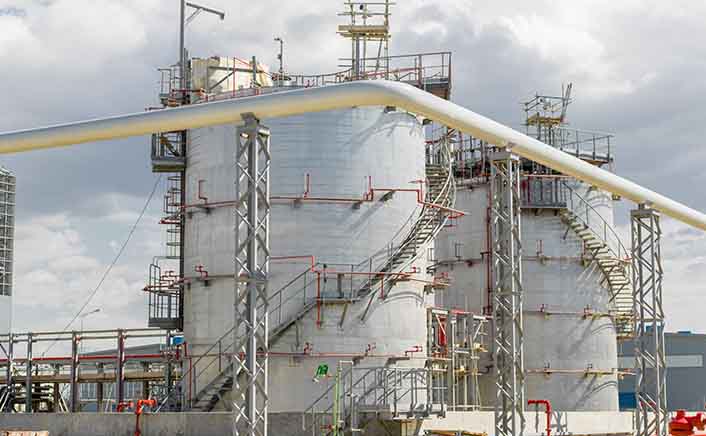
Qatar continues to strengthen its upstream energy infrastructure as operators prioritize production optimization and long-term asset integrity. The Qatar Oilfield Chemicals Market reached USD 0.40 billion in 2025 and is projected to grow to USD 0.64 billion by 2033, registering a CAGR of 6.2% from 2027 to 2033. Market growth is supported by the increasing need for corrosion protection, scale management, and flow assurance across mature hydrocarbon fields, along with ongoing investments in offshore gas production systems.
The country’s hydrocarbon sector relies heavily on offshore production assets that operate in highly corrosive marine environments. Pipelines and subsea infrastructure are continuously exposed to saline water, temperature fluctuations, and high-pressure operating conditions. Oilfield chemicals such as corrosion inhibitors, scale inhibitors, and hydrate inhibitors play a critical role in preventing pipeline degradation and maintaining stable hydrocarbon flow from reservoirs to processing facilities. Continuous chemical injection programs help operators reduce maintenance costs and extend the operational life of upstream infrastructure.
Mature oilfields are also contributing to the rising demand for advanced chemical treatment solutions. As reservoirs age, water production typically increases, increasing the risk of mineral scaling, microbial contamination, and paraffin deposition within production systems. Operators deploy specialized chemical formulations to manage these challenges and ensure that wells maintain optimal productivity. Effective scale control and microbial treatment programs are essential for preventing equipment damage and minimizing production interruptions in mature reservoirs.
Enhanced oil recovery techniques are becoming increasingly important as operators seek to sustain hydrocarbon output from aging reservoirs. Chemical-based recovery technologies utilize polymers, surfactants, and specialty additives to improve reservoir sweep efficiency and increase hydrocarbon recovery rates. These advanced chemical solutions help mobilize trapped oil and gas resources, enabling operators to maximize extraction from existing fields while delaying the need for new drilling investments.
Technological innovation in oilfield chemical formulations is further strengthening the sector’s growth outlook. Chemical manufacturers are developing high-performance solutions designed to operate under extreme reservoir conditions while maintaining environmental compatibility. New formulations focus on improving corrosion resistance, preventing scale formation, and enhancing reservoir stimulation efficiency. These technologies enable operators to reduce chemical consumption while achieving improved operational performance.
Oilfield service companies are increasingly offering integrated chemical management solutions that combine chemical supply with real-time monitoring technologies. These systems allow operators to track corrosion levels, scaling risks, and microbial activity across production infrastructure. Digital monitoring platforms help optimize chemical injection rates and ensure that treatment programs respond quickly to changing reservoir conditions. This integration of chemical solutions with digital monitoring capabilities improves operational efficiency and reduces unplanned production downtime.
Procurement practices within Qatar’s upstream sector are highly centralized, with national operators managing long-term chemical supply agreements. These procurement structures emphasize reliability, technical support, and proven field performance. Chemical suppliers often collaborate closely with operators to develop customized formulations tailored to specific reservoir characteristics and production conditions. Such partnerships create long-term supply relationships and encourage continuous innovation in chemical treatment technologies.
Competitive Landscape
The Qatar oilfield chemicals market is supported by a group of multinational chemical manufacturers and global oilfield service providers with extensive upstream expertise. QatarEnergy plays a central role in managing upstream production infrastructure and coordinating chemical procurement strategies across major oil and gas assets. SLB (Schlumberger Limited), Halliburton Company, and Baker Hughes Company provide integrated oilfield services that combine chemical supply with drilling, reservoir management, and production optimization technologies.
Specialty chemical manufacturers such as Clariant AG, BASF SE, and Solvay SA supply advanced production chemicals designed for corrosion control, scale inhibition, and flow assurance applications. Ecolab Inc., through its Nalco Champion division, delivers specialized water treatment and production chemical solutions widely used in upstream oil and gas operations. Croda International Plc and Innospec Inc. contribute specialty additives and reservoir-stimulation chemicals to improve production efficiency and protect equipment across complex hydrocarbon production systems.
Qatar’s continued investment in offshore gas production and reservoir optimization will strengthen long-term demand for oilfield chemicals across upstream operations. As reservoirs mature and production infrastructure expands, chemical treatment solutions will remain essential for protecting critical assets, improving recovery efficiency, and ensuring a reliable hydrocarbon supply within the country’s evolving energy sector.