North America Disinfectant Robots Market to Reach USD 2.91 Billion by 2033 as Healthcare Automation and Infection Control Investments Accelerate
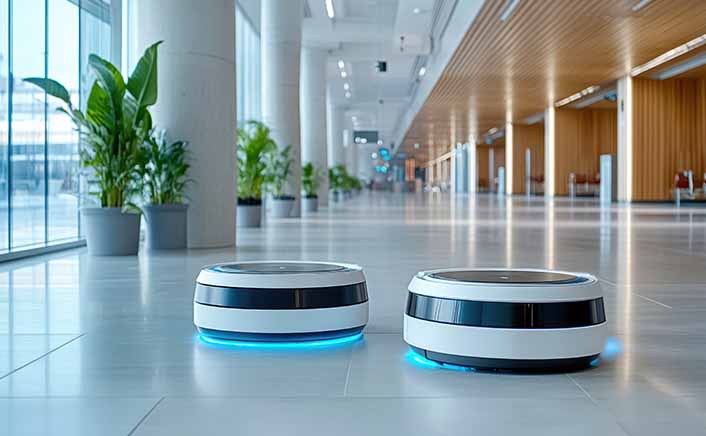
The North America Disinfectant Robots Market is demonstrating sustained expansion, valued at USD 1.08 billion in 2025 and projected to reach USD 2.91 billion by 2033, growing at a CAGR of 13.2% during the forecast period. Annual unit deployments are increasing from 1,130 units in 2025 to 3,150 units by 2033, reflecting steady adoption across healthcare facilities, public infrastructure, and commercial environments. This growth trajectory is supported by the institutionalization of infection prevention strategies and the increasing role of automation in maintaining hygiene standards.
Disinfectant robots, which use UV-C radiation, hydrogen peroxide vapor, or electrostatic spraying, have evolved from emergency pandemic solutions to long-term operational assets. Healthcare systems across the United States and Canada are integrating these technologies into routine disinfection workflows to improve consistency, reduce human error, and enhance patient safety outcomes.
Healthcare Infrastructure and Infection Burden Driving Core Demand
The demand for disinfectant robots in North America is strongly anchored in the scale and complexity of its healthcare infrastructure. The United States alone operates more than 6,000 hospitals, many of which are deploying robotic disinfection systems to address hospital-acquired infections (HAIs), which affect approximately 1 in 31 patients daily. These infections contribute significantly to extended hospital stays and increased treatment costs, prompting hospitals to adopt technologies that deliver reliable and measurable disinfection outcomes.
Large hospitals typically deploy between 1 and 3 robots, depending on facility size and patient throughput, supporting a growing installed base and consistent replacement demand. The ability of UV-C robots to achieve pathogen reduction rates exceeding 99.9% within minutes makes them particularly attractive in high-risk environments such as ICUs and patient rooms. This combination of clinical necessity and operational efficiency continues to drive procurement decisions across healthcare providers.
Expansion into Public Infrastructure and Commercial Facilities
Beyond healthcare, disinfectant robots are gaining traction in airports, transit hubs, and commercial real estate. North America’s major airports handle hundreds of millions of passengers annually, underscoring a strong need for scalable, visible hygiene solutions. Robotic systems enable continuous disinfection across large spaces while reducing reliance on manual labor.
Commercial sectors, including office complexes, retail chains, and hospitality operators, are also integrating robotic disinfection into facility management strategies. The emphasis on workplace safety, customer confidence, and regulatory compliance is accelerating adoption in these segments. As a result, non-healthcare applications are contributing an increasing share of annual unit deployments.
Technology Advancements Enhancing Adoption
Technological innovation is playing a critical role in expanding the applicability and efficiency of disinfectant robots. Autonomous navigation systems based on advanced mapping technologies allow robots to operate independently in complex environments. Integration of artificial intelligence enables optimization of disinfection routes and real-time performance monitoring, providing measurable outcomes for facility managers.
Hybrid systems that combine UV-C radiation with chemical disinfection are emerging in high-risk healthcare settings, offering enhanced pathogen elimination. Additionally, cloud connectivity and remote monitoring capabilities are enabling centralized control and analytics, further strengthening the value proposition for large-scale deployments.
Pricing Dynamics and Shift Toward Service Models
Disinfectant robots in North America are positioned as high-value assets, with UV-C systems typically priced between USD 70,000 and USD 110,000 and hydrogen peroxide vapor systems exceeding USD 120,000. While these price points can be a barrier for smaller facilities, the market is transitioning toward Robotics-as-a-Service (RaaS) models. Subscription-based pricing, typically ranging from USD 2,000 to USD 5,000 per month, is enabling broader access by reducing upfront capital requirements.
This shift toward service-based models is also creating recurring revenue streams for manufacturers while aligning costs with end users' operational budgets. As competition intensifies and component costs decline, moderate price adjustments are expected, while value will continue to be driven by software, analytics, and service integration.
Competitive Landscape and Strategic Positioning
The North American disinfectant robots market is moderately consolidated, with a mix of specialized providers and broader healthcare technology companies competing for market share. Companies such as Xenex Disinfection Services and Tru-D SmartUVC have established strong positions in the healthcare segment through clinically validated UV-C systems. UVD Robots, supported by Blue Ocean Robotics, has achieved significant deployment scale through strategic partnerships.
Other players, including Skytron, Avidbots, OTSAW Digital, and Nevoa, are focusing on expanding their presence through innovation, autonomous capabilities, and service-based offerings. Strategic collaborations with healthcare providers and facility management companies are becoming a key competitive lever, enabling companies to scale deployments and strengthen market penetration.
Outlook
The North American disinfectant robots market is expected to maintain steady growth as organizations prioritize automation, operational efficiency, and long-term infection control. With annual unit deployments projected to nearly triple by 2033, the market is transitioning toward a more mature phase characterized by diversified applications, technological sophistication, and expanding service models. This evolution positions disinfectant robots as a critical component of modern hygiene infrastructure across healthcare, public, and commercial environments.