North America Coolant Distribution Units Market to Reach USD 1,019 Million by 2033 Amid Accelerating AI Data Center Expansion
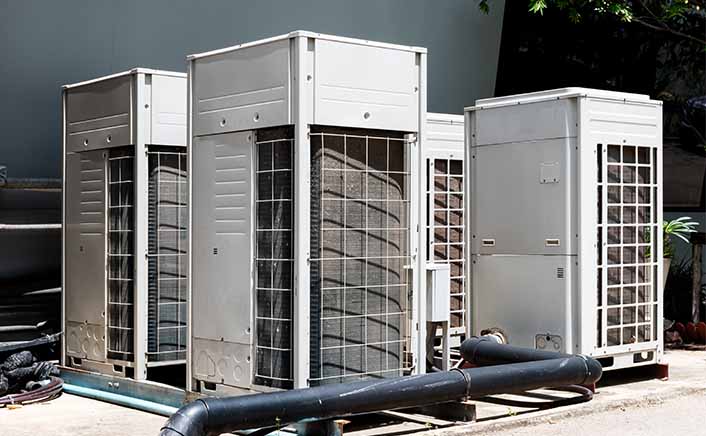
The North America Coolant Distribution Units (CDU) Market was valued at USD 370 million in 2025 and is projected to reach USD 1,019 million by 2033, expanding at a CAGR of 13.5% during the forecast period. The rapid deployment of AI infrastructure is reshaping the market, increasing rack power densities, and leading to the transition from conventional air cooling to liquid cooling technologies across hyperscale and enterprise data centers.
Coolant Distribution Units are critical thermal management systems that regulate coolant temperature, flow, and pressure in liquid-cooled computing environments. These systems are increasingly being deployed in AI clusters, high-performance computing (HPC) facilities, and hyperscale cloud campuses, where traditional air-cooling systems face efficiency limitations at rack densities exceeding 40kW.
The growing adoption of NVIDIA H100 and Blackwell GPU architectures across hyperscale environments has significantly increased demand for advanced liquid cooling infrastructure. Major cloud providers, including Microsoft, Google, Amazon Web Services, and Meta, are investing aggressively in AI-ready data center architectures capable of supporting high-density GPU workloads. Industry experts indicate that liquid cooling has moved from a niche HPC requirement to a mainstream infrastructure necessity for next-generation AI compute environments.
The United States accounts for the largest share of the regional market due to the concentration of hyperscale data centers in Virginia, Texas, Arizona, and Oregon. Northern Virginia continues to represent the world’s largest data center hub, while emerging AI infrastructure investments across Texas and Arizona are further strengthening CDU deployment opportunities. Canada is also gaining traction due to growing investment in sustainable data centers, supported by the availability of hydroelectric power and favorable environmental policies.
By type, centralized CDU systems dominate the market as hyperscale operators prioritize high-capacity thermal management architectures for AI server clusters. Rack-mounted CDU systems are also gaining adoption among enterprise data centers and colocation facilities seeking modular deployment flexibility. Based on cooling technology, direct-to-chip liquid cooling remains the leading segment because of its superior thermal transfer efficiency and compatibility with modern AI server platforms.
The market is also benefiting from rising energy efficiency requirements. Liquid cooling technologies can reduce cooling-related power consumption significantly compared to conventional air-cooled systems, helping operators improve Power Usage Effectiveness (PUE) metrics and reduce operational costs. As environmental regulations and sustainability targets become more stringent, data center operators are increasingly prioritizing investments in liquid cooling to support ESG and energy optimization objectives.
Despite strong growth prospects, the market faces challenges including high capital expenditure requirements, retrofit complexity in legacy data centers, and limited standardization across liquid cooling architectures. Concerns regarding coolant management, infrastructure compatibility, and deployment expertise continue to influence purchasing decisions among mid-sized operators.
Leading companies operating in the North America CDU market include Vertiv, Schneider Electric, CoolIT Systems, nVent, and Boyd. Market competition centers on thermal efficiency innovation, modular scalability, AI infrastructure compatibility, and strategic partnerships with hyperscale and GPU-ecosystem participants.
As AI infrastructure spending accelerates across North America, coolant distribution systems are expected to become foundational components of next-generation data center architecture, positioning the CDU market for sustained long-term expansion through 2033.