Elevating Industries: The prevalence of diseases is increasing.
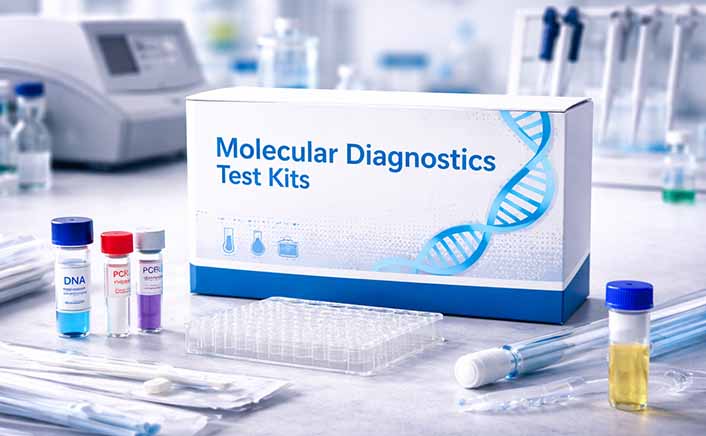
The Asia-Pacific region is currently facing a significant rise in infectious and chronic diseases, which is having a major impact on healthcare systems. High rates of infections such as tuberculosis, HIV, and COVID-19 have led to an increased demand for rapid and accurate diagnostic tests. In addition, the prevalence of chronic diseases, including diabetes and cancer, highlights the need for early detection to improve treatment outcomes. This growing disease burden is driving healthcare providers to adopt advanced molecular diagnostics, which provide more reliable results than traditional methods. As healthcare systems focus on improving patient care, the demand for molecular diagnostics is expected to continue increasing.
The Asia Pacific Molecular Diagnostics Test Kits Market was valued at USD 4.60 billion in 2025 and is projected to reach USD 8.58 billion by 2033, with a compound annual growth rate (CAGR) of 17.20% from 2027 to 2033.
The growing need for point-of-care (POC) testing solutions is transforming the field of molecular diagnostics in the Asia-Pacific region. POC testing provides quick results at or near the location of patient care, making diagnostics more available, especially in rural and underserved areas. The expansion of mobile health programs and telemedicine further reinforces this trend, as patients and healthcare providers look for convenient and effective testing options. POC molecular diagnostics enhance disease management by enabling timely interventions and lessening the strain on centralized laboratory services. This demand for accessible, rapid testing solutions is a major driver of market growth in the region.
1. Advancements in Technology:
Technological innovations are playing a crucial role in the rapid expansion of the molecular diagnostics market in the Asia-Pacific region. Breakthroughs in areas such as next-generation sequencing (NGS), real-time polymerase chain reaction (PCR), and microarray technology have improved the accuracy and efficiency of diagnostic tests. These advancements allow for faster testing and results, which is critical in managing infectious diseases and personalizing treatment plans. Increased investment in research and development by both local and international companies is driving the introduction of new and enhanced diagnostic tools, making molecular diagnostics more accessible to healthcare providers and patients alike.
2. Growing Healthcare Expenditure:
Healthcare expenditure in the Asia-Pacific region is increasing due to economic growth and growing government commitment to health initiatives. Countries like China and India are significantly increasing their healthcare budgets, leading to better infrastructure and improved access to advanced medical technologies. This financial investment allows for the purchase of state-of-the-art diagnostic equipment and the implementation of comprehensive healthcare programs. As healthcare systems expand, integrating molecular diagnostics into routine practice becomes more feasible, enabling early disease detection and management, ultimately improving patient outcomes and driving market growth.
3. Increasing Awareness and Adoption of Personalized Medicine:
The focus on personalized medicine is changing healthcare in the Asia-Pacific region. Personalized medicine emphasizes tailored treatments based on individual genetic profiles. This requires advanced diagnostic tools for accurate genetic testing and disease stratification. Educational programs for healthcare professionals and the public are raising awareness of the benefits of molecular diagnostics, encouraging their use in clinical practice. This shift towards personalized treatment approaches is increasing acceptance and use of molecular diagnostic tests, driving market growth as healthcare providers seek innovative solutions to improve patient care and outcomes.
4. Improving Regulatory Frameworks:
The Asia-Pacific region needs strong regulatory frameworks to support the growth of the molecular diagnostics market. Many countries are simplifying their approval processes for new diagnostic tests, making it easier for companies to introduce innovative products. These improved regulations create a favorable environment for research, development, and commercialization, ensuring that healthcare providers have access to high-quality diagnostic tools. Regulatory support also helps to establish trust among healthcare professionals and patients, as adherence to safety and efficacy standards becomes a key feature of the industry, ultimately leading to greater adoption of molecular diagnostics.
5. Increasing Collaborations and Partnerships:
Collaborations and partnerships among governments, academic institutions, and private companies play a crucial role in advancing molecular diagnostics in the Asia-Pacific region. Public-private partnerships enable knowledge sharing, resource pooling, and innovation, leading to the development of state-of-the-art diagnostic technologies. Local companies often team up with international firms to benefit from their expertise and gain access to global markets, thus enhancing their competitiveness. These partnerships not only drive research and development but also promote the exchange of best practices in diagnostics and healthcare delivery. As these collaborative efforts intensify, the molecular diagnostics market is expected to rapidly expand to meet the region's growing healthcare needs.
In conclusion, the Asia Pacific molecular diagnostics test kits market presents a wide array of opportunities across multiple sectors. The region's rapid technological advancements, coupled with the diverse needs of its industries, make it a fertile ground for the growth and adoption of molecular diagnostics test kits. As regulatory frameworks evolve and technology continues to advance, the potential for molecular diagnostics test kits in the Asia Pacific region is set to expand even further, driving innovation and economic growth.
Competitive Landscape
Some of the major companies operating within the Molecular Diagnostics Test Kits market are: bioMérieux SA, BD, Danaher Corporation, Grifols, S.A., Hologic Inc., Novartis AG, QIAGEN, Siemens Healthcare GmbH, F. Hoffmann-La Roche Ltd. and Others.