Rising Semiconductor Investment and Precision Manufacturing Are Reinforcing Motion Control Demand in Japan
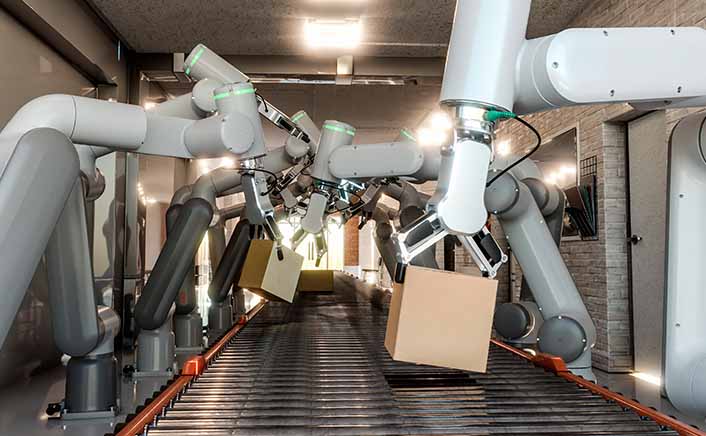
Demand for Motion Control Systems in Japan remains robust, driven by advanced manufacturing, semiconductor investments, and automotive electrification. Components like servo motors, drives, and multi-axis controllers are integral to robotics, CNC machinery, and high-precision production lines. As EV platforms grow and semiconductor facilities expand, manufacturers focus on synchronized, closed-loop motion systems that offer high torque stability and micron-level accuracy. Motion control is now seen as a vital part of production infrastructure, affecting throughput, yield, and efficiency. The growth is mainly driven by replacement, upgrades, and technological advances, ensuring steady, predictable expansion without reliance on speculative demand spikes.
Japan’s motion control industry is mature yet constantly innovating. The automotive sector uses servo-driven systems for stamping, welding, painting, and battery assembly. Semiconductor firms need high-speed linear motors and multi-axis platforms for wafer transfer and lithography. Industrial machinery OEMs embed motion controllers into export-focused equipment, boosting local demand. Closed-loop systems are preferred for their performance, while Ethernet-based controls are gaining popularity for real-time factory monitoring. Instead of rapid expansion, the market emphasizes cautious capital investment and steady system improvements.
Both new installations and cyclical replacements drive revenue growth. Industrial facilities usually update their servo drives and controllers every six years to stay compatible with new control software and networking standards. Higher prices for integrated motion systems boost value, whereas commoditized stepper systems offer a steady but limited market share. Procurement focuses on lifecycle costs, reliability, and supplier reputation rather than short-term discounts. Today, integration complexity and digital interoperability are key factors in purchasing decisions, especially for automotive and semiconductor companies with strict productivity goals.
In Japan, capital expenditure remains deliberate and performance-focused. Investments are driven by growth in EV production, battery manufacturing capacity, and efforts to localize semiconductor manufacturing. Manufacturers tend to develop long-term relationships with trusted domestic suppliers to ensure component compatibility and reliable after-sales support. Digital transformation efforts, especially predictive maintenance and analytics, are increasing the demand for smart motion control platforms that integrate into broader smart factory systems. Opportunities to expand margins are mainly found in high-performance servo systems and combined hardware-software solutions, rather than in standalone mechanical parts.
Regional distribution indicates industrial clustering more than population density. The Kanto area is prominent because of its electronics, robotics, and precision engineering sectors. Chubu benefits from a focus on the automotive industry and electrification projects. Kansai continues to be active in machinery and system integration, while Kyushu is emerging as a growth hub driven by semiconductors. This varied industrial landscape helps stabilize overall national demand and minimizes concentration risks.
Competitive Landscape
Japan’s motion control market features a blend of advanced local manufacturers and global giants. Yaskawa Electric and FANUC lead in servo motors and robotics-integrated motion systems, while Mitsubishi Electric and OMRON combine controllers, drives, and digital monitoring in their automation offerings. Panasonic Industry focuses on providing high-precision components for industrial systems. International competitors like Rockwell Automation, Siemens, Schneider Electric, Bosch Rexroth, and ABB compete by advancing control architectures and digital factory solutions. The rivalry centers on reliability, performance, and ecosystem compatibility, rather than price cuts. Strict technical standards, strong OEM partnerships, and complex software integration act as barriers to new entrants, supporting stable, long-term growth in Japan’s motion control industry.