Japan MEMS Sensor Market to Reach USD 2.76 Billion by 2033 Amid Expansion of Automotive Electronics and Industrial Automation
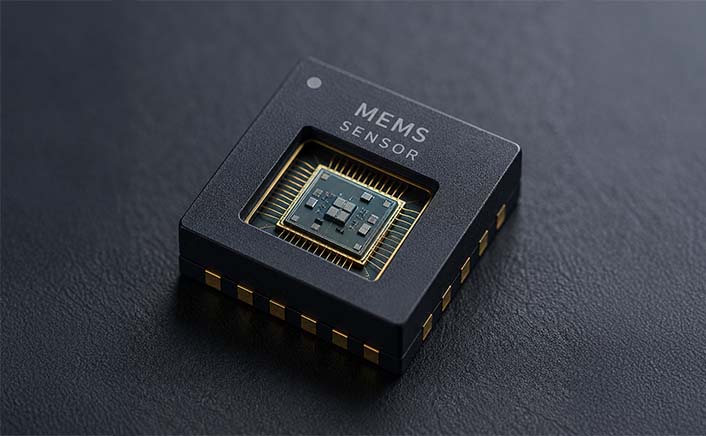
Japan’s MEMS Sensor Industry is entering a new phase of growth as the country strengthens investments in automotive electronics, semiconductor manufacturing, industrial robotics, and smart sensing technologies. According to recent market analysis, the Japan MEMS Sensor Market was valued at USD 1.45 billion in 2025 and is projected to reach USD 2.76 billion by 2033, expanding at a CAGR of 8.4% during the forecast period. In volume terms, the market accounted for nearly 950 million units in 2025, with strong deployment across vehicles, factory automation systems, wearable electronics, healthcare devices, and telecommunications infrastructure.
MEMS (Micro-Electro-Mechanical Systems) sensors are miniaturized semiconductor-based components that detect motion, pressure, vibration, sound, and environmental conditions in electronic systems. These sensors have become essential for modern automotive safety systems, industrial robotics, smartphones, gaming devices, medical equipment, and IoT-enabled infrastructure. Japan remains one of the world’s most important MEMS ecosystems due to its advanced manufacturing base, semiconductor expertise, and a strong presence of global electronics and automotive companies.
The automotive industry remains a major driver of demand for MEMS sensors in Japan. Modern vehicles increasingly require accelerometers, gyroscopes, pressure sensors, and inertial modules for applications including airbag deployment, electronic stability control, battery management systems, ADAS platforms, and autonomous navigation technologies. According to OICA data, Japan produced more than 8 million vehicles in 2024, supporting consistent demand for automotive sensing technologies. Hybrid and electric vehicles are also contributing to higher MEMS integration, as advanced battery systems and vehicle safety architectures require greater sensor density than in conventional internal combustion vehicles.
Industrial automation is another major growth area for the market. Japan remains the world’s largest industrial robot manufacturer, accounting for nearly 45% of global robot production according to the International Federation of Robotics. MEMS sensors are increasingly integrated into collaborative robots, predictive maintenance systems, automated guided vehicles, and smart manufacturing platforms to improve operational efficiency and reduce machine downtime. The expansion of factory digitalization and AI-enabled industrial monitoring systems is further accelerating the adoption of low-power MEMS sensing technologies across manufacturing environments.
The market is also benefiting from Japan’s renewed semiconductor investment strategy. The Japanese government has significantly increased support for domestic semiconductor production through partnerships involving Rapidus, TSMC, Sony, and Denso. TSMC’s Kumamoto semiconductor facility and additional government-backed investments are expected to strengthen Japan’s domestic semiconductor ecosystem while improving local manufacturing capacity for sensing technologies and specialty chips. These investments are becoming increasingly important as companies seek to reduce supply chain risks following global semiconductor shortages experienced in recent years.
Consumer electronics remain a major contributor to shipments in the MEMS sensor industry. MEMS microphones, accelerometers, and environmental sensors are widely integrated into smartphones, gaming consoles, wearable devices, and imaging systems. Japan’s strong gaming and imaging electronics industries continue to support stable demand for high-precision motion and environmental sensing technologies. Companies such as Sony Group Corporation, Murata Manufacturing, TDK Corporation, Alps Alpine, and Omron Corporation continue investing in compact, low-power MEMS modules optimized for IoT devices, automotive systems, and industrial applications.
Healthcare and smart infrastructure applications are also creating new growth opportunities for MEMS manufacturers. Japan’s aging population is driving demand for wearable monitoring devices, remote healthcare systems, hearing technologies, and smart medical equipment equipped with miniaturized sensors. At the same time, smart infrastructure projects and disaster monitoring systems are supporting the deployment of environmental and vibration-sensing MEMS technologies across urban infrastructure and energy-efficient building systems.
Despite strong long-term fundamentals, the market faces several challenges. Japanese MEMS suppliers continue facing pricing pressure from semiconductor manufacturers in China, Taiwan, and South Korea, particularly in consumer electronics categories where cost competition remains intense. Rising fabrication and advanced packaging costs also create operational pressure for manufacturers investing in next-generation MEMS technologies.
Nevertheless, the market outlook remains positive due to the increasing integration of sensors across vehicles, industrial systems, healthcare devices, and connected infrastructure. Growth in autonomous mobility, AI-enabled edge sensing, robotics, and smart manufacturing is expected to position MEMS sensors as a critical component within Japan’s broader semiconductor and advanced electronics ecosystem through 2033.