The increasing need for food security, urban agriculture, and resource-efficient cultivation is accelerating the adoption of indoor farming systems across Japan.
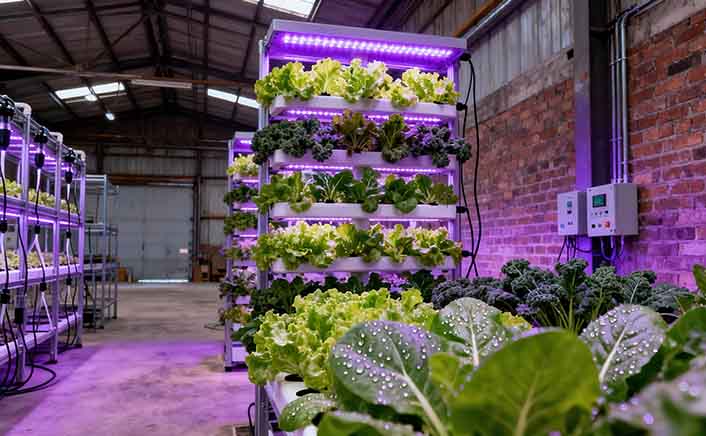
The Japan Indoor Farming Market is expanding steadily, supported by the country’s strong technological capabilities, limited arable land, and growing demand for pesticide-free, high-quality produce. Initially, indoor farming adoption was concentrated among large-scale plant factories and technology-driven enterprises. However, the market is now seeing broader participation from retail chains, food service providers, and mid-scale commercial growers to ensure a consistent supply and improve operational efficiency. As Japan continues to face structural challenges such as an aging agricultural workforce and declining rural labor availability, indoor farming is increasingly positioned as a viable, scalable solution for modern food production.
The Japan Indoor Farming Market was valued at USD 1.58 billion in 2025 and is expected to reach USD 3.08 billion by 2033, growing at a CAGR of approximately 8.8%. The market’s growth is supported by stable demand, premium pricing for indoor-grown produce, and ongoing advancements in automation, LED lighting, and climate-control technologies. However, growth remains moderate rather than exponential, reflecting high capital requirements and energy costs associated with indoor farming infrastructure.
Plant factories with artificial lighting (PFAL) dominate the market in value terms.
PFAL systems account for the largest share of the Japanese indoor farming market, driven by their ability to deliver consistent, year-round production independent of external climatic conditions. These facilities offer high yield per square meter, precise environmental control, and reduced reliance on manual labor, making them particularly suitable for Japan’s urban and resource-constrained environment. While greenhouse-based systems remain relevant in certain applications, PFAL continues to lead in scalability and compatibility with automation technologies.
Automation and AI-driven systems are emerging as high-growth enablers.
Automation technologies, including robotics, IoT-based monitoring, and AI-driven farm management systems, are among the fastest-growing areas in the market. These solutions address critical labor shortages while improving productivity, resource efficiency, and crop consistency. As operational costs remain a key concern, investments in automation are increasingly viewed as essential for achieving long-term profitability and scalability in indoor farming operations.
Kanto and Kansai regions lead adoption, while regional expansion gains traction.
The Kanto region, particularly Tokyo, represents the largest market due to high urban demand, strong retail infrastructure, and proximity to consumers. Kansai follows closely, supported by commercial adoption in cities such as Osaka. Meanwhile, regions such as Kyushu are emerging as growth areas, offering lower land costs and attracting increased investment in agri-tech infrastructure. This regional diversification reflects a gradual shift toward balancing urban proximity with cost-efficient production.
Demand for stability is driven by premium produce and institutional buyers.
Demand in the Japanese indoor farming market remains relatively stable, supported by consistent procurement from supermarkets, foodservice providers, and institutional buyers. Indoor-grown leafy greens and herbs command premium prices due to their pesticide-free nature and quality consistency. While some segments remain price-sensitive, particularly in comparison to traditional agriculture, the market benefits from a loyal consumer base that prioritizes food safety, freshness, and traceability.
The long-term outlook remains positive, with a focus on efficiency and diversification.
Despite challenges related to energy consumption and capital intensity, the long-term outlook for indoor farming in Japan remains structurally strong. Continued advancements in energy-efficient technologies, automation, and crop diversification are expected to improve profitability and expand market scope. As the industry evolves, growth will increasingly be driven by operational optimization, integration with retail supply chains, and expansion into higher-value crop categories beyond leafy greens.
Competitive Landscape
The Japan Indoor Farming Market comprises a mix of specialized indoor farming companies and large technology-driven conglomerates. Competition centers on technological innovation, automation capabilities, and production efficiency rather than on price alone. Leading players focus on scaling automated plant factories, developing energy-efficient systems, and forming strategic partnerships with retailers and food service providers. Additionally, the entry of electronics and technology firms into the sector highlights the growing convergence between agriculture and advanced industrial technologies, intensifying competition and accelerating innovation.