Accelerating EV penetration and aligning industrial policy are strengthening Indonesia’s position as Southeast Asia’s most strategic electric-vehicle hub.
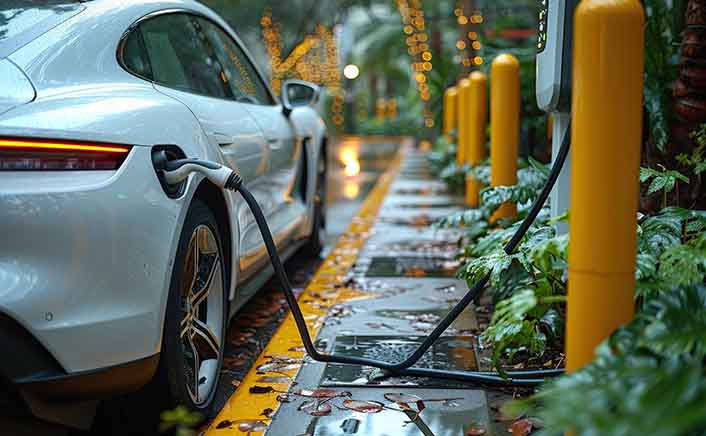
Indonesia is quickly evolving from an emerging EV user into a well-established electric mobility ecosystem. By 2025, passenger EV sales are expected to make up about 15% of all passenger vehicles, supported by strong domestic battery production using nickel resources. The country aims to be both a major consumer and producer in this sector. Java, especially Jakarta and nearby areas, drives demand thanks to its high urban density, expanding charging infrastructure, and supportive regulations. Continued investment in manufacturing and increasing consumer interest are strengthening Indonesia’s long-term path toward widespread electrification.
The Indonesian Electric Vehicles Market was worth USD 3.80 billion in 2025 and is expected to reach USD 12.12 billion by 2033, growing at a CAGR of 15.60% from 2027 to 2033. The market benefits from coordinated fiscal incentives, increasing urban air quality concerns, and the development of a local EV manufacturing and battery ecosystem. Despite a slowdown in the general automotive sector, EV sales increased by around 49% in 2025, indicating a fundamental shift in demand towards electrified mobility solutions.
Passenger electric vehicles continue to generate the most revenue, thanks to their higher average selling prices than two-wheelers. The segment has advanced beyond early adoption, aided by the availability of more mid-range models and better cost competitiveness. Although lower in unit value, electric two-wheelers are the fastest-growing segment by volume, driven by subsidy programs and Indonesia’s extensive motorcycle ownership.
Government targets are bolstering long-term market confidence, aiming for 2 million electric cars and around 12–13 million electric two-wheelers by 2030. These goals are part of Indonesia’s wider green economy and industrial transition strategy. Over USD 346 million in investment has been announced to increase EV assembly and battery production, enhance domestic value chain integration, and decrease dependence on imports.
Urban concentration still influences EV adoption, with Java leading in registrations due to its higher income levels and dense infrastructure. Charging stations are most developed in Jakarta and nearby metropolitan areas, facilitating daily commuting and fleet electrification. Regions like Sumatra and Bali are seeing faster adoption, especially in industrial hubs and tourism-focused sustainability efforts.
Battery ecosystem localization remains a key strategic advantage for Indonesia. By utilizing its large nickel reserves, the country is building integrated facilities for processing, refining, and manufacturing battery cells. This approach aims to reduce long-term costs and strengthen its export position within ASEAN markets.
Consumer sentiment data shows robust underlying demand, with surveys indicating that almost 78% of respondents plan to buy EVs. This enthusiasm, along with growing model options and competitive prices from global OEMs, helps maintain momentum in demand.
Competitive Landscape
Indonesia’s EV market blends global leaders and local emerging firms competing on price, localization, and technology. Key players include BYD, Wuling Motors, Hyundai, Chery, Toyota, Mitsubishi, DFSK, BMW, Gesits, and Alva. International OEMs boost their market share through local assembly and competitive mid-range prices, while local two-wheeler brands benefit from government subsidies and national branding efforts. The most intense competition happens in the mid-range passenger EV segment, where affordability and feature innovation drive growth. As battery production becomes more localized and infrastructure develops, strategic alliances and manufacturing capacity will be crucial for long-term leadership in Indonesia’s growing electric mobility sector.