Global Smart Refrigerator Market to Reach USD 17.6 Billion by 2032, Driven by Smart Home Integration and Premium Appliance Demand
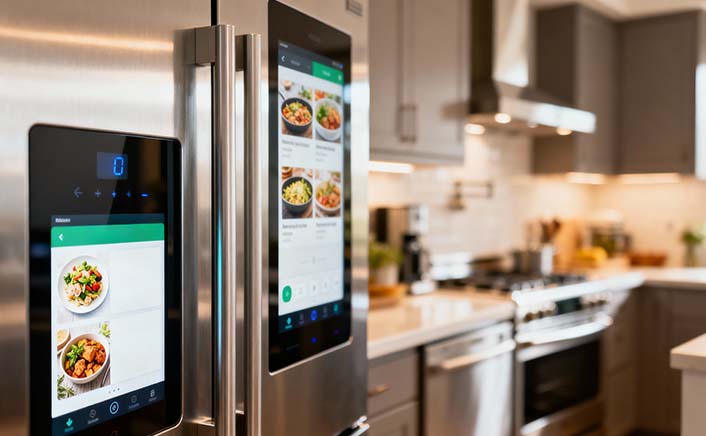
The Global Smart Refrigerator Market is expanding steadily as connected living gains traction in residential households worldwide. According to the latest analysis by MarkSpark Solutions, the market was valued at USD 9.9 billion in 2025 and is projected to reach USD 19.1 billion by 2033, growing at a compound annual growth rate (CAGR) of 8.60% over the forecast period. This growth reflects rising adoption of smart home technologies, increasing premiumization of kitchen appliances, and heightened consumer focus on energy efficiency and convenience.
Smart refrigerators, equipped with features such as app-based control, energy optimization, internal cameras, and ecosystem connectivity, are increasingly positioned as central components of modern kitchens. While overall unit volumes remain constrained by long appliance replacement cycles, higher average selling prices and feature-driven upgrades continue to support sustained revenue growth. In value terms, smart refrigerators now account for a growing share of global refrigerator sales, particularly in developed markets.
North America currently dominates the global market, accounting for 39.0% of total revenue, supported by high household incomes, intense smart-home penetration, and shorter appliance upgrade cycles. The United States remains the region's primary contributor, with smart refrigerators accounting for a significant share of premium refrigerator purchases. Europe follows with a 27.0% market share, driven by stringent energy-efficiency regulations and rising consumer preference for technologically advanced household appliances. Asia-Pacific, with a 28.0% share, is the fastest-growing region, driven by rapid urbanization, rising disposable incomes, and the expanding availability of smart appliances through online retail channels.
From a product perspective, French-door smart refrigerators lead the market, accounting for 39.0% of global revenue. Their dominance stems from larger storage capacities, premium aesthetics, and compatibility with advanced innovative features, making them particularly attractive to urban and high-income households. Side-by-side and multi-door configurations also contribute significantly, reflecting strong demand for large-capacity models in developed regions.
A key trend shaping the market is the growing monetization of functional innovative features. Energy optimization, remote diagnostics, and app-based controls are driving a higher willingness to pay. At the same time, experiential features such as internal cameras and touchscreen displays serve as potent purchase triggers in the premium segment. Additionally, smart refrigerators are emerging as anchor devices in the connected home ecosystem, enabling integration with voice assistants, intelligent energy management systems, and other connected kitchen appliances. This ecosystem-centric positioning is enhancing long-term customer engagement and brand loyalty.
The Global Smart Refrigerator market is moderately consolidated, with a small group of multinational manufacturers capturing a significant share of global revenue. Leading players such as Samsung Electronics and LG Electronics dominate the premium segment through continuous innovation in connectivity, display interfaces, and ecosystem integration. Whirlpool Corporation and GE Appliances maintain strong positions in North America through extensive retail networks and after-sales service capabilities. Asian manufacturers, including Haier Group, Hisense Group, and Panasonic Corporation, are expanding their global footprint with competitively priced models and localized product strategies.
Looking ahead, the Global Smart Refrigerator market is expected to benefit from continued smart-home adoption, declining technology costs, and growing consumer awareness of energy-efficient appliances. Despite high upfront prices and long replacement cycles, which will continue to shape adoption patterns, manufacturers that align feature monetization with ecosystem integration and regional demand dynamics are well-positioned to capture long-term growth opportunities.