Why Printed Circuit Boards Continue to Dominate the Global Conformal Coating Market Across High-Reliability Electronics
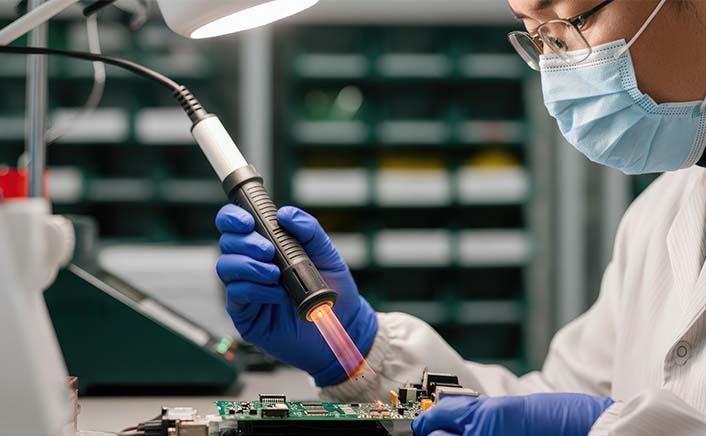
Printed circuit boards (PCBs) represent the largest segment of the Global Conformal Coating Market, as nearly all electronic products from consumer gadgets to industrial automation systems depend on PCB assemblies. These assemblies require protection against elements like moisture, dust, salt spray, chemicals, and electrical leakage. As electronic circuits become more compact and conductor spacing diminishes, PCBs have become increasingly susceptible to electrochemical migration and corrosion. This vulnerability has prompted electronics manufacturers to treat conformal coatings as essential for enhancing reliability rather than merely an optional protective layer.
The second-largest application segment consists of electronic assemblies, which combine multiple interconnected components such as resistors, capacitors, microcontrollers, connectors, and communication modules. These components must consistently perform under various environmental conditions. The rising adoption of automated selective coating equipment has further facilitated the use of coatings on assembled boards, enhancing precision and reducing material waste.
Power electronics have emerged as one of the fastest-growing application areas, driven by the increasing deployment of electric vehicles, renewable energy systems, industrial motor drives, and AI data center power infrastructures. High-voltage inverters, converters, and power control modules produce significantly higher thermal loads compared to conventional electronic systems, necessitating coatings with excellent dielectric strength, thermal stability, and humidity resistance. The commercialization of silicon carbide (SiC) and gallium nitride (GaN) devices has spurred demand for advanced silicone and parylene coatings that maintain insulation performance even under elevated operating temperatures. As power densities rise, manufacturers are focused on developing coating formulations that enhance long-term reliability while minimizing partial discharge and electrical tracking.
Automotive electronic control units (ECUs) represent another vital application, particularly as modern passenger vehicles incorporate numerous controllers responsible for various functions, including engine management, braking, steering, infotainment, connectivity, and advanced driver assistance systems (ADAS). Electric vehicles demand even greater electronic integration, with multiple ECUs communicating continuously under challenging thermal and vibration conditions. The exposure of these systems to condensation, road salt, oil vapors, and temperature fluctuations underscores the critical role of conformal coatings in maintaining operational reliability throughout the vehicle's lifecycle. Likewise, battery management systems (BMS) have gained importance alongside the expansion of global electric vehicle production. BMS boards oversee vital functions such as voltage, current, temperature, and cell balancing while operating close to high-voltage battery packs, making electrical insulation and corrosion protection essential design requirements. In this segment, silicone coatings are increasingly favored for their ability to maintain flexibility across broad temperature ranges and resist cracking due to repeated thermal cycling.
The semiconductor sector is also witnessing growing demand for conformal coatings as advanced packaging technologies enhance the complexity and value of electronic modules. Semiconductor manufacturing equipment, power modules, RF components, and advanced chip packaging often require protective coatings to avert contamination and ensure electrical stability in both cleanroom and field environments. Although semiconductor devices are usually encapsulated, surrounding assemblies and power modules are increasingly utilizing conformal coatings to bolster long-term operational reliability.
Medical electronic devices hold a significant share of the market because systems like diagnostic tools, patient monitoring equipment, infusion pumps, wearable health devices, and implantable electronics must endure repeated sterilization cycles, high humidity, and chemical exposure without compromising their electrical performance. A regulatory focus on product reliability and patient safety continues to drive the adoption of premium coatings in this sector.
As industrial automation, smart factories, connected vehicles, and Internet of Things (IoT) solutions expand globally, sensors are becoming increasingly essential. Environmental monitoring sensors, pressure sensors, radar modules, lidar systems, and industrial control sensors are often deployed in harsh operating environments, where moisture ingress and chemical exposure could impair performance. Thin, uniform conformal coatings allow manufacturers to safeguard delicate sensing elements without impacting measurement accuracy. Additionally, LED lighting modules contribute to market demand, particularly in outdoor lighting, automotive lighting, architectural illumination, and hazardous industrial locations, where condensation, UV exposure, and airborne contaminants can reduce service life. Coatings enhance insulation and corrosion resistance while preserving optical performance.