Germany Sensor-Based Sorting Machine Market to Reach USD 302 Million by 2033 as AI-Driven Recycling and Industrial Automation Investments Accelerate
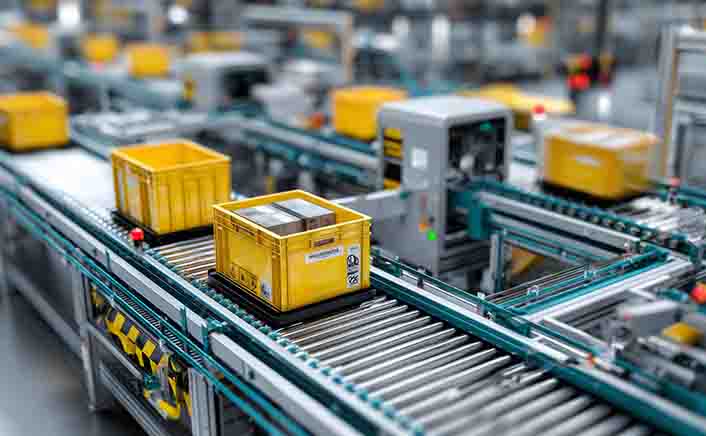
Germany’s Sensor-Based Sorting Machine Industry is entering a new phase of industrial modernization as recycling operators, food processors, and logistics companies increase investment in automation technologies that improve material recovery, operational efficiency, and contamination detection. According to recent market analysis, the German Sensor-Based Sorting Machine Market was valued at USD 180 million in 2025 and is projected to reach USD 302 million by 2033, expanding at a CAGR of 7.1% during the forecast period.
Sensor-based sorting machines use technologies such as optical sensors, near-infrared (NIR), X-ray, laser, and AI-enabled camera systems to identify and separate materials automatically at an industrial scale. These systems are increasingly replacing manual sorting operations across recycling plants, food processing facilities, plastics recovery centers, mining operations, and logistics hubs where speed, accuracy, and material purity directly influence profitability and regulatory compliance.
Germany’s leadership in industrial automation and recycling infrastructure continues to position the country as one of Europe’s most important markets for advanced sorting technologies. According to Eurostat, Germany maintains a municipal waste recycling rate above 67%, among the highest in Europe. At the same time, the German Environment Agency reported that packaging waste volumes exceed 19 million tonnes annually, creating sustained demand for automated sorting infrastructure capable of efficiently handling mixed and contaminated waste streams.
The waste recycling segment currently accounts for the largest share of the market. Recycling operators are increasingly adopting optical and AI-powered sorting systems to improve plastics recovery rates and reduce contamination in recycled materials. Advanced sorting technologies have become commercially important as demand for recycled polymers is increasing across Germany’s automotive, packaging, and manufacturing industries. Companies are under pressure to meet circular-economy targets established by the German Packaging Act (VerpackG) and broader European Union sustainability regulations.
Artificial intelligence is also reshaping the competitive landscape. Manufacturers are integrating deep-learning software and hyperspectral imaging technologies into sorting systems to improve detection accuracy for difficult-to-identify materials such as multilayer plastics, black polymers, and battery waste components. According to TOMRA's deployment studies, AI-enabled optical sorting systems can achieve plastic purity rates above 95%, significantly improving the commercial value of recycled materials.
The food processing industry represents another major growth area for sensor-based sorting systems. Germany hosts one of Europe’s largest food manufacturing sectors, generating annual revenues exceeding USD 240 billion. Food processors increasingly deploy optical sorting technologies to identify product defects, contamination, discoloration, and foreign materials in grains, vegetables, frozen foods, and packaged products. These systems help manufacturers comply with strict European food safety regulations while reducing product wastage and labor dependency.
Rising labor costs and workforce shortages are further accelerating automation investments across Germany’s industrial sector. Manufacturing companies are increasingly deploying automated inspection and sorting technologies to maintain productivity amid ongoing shortages of skilled industrial workers. Sensor-based sorting systems improve operational consistency while reducing reliance on labor-intensive, error-prone manual inspection processes.
Battery recycling is expected to emerge as a major long-term opportunity within the market. Germany’s electric vehicle ecosystem continues expanding through companies including Volkswagen, BMW, Mercedes-Benz, and Tesla’s Berlin Gigafactory operations. As electric vehicle adoption rises, future volumes of lithium-ion battery waste are expected to increase significantly, creating demand for high-precision sorting technologies capable of safely identifying and separating battery materials.
The market remains moderately consolidated, with competition centered on sorting accuracy, AI integration, throughput efficiency, and predictive maintenance capabilities. Key companies operating in the German sensor-based sorting machine market include TOMRA Systems, Sesotec GmbH, STEINERT GmbH, Bühler Group, REDWAVE, and Binder+Co AG. These companies are increasingly focusing on AI-enabled recognition systems, energy-efficient sorting architectures, and integrated smart-facility solutions to strengthen their competitive positioning.
With stricter recycling regulations, rising adoption of industrial automation, and increasing demand for high-purity recycled materials, Germany’s sensor-based sorting machine market is expected to remain one of Europe’s most technologically advanced segments of industrial automation over the next decade.