Onshore vs Offshore Wind: Strategic Insights into Europe’s Expanding Wind Energy Market
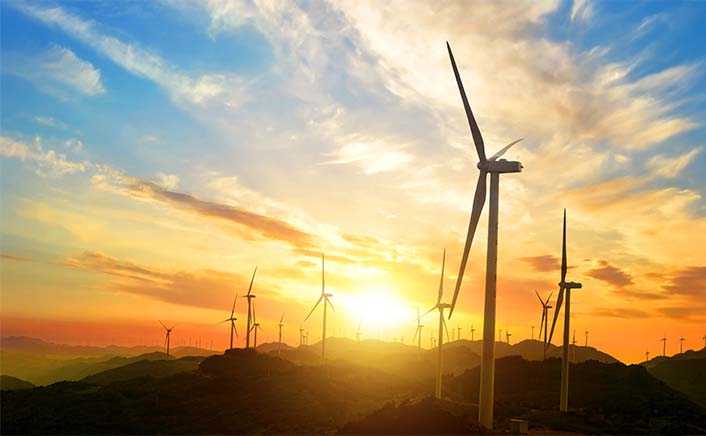
The European Wind Energy Market exhibits a notable division between onshore and offshore installations, each driven by unique economic, technological, and geographical factors. Currently, onshore wind energy dominates the market, representing approximately 65% of the total installed capacity. This dominance arises from several advantages, such as lower capital expenditures, easier access to project sites, and relatively simple permitting processes compared to offshore projects. Historically, onshore wind farms have formed the backbone of Europe's renewable energy transition, with countries like Germany, Spain, France, and the United Kingdom boasting extensive networks of onshore turbines that significantly contribute to their national energy mixes.
The prevalence of mid-sized turbines within the 2–5 MW and 5–8 MW ranges makes onshore projects economically viable while providing reliable energy generation to meet both utility-scale and industrial demands. Furthermore, the widespread deployment of onshore wind benefits from established supply chains and maintenance infrastructures, allowing developers to optimize operational costs and achieve predictable returns on investment. Increasingly, digital monitoring, predictive maintenance, and performance analytics are being integrated into onshore wind projects to enhance efficiency and extend the lifespan of installations. European countries have also utilized incentives such as feed-in tariffs and auctions to encourage investment in onshore wind, further cementing its market share. Despite facing land use and planning constraints in densely populated areas, onshore wind remains the most cost-effective option for large-scale renewable energy deployment across the continent.
On the other hand, offshore wind accounts for about 35% of the European wind energy market, and it is the fastest-growing segment due to its ability to yield higher energy outputs and its reduced land-related constraints. Offshore facilities can accommodate larger turbines, often exceeding 8 MW each, thereby significantly increasing the capacity of each project. The United Kingdom, Germany, the Netherlands, Denmark, and Belgium are leading the charge in offshore wind development, especially in the North Sea and Baltic Sea, regions known for their strong and consistent wind speeds, as well as supportive national and EU policies focused on decarbonization and energy security. Offshore projects also offer benefits such as diminished visual and noise impacts and strategic proximity to industrial load centers for direct energy delivery.
However, the offshore wind sector does face higher capital expenditure requirements related to complex foundations, subsea cabling, marine vessel logistics, and grid connection infrastructure. Despite these challenges, advancements in turbine technology, floating foundations, and installation methods have gradually reduced costs and enhanced feasibility. Furthermore, repowering aging offshore wind farms presents an additional opportunity for operators to replace older turbines with modern, high-capacity units, thereby increasing energy output without requiring additional land or sea area. This strategy aligns with broader EU climate objectives and is contributing to the rapid expansion of the offshore segment within the European wind energy market.
The coexistence of onshore and offshore installations fosters a diversified market structure that effectively balances cost efficiency with the potential for high energy yields. Policymakers and investors are increasingly integrating both types of installations into long-term energy strategies to achieve Europe’s ambitious renewable energy targets. Onshore wind is positioned as a cost-effective backbone, particularly in continental regions with favorable wind resources, while offshore wind addresses the high-capacity and coastal energy requirements. As turbine technology continues to advance, economies of scale improve, and financing models evolve, both segments are anticipated to grow, with offshore installations gradually securing a larger market share over the next decade.
This dynamic dual structure ensures that Europe can fulfill its renewable energy commitments while preserving energy security and promoting technological innovation, with onshore and offshore wind complementing each other to form a resilient and sustainable energy ecosystem.