Europe Agricultural Machinery Market by Power Output: Why 50–100 HP Tractors Dominate Farm Mechanization Trends
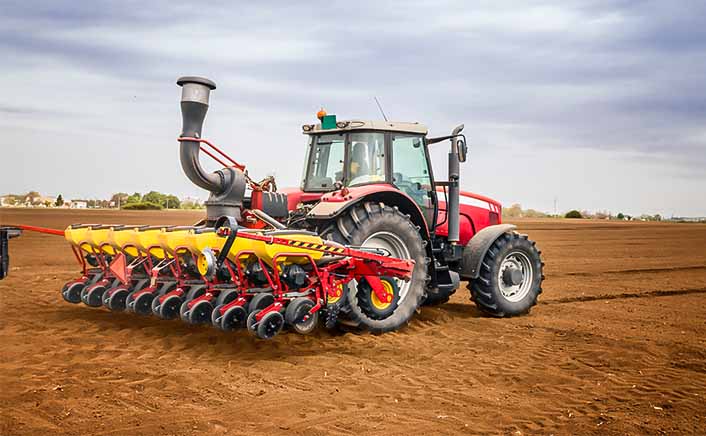
The power output segmentation of the European Agricultural Machinery Market reveals a distinct structural pattern influenced by factors such as farm size distribution, cropping intensity, levels of mechanization, and regional agricultural practices. The segment for tractors ranging from 50 to 100 HP commands the largest share at 34%, reflecting its strong alignment with Europe's predominant medium-sized farm structure. In countries like Germany, France, Italy, and Poland, farms typically require versatile tractors that can handle tasks such as ploughing, planting, spraying, and light hauling, all without the excessive fuel consumption that comes with higher horsepower models. This segment strikes a balance between affordability and operational capability, making it the backbone of mechanized farming in the region, particularly in mixed farming systems that integrate crop cultivation with livestock operations, a common structure throughout Western and Central Europe.
The 101 to 200 HP segment, representing the second-largest share at 28%, indicates a gradual shift toward higher productivity agriculture. Factors such as increasing farm consolidation, labor shortages, and the need to optimize operational windows are driving demand for more powerful equipment. Larger arable farms, especially in France, Germany, and regions of Eastern Europe, rely on this horsepower range to efficiently manage extensive acreage. Tractors in this category are often paired with wider implements, advanced precision farming systems, and digital monitoring tools, enabling farmers to enhance fuel efficiency, reduce input waste, and increase output per hectare. The growing adoption of GPS guidance, telematics, and automated steering systems is particularly prominent in this power band, emphasizing its critical role in the modernization of European agriculture.
The segment for tractors under 50 HP, which holds an 18% share, remains significant despite the overall trend toward higher horsepower models. This segment primarily serves small farms, vineyards, orchards, horticultural operations, and municipal applications. Southern European countries, such as Italy, Spain, and Greece, exhibit strong demand for compact tractors due to fragmented landholdings and specialty crop cultivation. These machines provide maneuverability, lower acquisition costs, and reduced maintenance expenses, making them ideal for niche agricultural environments. Additionally, lifestyle farming and part-time farming activities in certain areas contribute to sustained demand in this horsepower range.
The 201 to 300 HP category, which accounts for 12% of the market, reflects the needs of large-scale commercial agriculture. Farms cultivating broadacre crops such as wheat, corn, and oilseeds increasingly depend on high-powered tractors to operate heavy-duty implements and maximize field efficiency. This segment benefits from the growth of contract farming services, wherein agricultural contractors invest in higher horsepower machinery to serve multiple clients. Such operations require machines capable of extended working hours, offering higher torque and compatibility with advanced digital platforms. Although this segment's market share is smaller compared to mid-range categories, it represents significant value due to higher unit prices and premium feature integration.
The 300+ HP segment, which makes up 8% of the market, is focused on industrial-scale farms and specialized contractors. Demand in this horsepower range is particularly strong in regions characterized by expansive farmland and advanced levels of mechanization. Tractors within this category are often equipped with sophisticated precision agriculture technologies, including variable rate application systems and data-driven farm management software. While unit volumes in this segment remain relatively limited, the revenue contribution per unit is substantial, supporting the overall growth of market value.
In summary, the distribution across power output segments illustrates that the European agricultural machinery market maintains a well-balanced structure. Mid-range tractors dominate due to their versatility and cost-effectiveness, while higher horsepower equipment aligns with rising efficiency demands and structural farm expansion. At the same time, compact tractors remain relevant in specialty and fragmented farming environments. This diverse horsepower mix highlights the region’s varied agricultural landscape, where farm size, crop type, and technological readiness collectively influence equipment demand patterns.