Rising Investments in Railway Modernization Driving Europe Rail Guided Inspection Robots Market Growth
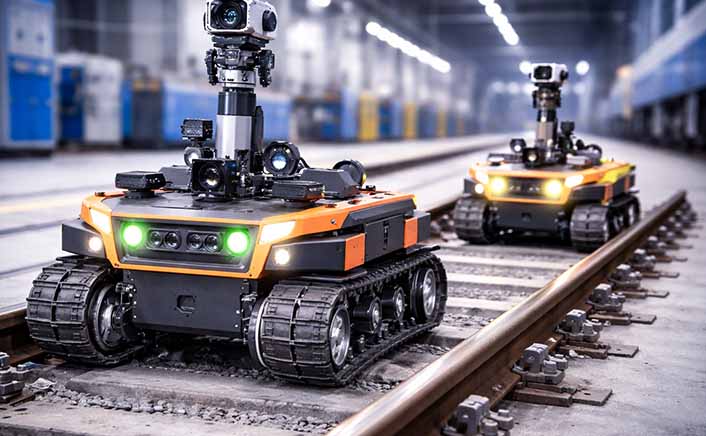
The Europe region is quickly becoming the leading market for Rail Guided Inspection Robots, thanks to increased investments in modernizing railways and improving safety. Countries like Germany, France, and the United Kingdom are taking the lead in adopting advanced robotic technologies to make track maintenance more efficient and minimize human error. The push for high-speed rail networks, along with strict safety and reliability regulations, is driving the demand for smart inspection solutions.
The Europe Rail Guided Inspection Robots market was valued at USD 146.80 Million in 2025 and is projected to reach USD 1098.12 Million by 2033, with a compound annual growth rate (CAGR) of 20.50% from 2027 to 2033.
Additionally, Europe's strong presence of robotics and automation companies, along with the European Union's support for innovative transportation systems, is speeding up the development and deployment of these technologies. Efforts towards sustainable mobility and predictive maintenance are also motivating rail operators to incorporate AI-powered inspection robots into their operations. As a result, Europe is experiencing significant growth in technology adoption and market presence, establishing itself as a crucial player in the global rail inspection market.
In order to preserve system integrity, Europe's investments in updating its rail infrastructure raise the demand for sophisticated inspection systems.
Europe is currently undergoing a significant transformation in its rail infrastructure to meet the growing demands for both passenger and freight transport. Governments across the continent are investing heavily to upgrade older rail networks, enhance track quality, and boost capacity. As part of these efforts, many are starting to use automated rail inspection robots. These robots help ensure that tracks, switches, and tunnels are consistently monitored and maintained, making inspections more accurate and less time-consuming than manual methods.
Countries like Germany, France, and Italy are at the forefront of this modernization push, backed by both public and private investments. This demand for inspection robots is part of a larger trend towards smart, digitized rail systems. As Europe embraces digital transformation alongside infrastructure improvements, the use of rail-guided robots is set to play an increasingly vital role in the future of rail travel.
EU-imposed safety standards compel railway operators to implement automated inspection systems to comply with regulatory requirements.
Rail-guided robots play a crucial role by collecting real-time data, detecting anomalies, and reporting findings, which helps operators meet compliance standards with improved accuracy and efficiency. As safety expectations grow due to urban expansion and the rise of high-speed rail, integrating robotic inspection systems has become vital to maintain legal compliance without sacrificing the speed or reliability of inspections.
Organizations like the European Union Agency for Railways (ERA) support unified safety strategies across member states and promote the widespread use of advanced technologies. These regulatory demands are a major factor driving the quick adoption of rail-guided inspection robots in the region.
The shift towards predictive maintenance strategies drives adoption of rail-guided robots for early detection of infrastructure issues.
Predictive maintenance has become essential in European rail operations, moving away from the old reactive methods to smarter, technology-driven approaches. A key player in this transformation is the use of rail-guided inspection robots. These robots are constantly surveying the condition of the tracks and structures, picking up on early signs of wear and potential issues before they turn into serious problems. Equipped with sensors, machine vision, and AI analytics, they provide rail operators with valuable insights, enabling them to carry out maintenance work proactively.
This shift not only boosts safety and reliability but also helps extend the lifespan of railway assets and cuts down overall maintenance costs. More and more European railway companies are incorporating these advanced systems into their digital asset management platforms, looking to enhance performance and minimize disruptions to services. As rail operators and governments focus on improving service quality while keeping operational costs in check, the combination of predictive maintenance and robotic inspections is a perfect fit. This shift toward smarter rail management is fueling increased investment in robotic inspection technologies throughout the region.
The growth of high-speed rail lines in Europe necessitates frequent and precise track inspections to ensure safe and reliable operations.
Europe is a leader when it comes to high-speed rail, boasting extensive networks in countries like France with its TGV, Spain's AVE, Germany's ICE, and Italy's Italo. These high-speed trains travel at over 300 km/h, which means there’s little room for error in the quality of the tracks and infrastructure. To keep everything safe and running smoothly, regular and precise inspections are a must, and that’s where rail-guided robots come into play.
These smart robots are great at making sure the tracks are aligned correctly, spotting tiny cracks or shifts, and checking the condition of tunnels and bridges—all vital for the safe operation of high-speed trains. As projects to expand and link these high-speed corridors across borders continue to grow, the demand for advanced inspection technology is increasing rapidly.
Moreover, the EU’s Trans-European Transport Network (TEN-T) initiative is pushing for reliable and interoperable high-speed rail systems, further highlighting the need for intelligent maintenance tools. As Europe invests more in its high-speed rail infrastructure, these rail-guided inspection robots are becoming essential for ensuring safety and sustainability across the network.
Europe's strong robotics and automation sector facilitates rapid innovation and integration of smart inspection robots in rail systems.
Europe is home to several leading robotics and automation companies that are driving innovation in inspection technologies. Firms in Germany, the Netherlands, and Switzerland are at the forefront, developing advanced AI-enabled rail-guided robots capable of autonomous navigation, data processing, and real-time communication. By integrating cutting-edge technologies such as computer vision, 5G connectivity, and cloud-based analytics, these robots can detect micro-defects and structural anomalies more efficiently than manual inspections.
Additionally, research institutions and public-private partnerships throughout Europe are fostering research and development efforts to enhance the versatility and durability of inspection robots. The European Commission also supports digital transformation through initiatives like Horizon Europe, which promotes the adoption of Industry 4.0 technologies in transport infrastructure.
These advancements are not only enhancing the functionality of inspection robots but also making them more accessible to operators of all sizes. As technological capabilities continue to evolve, they are driving both innovation and market growth in the region.
Competitive Landscape
Some of the major companies operating within the Rail Guided Inspection Robots market are: ANYbotics, SIASUN, SHENHAO, Yijiahe Technology Co., Ltd, Hangzhou Guochen Robot Technology Co. Ltd., Future Maintenance Technologies and Others.