Powder Coatings Expansion Trends Across Europe’s Automotive Manufacturing Sector
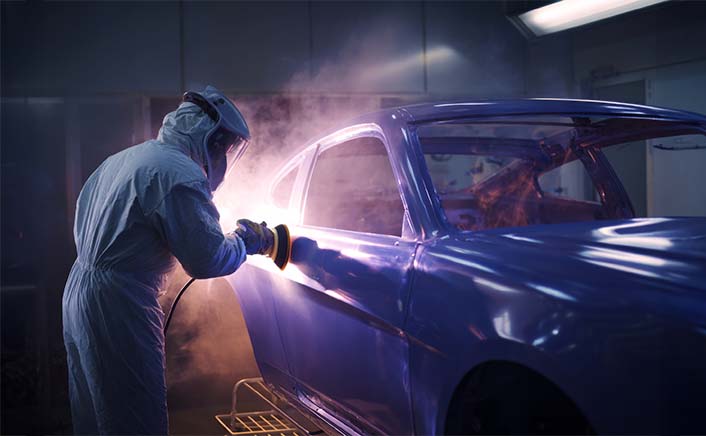
The technology landscape of the European Automotive Coatings Market reflects the region’s robust regulatory framework, sustainability goals, and advanced manufacturing ecosystem. Each coating technology plays a specific role in both OEM and refinish applications, with market shares influenced by VOC legislation, decarbonization objectives, productivity demands, and the swift transition toward electric mobility. Water-based coatings currently dominate the market, followed by solvent-based systems, while powder, high-solid, and UV-curable technologies are progressively carving out their niche presence.
Water-based coatings account for the largest share in the market, having gained significantly from Europe’s stringent environmental regulations aimed at reducing volatile organic compound emissions. Automakers and tier suppliers are increasingly adopting aqueous formulations for primer, basecoat, and clearcoat layers to comply with regulations while preserving finish quality. Advances in resin chemistry, flash-off performance, and corrosion resistance have mitigated earlier technical challenges, facilitating broader adoption even in high-throughput production environments. The leadership of this segment is further bolstered by OEM sustainability commitments, life-cycle emission reductions, and a rising consumer preference for environmentally responsible vehicles. Over the forecast period, water-borne technologies are expected to enhance their market penetration, particularly as next-generation robotic paint shops optimize humidity and curing management.
Despite regulatory pressures, solvent-based coatings remain quite relevant, primarily due to their well-established processing familiarity, reliability in various climatic conditions, and strong appearance performance. Many legacy production lines across Eastern and Southern Europe still utilize solvent systems, and the refinish market continues to favor them for their faster drying times and ease of application in smaller workshops. Additionally, certain specialty coatings, such as high-performance protective layers and low-temperature cure products, still rely on solvent-based chemistry. However, a gradual shift is noticeable, with suppliers reformulating their products to reduce VOC content. As capital expenditure cycles permit plant upgrades, a portion of this market share is expected to transition toward water-based or high-solid alternatives.
Powder coatings, while capturing a smaller share of the market, hold strategic importance. Their near-zero VOC emissions, high transfer efficiency, and durability make them appealing for applications such as wheels, underbody parts, and chassis components, and they are increasingly being used for selected body applications. Growth in this segment is fueled by energy savings, waste reduction, and compatibility with circular economy initiatives. Technological advancements that allow for thinner films and improved surface aesthetics are creating additional opportunities, although challenges in color change flexibility and initial equipment costs remain. As manufacturers pursue greener operations, the usage of powder coatings is likely to rise steadily.
High-solid coatings act as a transitional solution between traditional solvent-based and water-based systems. By offering lower solvent content while maintaining similar application methods, they enable manufacturers to achieve environmental targets without overhauling existing infrastructure. These coatings are commonly used in primers and clearcoats, where film build and protection are essential. Ongoing innovation in cross-linking chemistry and cure efficiency is expected to sustain moderate growth, particularly among facilities aiming for incremental improvements rather than complete process transformation.
UV-curable coatings, although still holding a relatively small market share, are garnering increasing attention due to their ultra-fast curing, reduced energy consumption, and compatibility with plastics and lightweight substrates. Their significance is rising alongside the expansion of electric vehicles, which require precise finishing for a variety of materials. As automation and digital paint technologies advance, UV solutions may take on higher value segments, even if overall volume remains limited.
In summary, the mix of technologies in the European automotive coatings market highlights a clear trend: sustainability, efficiency, and material compatibility are significantly influencing purchasing decisions. While water-based systems lead the charge, complementary growth in powder, UV, and high-solid products suggests a diversified future where various technologies coexist to meet the evolving demands of automotive design and regulatory expectations across Europe.