Europe Emerging as the Fastest Growing Region in the Global Metal Stamping Market Driven by Advanced Manufacturing and Sustainability
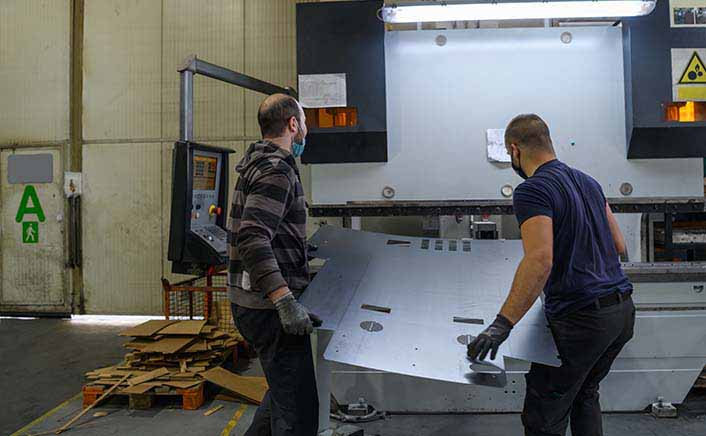
The Europe Metal Stamping Market was valued at USD 47.45 Billion in 2025 and is projected to reach USD 69.75 Billion by 2033, with a compound annual growth rate (CAGR) of 18.40% from 2027 to 2033.
Europe is emerging as the fastest-growing region in the global metal stamping market due to a strong push toward advanced manufacturing and sustainability. Countries such as Germany, France, and Italy are investing heavily in precision engineering and automation technologies, which are enhancing production efficiency and product quality. The rapid expansion of the automotive sector, particularly the shift toward electric vehicles (EVs), is significantly increasing demand for high-precision stamped components.
In addition, Europe’s strict environmental regulations are encouraging manufacturers to adopt lightweight and recyclable materials, boosting the use of advanced metal stamping processes. The presence of leading automotive OEMs and a well-established industrial base further supports market growth. Moreover, increasing investments in renewable energy infrastructure and aerospace manufacturing are creating new opportunities for stamped metal components. These combined factors position Europe as a key growth engine in the global metal stamping market.
Rapid growth of electric vehicle manufacturing across Europe is increasing demand for precision metal stamped components.
The accelerating transition toward electric mobility across Europe is a major driver for the metal stamping market. Governments are implementing strict emission regulations and offering incentives to promote electric vehicle (EV) adoption, leading to increased production by automotive manufacturers. EVs require a wide range of lightweight, high-precision metal components for battery enclosures, motor housings, and structural parts, all of which rely heavily on advanced stamping processes. Additionally, the shift from internal combustion engines to electric drivetrains is prompting redesigns of vehicle architectures, creating new opportunities for customized stamped parts. Automakers are also focusing on reducing vehicle weight to improve battery efficiency, further boosting demand for innovative metal stamping solutions. This strong push toward electrification is expected to sustain long-term growth for the metal stamping industry across Europe.
Strong presence of established automotive and industrial manufacturers in Germany and France is driving consistent market expansion.
Germany and France serve as key industrial hubs in Europe, housing some of the world’s leading automotive manufacturers and engineering companies. These countries have well-established supply chains and advanced production ecosystems that rely heavily on metal stamping for mass production of components. The presence of major OEMs and tier suppliers ensures steady demand for stamped parts used in vehicle bodies, engines, and structural assemblies. Furthermore, continuous investments in research and development enable manufacturers to adopt innovative stamping techniques such as hot stamping and precision forming. Industrial diversification in these countries, including machinery and heavy equipment manufacturing, also contributes to consistent demand. As these economies continue to modernize their manufacturing sectors, the metal stamping market benefits from both volume production and technological advancements.
Increasing adoption of automation and Industry 4.0 technologies enhances efficiency in metal stamping production.
The integration of automation and Industry 4.0 technologies is transforming the metal stamping landscape across Europe. Manufacturers are increasingly deploying robotics, artificial intelligence, and IoT-enabled systems to streamline production processes, reduce human error, and improve operational efficiency. Smart factories equipped with real-time monitoring and predictive maintenance capabilities help minimize downtime and optimize resource utilization. This technological shift allows companies to produce complex and high-precision components at scale while maintaining consistent quality standards. Additionally, automation supports faster production cycles and cost efficiency, making European manufacturers more competitive in the global market. The ability to quickly adapt to changing customer requirements and design specifications further enhances market growth. As digital transformation continues, it is expected to play a crucial role in advancing the metal stamping industry in Europe.
Stringent environmental regulations in European Union promote lightweight and recyclable materials usage.
Environmental sustainability is a key focus area in the European Union, and stringent regulations are significantly influencing the metal stamping market. Policies aimed at reducing carbon emissions and promoting resource efficiency are encouraging manufacturers to adopt eco-friendly production practices. This includes the use of lightweight metals such as aluminum and high-strength steel, which help improve fuel efficiency in vehicles and reduce overall emissions. Metal stamping processes are being optimized to minimize waste and energy consumption, aligning with circular economy principles. Additionally, recycling initiatives and stricter compliance standards are pushing companies to innovate in material usage and production techniques. These regulations not only ensure environmental protection but also create opportunities for advanced stamping technologies that support sustainability goals, thereby driving market growth.
Rising investments in aerospace and renewable energy sectors are boosting demand for advanced stamped metal parts.
The expansion of aerospace and renewable energy industries in Europe is creating new growth avenues for the metal stamping market. Aerospace manufacturers require high-precision, durable components for aircraft structures and systems, many of which are produced using advanced stamping techniques. At the same time, the rapid development of renewable energy infrastructure, including wind and solar power projects, is increasing demand for metal components used in turbines, mounting systems, and support structures. Governments and private investors are heavily funding these sectors to achieve energy transition goals and reduce dependence on fossil fuels. This surge in investment is leading to higher production requirements and technological advancements in metal forming processes. As both industries continue to grow, they will play a significant role in driving long-term demand for metal stamping solutions across Europe.
Competitive Landscape
Some of the major companies operating within the Metal Stamping market are: Arconic Corporation, Acro Metal Stamping, Manor Tool & Manufacturing Company, Lindy Manufacturing Co., D&H Industries, Inc., Kenmode, Inc., Klesk Metal Stamping Co., Tempco Manufacturing Company, Inc., Goshen Stamping Company and Others.